
Gilbert home prices rose in August 2026 even as the number of buyers signing contracts fell sharply. The median sale price for a single-family home climbed to $605,000 while pending sales dropped nearly forty percent from a year earlier. If you are buying or selling in Gilbert right now, the market is sending two very different signals at once.
Your next move depends on which side of this market you are on
If you are a seller, the headline number looks encouraging. Prices are up. But the fuller picture is harder. Homes are sitting on the market for an average of 74 days. Inventory has grown. Fewer buyers are signing contracts than at any point in recent memory. That gap — rising prices alongside shrinking demand — is unusual, and it puts real pressure on sellers who need to move quickly.
If you are a buyer, this market is quietly shifting in your favor. More homes to choose from, less competition, and sellers who are increasingly willing to cover part of your costs. The two price bands that Cromford Report analyst Tina Tamboer flagged as especially soft — $300,000 to $400,000 and $500,000 to $600,000 — happen to sit right where many Gilbert families are shopping. That is where your negotiating room is largest right now.
Renters watching from the sidelines should know: this is not a freefall. Prices have not dropped. But the market is slower and more negotiable than it has been in years.
Gilbert home prices in August 2026: what the numbers actually show
According to Phoenix Realtors data, the median sales price for a Gilbert single-family home rose 2.8% from a year earlier to $605,000. The average price climbed faster — up 6.6% to $717,582.
That gap between median and average matters. When the average rises much faster than the median, it usually means higher-priced homes are selling at a stronger pace, pulling the average up. The typical Gilbert seller is not seeing a 6.6% gain. The median gain of 2.8% is the more representative number for most homeowners.
Inventory rose 13.1% to 839 homes. Homes averaged 74 days on the market, an 8.8% increase from August 2025.
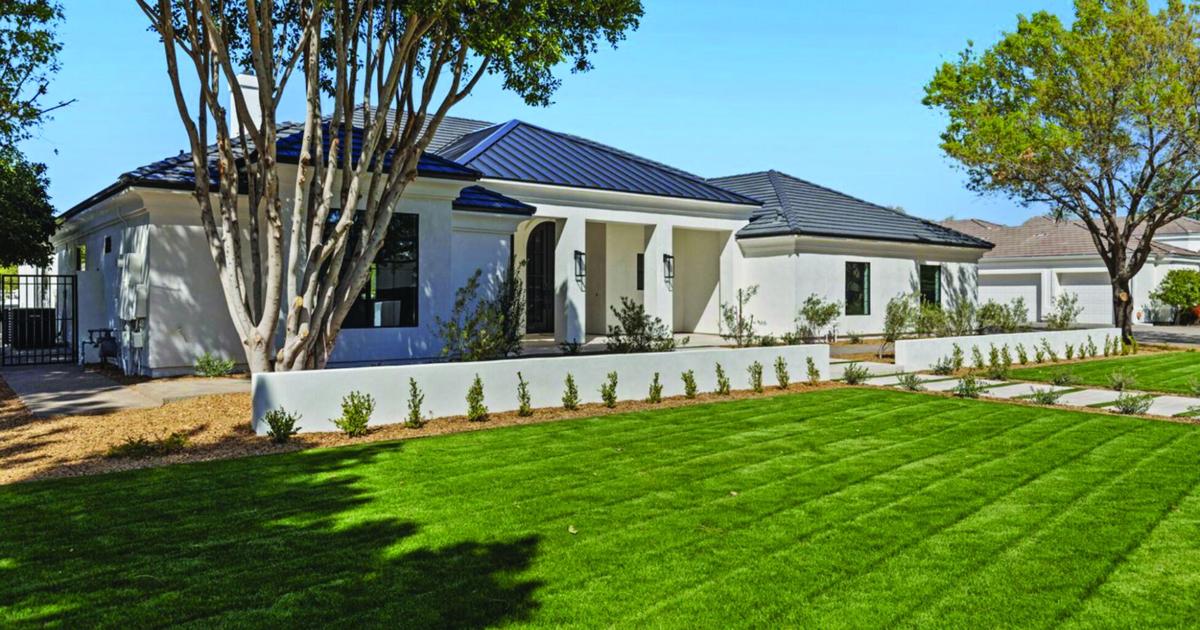
A single-family home in the Gilbert area. The median sale price for Gilbert single-family homes reached $605,000 in August 2026. (InsideTheValley.com)
Pending sales collapsed 39.5% — here is why closed prices are still rising
Pending sales — contracts signed but not yet closed — fell 39.5% from August 2025, dropping to just 167. Closed sales declined a more modest 6.1% to 248.
Why the difference? Pending sales reflect what buyers are doing right now. Closed sales reflect deals that were signed weeks or months ago, when demand was higher. The closed-sale prices you see today are largely from contracts written before the current slowdown deepened. That lag is why prices still look strong even as current buyer activity has fallen sharply.
Put simply: today’s pending sales numbers are a leading indicator. They suggest closed prices could face more pressure in the months ahead.
The price bands buyers and sellers need to watch right now
Cromford Report analyst Tina Tamboer identified two price ranges where contract activity has been especially weak: $300,000 to $400,000 and $500,000 to $600,000. Demand in both bands is soft relative to supply.
If you are selling in either range, pricing accurately from the start matters more than it did a year ago. If you are buying, these bands are where you have the most room to negotiate — on price, on repairs, and on concessions.
Across the broader Phoenix Valley, overall housing demand ran approximately 22% below normal levels, per the Cromford Report. Gilbert is part of that Valley-wide softness, though some parts of Gilbert and the Southeast Valley still show pockets of relatively stronger demand.
Mortgage rates cross a two-year threshold — what that means for Gilbert demand
The national 30-year fixed-rate mortgage average hit 7.03% on Sept. 24, 2026, according to Freddie Mac’s weekly survey. A year earlier it was 6.30%. Crossing back above 7% is a level not seen in nearly two years.
Higher rates shrink what buyers can afford. A buyer who qualified for a $600,000 home at 6.30% qualifies for less at 7.03%. That math pushes some buyers to lower price points or out of the market entirely. Demand in Gilbert could weaken further if rates stay elevated.

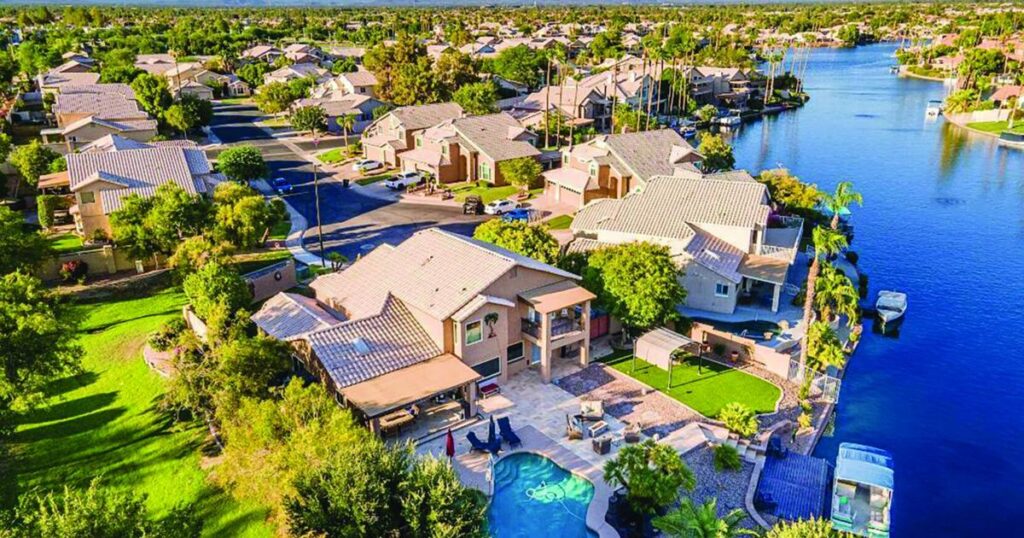
The Gilbert and East Valley suburban landscape, where rising mortgage rates and growing inventory are reshaping buyer decisions in 2026. (InsideTheValley.com)
Seller concessions hit an all-time record: how Gilbert homeowners should respond
Across the Valley, 58% of home sales so far this month have included seller-paid concessions. That is the highest share recorded since the Cromford Report began tracking the figure in 2014. The median concession was $10,050.
Seller concessions typically cover a buyer’s closing costs, a rate buydown, or repairs. At $10,050 median, that is real money — and it is now standard practice in more than half of Valley transactions.
If you are listing a Gilbert home and not offering any concessions, you are competing against sellers who are. That does not mean you have to match every deal, but knowing the going rate helps you price and negotiate strategically.
The four-month rule: when seller discounts get real
Tamboer offered a specific timing signal worth noting. Discounts tend to grow more pronounced once a listing approaches roughly four months on the market without selling.
With Gilbert homes averaging 74 days — about two and a half months — many listings are approaching that window. If your home has been sitting, a price adjustment or concession offer before the four-month mark may be more effective than waiting.
For buyers, a home that has been listed for close to four months is likely a stronger negotiating target than one that just hit the market.
What Tamboer is watching — and when the picture may get clearer
The central question for Gilbert homeowners right now is whether the gap between rising prices and falling buyer activity will persist or begin to close. Tamboer said the coming months may offer a clearer signal on which direction the market is heading.
There is no firm forecast here — the data does not support one yet. What is clear is that the market is at an inflection point. Rates above 7%, record concessions, and a 39.5% drop in pending sales are not normal conditions. Watch the pending sales numbers through the fall. If they stay depressed, price pressure will follow.