
Queen Creek water bills went up in fall 2025, and a second increase is still coming. The Town approved a 15% rate hike effective October 7, 2025 — the first residential adjustment in more than 15 years. A separate Water Resource Fee is being layered on top. For most households, the combined impact could be modest or significant, depending on how much water you use.
Your water bill changed this fall — here is exactly how much
If you are a Queen Creek water customer, you already felt the first hit. The Town approved a 15% rate increase, adding roughly $3 to $6 per month for most residential customers. Your first bill at the new rate arrived after October 7, 2025.
That sounds manageable. But it is only part of the story. The Town is also rolling out a dedicated Water Resource Fee, proposed at $3.07 per 1,000 gallons based on your actual usage. That fee is separate from the rate hike and tied directly to how much water flows through your meter.
Run a pool. Water a large yard. Own a business. The fee adds up fast. Queen Creek resident Ron Rios, 52, told reporters his bill could eventually climb from $130 a month to more than $500. That is not a worst-case outlier — it is what heavy water users face when a usage-based fee stacks on top of a higher base rate.
One group will not see any change: customers in the Diversified Water Service Area, which covers portions of east San Tan Valley. Their rates already match the new structure, so no adjustment applies to them.
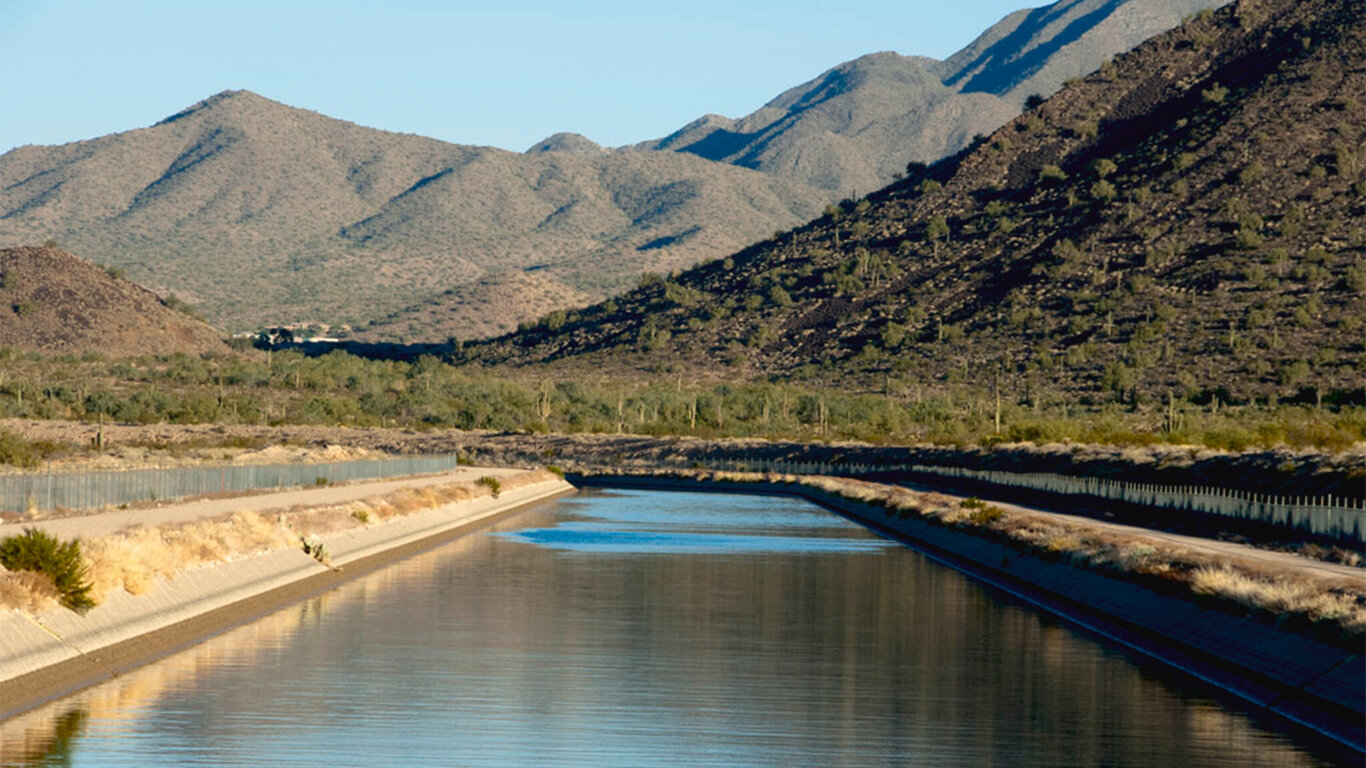
The Central Arizona Project delivers Colorado River water across the state, but Queen Creek relies on the river for only about 10% of its supply. (InsideTheValley.com)
Why Queen Creek is spending $730 million on water
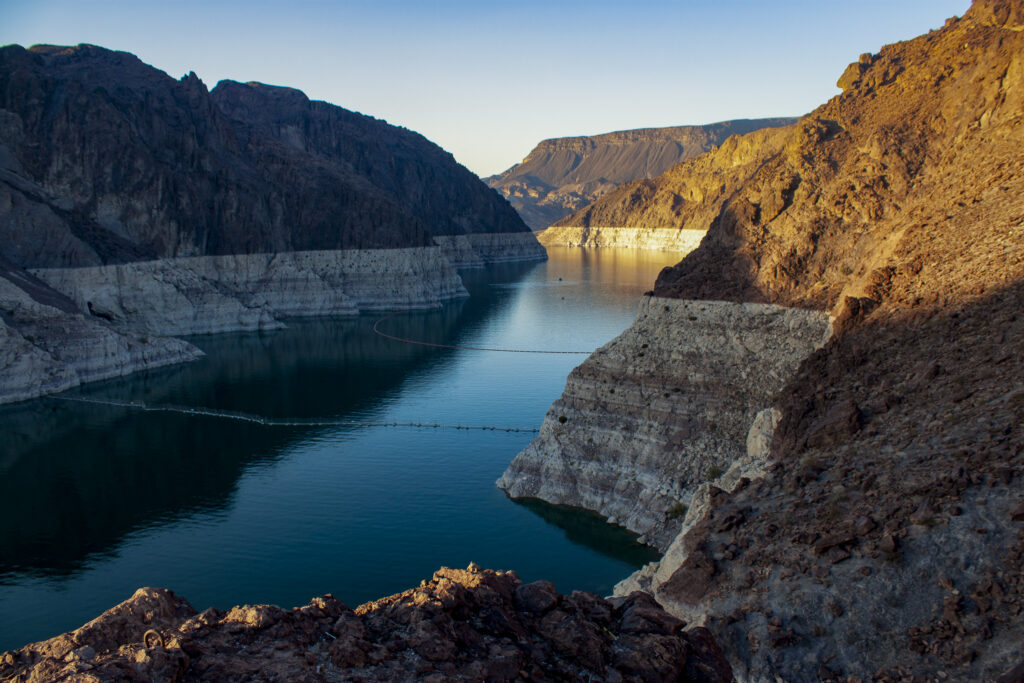
Town leaders are not raising rates because of a budget shortfall. They are spending to solve an existential problem: the Colorado River is shrinking, and fast-growing communities that depend on it face real supply risk.
Queen Creek’s situation is actually better than most. The town relies on the Colorado River for only about 10% of its water. But groundwater pumping fills most of the gap, and that is not a permanent solution. The town wants to cut local groundwater pumping to about 6% of supply by bringing in water from elsewhere.
Mayor Julia Wheatley put the spending pace plainly: the town spent $168 million in a single year on renewable water resources, up from $60 million the year before. When you add it all up, Queen Creek expects to spend roughly $730 million total to secure a hundred-year supply.
That is an enormous number for a suburb. It is also the reason your bill is rising.
The $244 million Harquahala deal: what it actually buys
The biggest single piece of that investment is the Harquahala Basin purchase. The Queen Creek Town Council voted unanimously to spend $244 million to acquire 12,000 acre-feet of water annually from the Harquahala groundwater basin, located about 90 miles from town.
That water is locked in for the next century. The purchase price came out to roughly $20,000 per acre-foot. It does not flow through a pipe to your tap directly — the mechanics involve groundwater banking and replenishment credits — but it counts toward the town’s long-term supply portfolio.
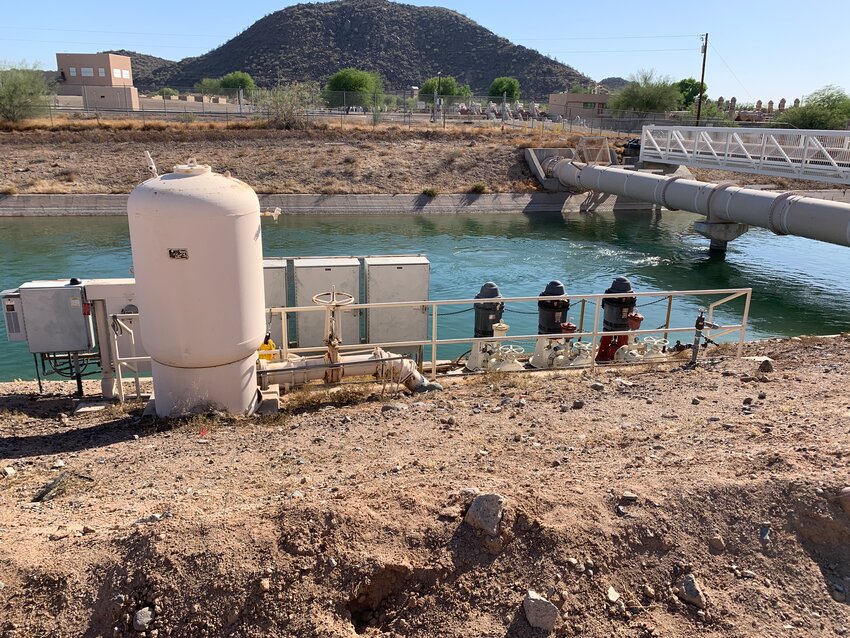
A pump station beside an Arizona irrigation canal — infrastructure like this forms the backbone of the water delivery systems Queen Creek depends on. (InsideTheValley.com)
Ten thousand Queen Creek homes without an assured water supply
Here is the fact no other outlet has connected to the rate hike story: about 10,000 single-family homes in Queen Creek do not yet have a certificate of assured water supply.
In Arizona, a certificate of assured water supply is a state-issued document confirming that a subdivision has access to a 100-year water supply. Without it, a community is technically on uncertain footing. The Town is actively working with landowners to secure a renewable water source for those homes.
If you are buying a home in Queen Creek, ask your agent whether the specific property carries an assured water supply designation. It matters for your long-term risk and for future resale. The town’s investments — including the Harquahala deal — are partly aimed at resolving this gap, but the work is not finished.
What rising water costs mean if you are buying or selling in Queen Creek
Water bills are a carrying cost, just like property taxes or an HOA fee. A bill that could reach several hundred dollars a month for a high-usage household changes the real cost of ownership — especially for buyers who are already stretching on a mortgage.
The flip side is real too. A town that locks in a century of water supply is a town where builders can keep building, new residents keep arriving, and property values stay supported. A suburb without water certainty faces a harder future. Queen Creek is choosing to pay now to protect that future.
For buyers comparing Queen Creek to neighboring East Valley cities, the honest question is: how much water do you use, and what will the full fee structure look like once the Water Resource Fee is fully in place? For sellers, the town’s $730 million commitment is a legitimate selling point — it is the infrastructure that keeps Queen Creek buildable and desirable for the long run.
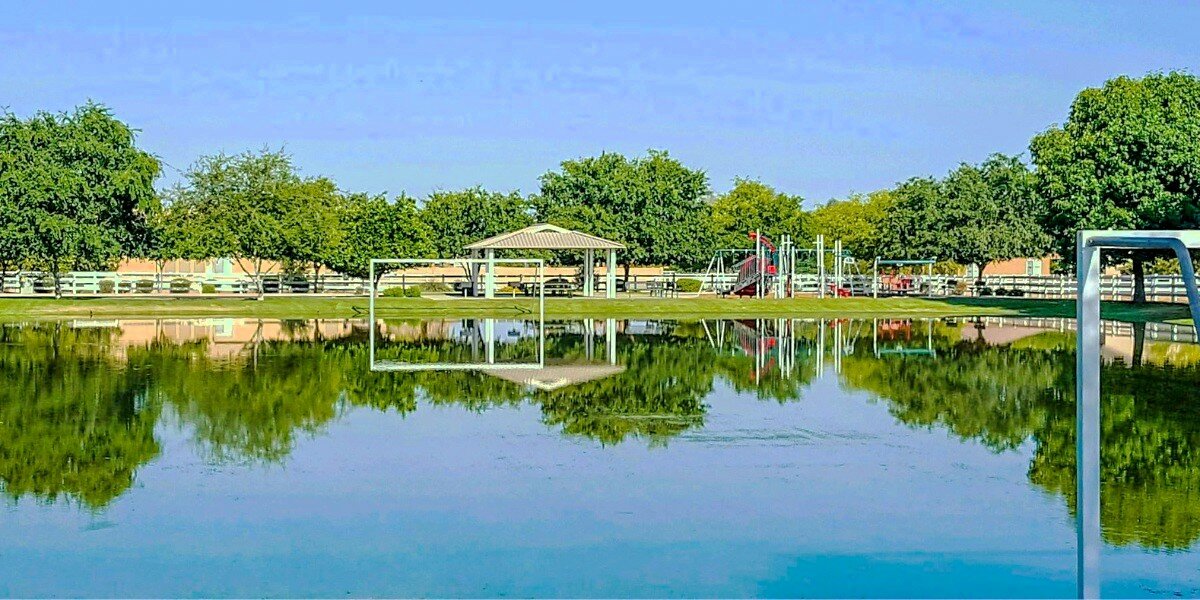
Parks and community water features like this one are part of Queen Creek’s appeal — and part of why the town’s long-term water security matters to property values. (InsideTheValley.com)
What comes next on Queen Creek water rates and the Water Resource Fee
The 15% rate increase is already in effect. The Water Resource Fee is in the proposal stage, with a year-one rate of $3.07 per 1,000 gallons, following a 60-day public outreach process. The town has not published a final implementation date for the fee as of the writing of this article.
The $730 million spending target means costs are unlikely to fall in the near term. Town leaders have framed this as an unavoidable investment — the price of keeping Queen Creek growing and water-secure as the Colorado River continues to shrink.
Watch the Town of Queen Creek’s utilities page at queencreekaz.gov for Water Resource Fee hearing dates and final adoption details. If you are in the middle of a home purchase or sale in Queen Creek right now, make sure your real estate agent is factoring the full water cost picture into the conversation.