
Organized neighbors have killed or stalled several major data center proposals across the Phoenix Valley. They forced a rewrite of city zoning rules. They pushed Arizona’s legislature to freeze the state’s biggest industry tax break. Now developers are rethinking how they site, design, and sell these projects.
Your electricity bill, your sleep, and your home’s value are all on the line
If you live near a proposed data center site — Ahwatukee, Chandler, the West Valley, northwest Phoenix — this fight is already touching your wallet. APS filed for a 14% electricity rate hike in 2026. Protesters showed up outside the Arizona Corporation Commission on May 18, 2026. They were not there about a billing error. They were there because data centers now consume roughly 5% of APS’s total peak energy demand. APS’s own numbers show that if every pending permit in its service area were fulfilled, total demand would hit 19,000 megawatts. That is more than double APS’s all-time peak of 8,200 megawatts, set in summer 2024.
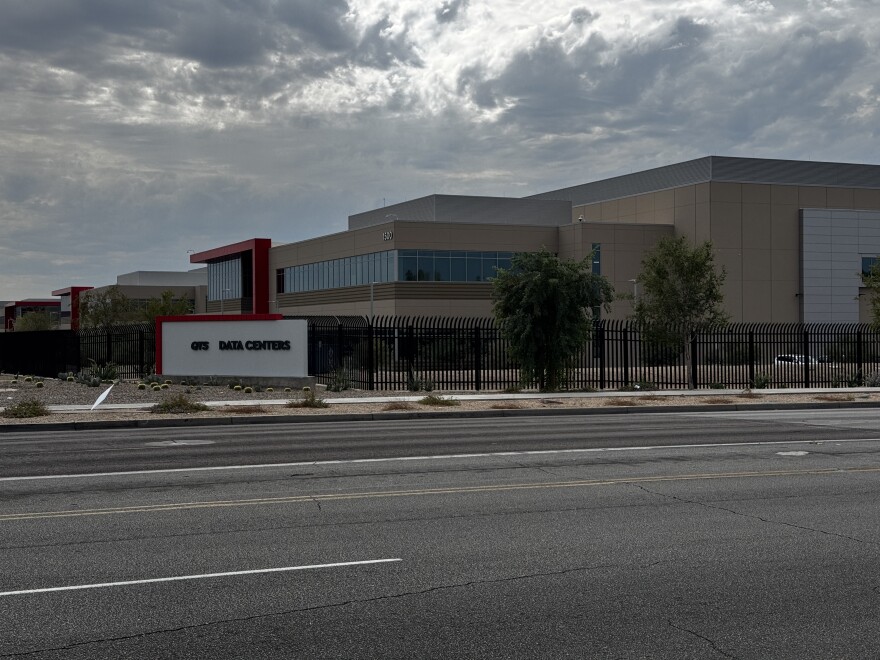
Noise is the second complaint. Residents near operating facilities describe a constant industrial cooling-fan hum that does not stop at night. In Chandler, documented cases included windows rattling. In Surprise, opposition leader Roy Dunbar cited reduced property values in public testimony. In Ahwatukee, neighbors discovered a six-building hyperscale campus was already under construction — without any new city rules applying to it.
Phoenix Mayor Kate Gallego has said data centers hurt walkability and neighborhood vitality. She joined a coalition of roughly 40 cities worldwide demanding stronger standards. The short version: this is not a hypothetical debate about future growth. It is happening now, on specific streets, with real costs attaching to real homes.
The Arizona scorecard: which projects were killed, scaled back, or pushed through
The clearest way to understand the backlash is to look at what has actually happened, project by project.
Dead: Project Range (Tract / West Valley). Denver-based developer Tract withdrew its $14 billion “Project Range” proposal in May 2024. The plan called for up to 30 buildings totaling 5.6 million square feet across 1,000 acres near Yuma and Perryville roads. The site straddled Goodyear and Buckeye. Both city staffs declared it incompatible with surrounding residential neighborhoods. The project never reached a council vote.
Dead: Active Infrastructure (Chandler). New York-based Active Infrastructure proposed a $2.5 billion AI data center on 40 acres near Queen Creek and Dobson roads. Resident emails to the Chandler City Council ran 20-to-1 against it. Hundreds of opponents packed City Hall. On December 11, 2025, the council voted 7-0 to reject the rezoning.
Dead in Tucson, approved in Marana: Project Blue (Beale Infrastructure). The Tucson City Council rejected Beale Infrastructure’s $3.6 billion “Project Blue” — a 290-acre data center complex — in August 2025. Beale then pursued a 600-acre project in neighboring Marana. The Marana Town Council approved it 6-0 in January 2026.
Still alive despite opposition: Project Baccara (Takanock / West Valley). A grassroots petition opposing this proposed data center and natural gas power plant gathered more than 4,000 signatures. It targets a site north of Luke Air Force Base, near West Olive Avenue and the North Bullard Avenue alignment. Residents sent 225 emails to Maricopa County in opposition. Despite that, the county’s Planning and Zoning Commission unanimously recommended approval on April 9, 2026.
Grandfathered in: East Thistle (Menlo Digital / Ahwatukee). Menlo Digital’s six-building hyperscale campus near Thistle Landing Drive began construction under a 1996 Commerce Park zoning classification. It predates Phoenix’s 2025 ordinance. That makes it effectively exempt from the new rules. The Ahwatukee Community Alliance — a nonprofit whose members include a social worker, a retired engineer, and a piano teacher — launched opposition, but the project is proceeding.
Inside Phoenix Ordinance G-7396: what the new rules actually require, and who is suing to undo them
On July 2, 2025, Phoenix enacted Ordinance G-7396 — the city’s first-ever data center zoning rules. The ordinance requires a Special Permit before any new facility can be built. That permit process covers power grid reliability, fire risk, emergency response access, and noise. Data centers are now only allowed in C-2, C-3, CP/GCP, A-1, and A-2 zoning districts, and only with that permit in hand.
The legal counter-offensive started quickly. At least 11 landowners filed Prop 207 property-rights claims against Phoenix. They argued the new ordinance cut the value of their land. Aligned Data Centers was among them. The company had planned to convert a vacant Deer Valley office park near Interstate 17 and Loop 101 into a data center campus. Phoenix is now in active talks with those claimants.
Prop 207, passed by Arizona voters in 2006, requires governments to compensate property owners when a new land-use rule reduces their property value. The claims do not automatically block the ordinance. But they create real financial exposure for the city and give developers leverage at the negotiating table.
The state budget bombshell: Arizona’s three-year data center tax moratorium, explained
Arizona has long offered data centers a sales tax exemption on equipment and power. That changed in 2026. The state budget bill — HB 4168/SB 1861, negotiated by Gov. Katie Hobbs and Republican legislative leaders — enacted a three-year moratorium. Starting July 1, 2026, the Arizona Commerce Authority cannot accept new applications for the exemption. The freeze runs through June 30, 2029.
The timing matters. Before the moratorium took effect, developers rushed to lock in the old rules. According to data cited by the Arizona Capitol Times, 113 last-minute applications were filed. The 13-year baseline was just 123 total applications. That is a decade of typical volume compressed into the final weeks before the window closed.
Gov. Hobbs has noted that Arizona ranks seventh in the nation for data centers. About 98 facilities are operating and 86 more are planned or under construction as of July 2026. The moratorium does not kill those projects. But it changes the math on new ones.
How developers are changing strategy — and why it may not be enough
Developers are not walking away from Arizona. The economics are too strong. Phoenix ranks second in North America for proposed data center development, according to APS. Demand is not the problem. Social license is.
Three changes are showing up across the industry. First, earlier community engagement — reaching neighborhoods before a zoning application is filed, not after. Second, design concessions: reduced building heights, larger setbacks, and sound barriers aimed at the noise complaints that sank the Chandler project. Third, site selection pivots toward areas with less residential proximity. Beale Infrastructure showed this by moving from Tucson to Marana after the Tucson rejection.
Arizona’s Energy Promise Task Force was created by executive order in September 2025. It reported in April 2026. Its recommended community engagement requirements are expected to add 6 to 18 months to entitlement timelines in Maricopa and Pinal counties. That is not a minor adjustment. Developers now must carry land costs longer before knowing whether a project will be approved. That changes the risk math on every new site.
Mayor Gallego is trying to set a global floor. She co-unveiled the Global Urban Data Centres Pact on June 23, 2026, at London Climate Action Week, alongside Melbourne Lord Mayor Nicholas Reece. Both serve as C40 Cities Vice Chairs. The pact’s 41 founding cities — including Barcelona, London, Chicago, Miami, and Phoenix — represent more than 90 million people across six continents. Its standards call for data centers to avoid displacing existing communities. They require power demand to be met without new fossil fuel plants. They also call for lower reliance on potable water. Gallego’s launch statement read: “Residents expect local leaders to ensure development is planned carefully, infrastructure keeps pace, and surrounding communities share in the benefits.” She also said the pact aims to stop developers from “simply looking for communities unable to advocate for their own benefits.”
The next decisions, and when they are likely to arrive
Several threads are still open. Phoenix is in active talks with the 11-plus Prop 207 claimants, including Aligned Data Centers. Those talks have no public deadline. Project Baccara still needs a final vote from the Maricopa County Board of Supervisors. The Planning and Zoning Commission recommended approval on April 9, 2026. If you live near Luke Air Force Base, that board vote is the one to watch. The Ahwatukee Community Alliance continues its fight against the East Thistle campus. But the grandfathered zoning makes a legal stop unlikely without a new avenue of challenge.
For the 86 projects still in the pipeline statewide, the Energy Promise Task Force warning is the clearest signal. Expect 6 to 18 months of extra process before any of them breaks ground. Many projects now penciled in for 2026 or 2027 starts will slip. Whether that delay gives communities more say — or just delays the same outcomes — is the question neighbors in Ahwatukee, the West Valley, and Chandler are still trying to answer.