

On August 21, 2026, the U.S. Department of the Interior finalized a new Colorado River operating plan that hands Arizona the largest mandatory water cut of any state in the basin — 760,000 acre-feet per year starting in 2027. Your water bill is going up. New homes will cost more. And the Legislature still has to vote on whether Arizona accepts the deal at all.
Your water bill, your new home, and your tap water — here is what changes
The most immediate thing most Phoenix residents will feel is cost. Mayor Kate Gallego confirmed that water costs will rise for the city’s nearly 2 million residents. The city may also declare a Stage 2 Water Warning by the end of 2026. That declaration would allow Phoenix to add drought surcharges to monthly water bills. No specific dollar amount has been announced, but the city’s own newsroom page lists surcharges as an explicit Stage 2 tool.
If you are buying a new home in the Valley, expect to pay more. Mayor Gallego said new development will face higher impact fees so the city can fund replacement water supplies. Those fees flow through to the builder, and builders pass them to buyers.
Your tap will not run dry. Phoenix has planned for cuts like these for years. But the price of keeping it reliable is rising — and that cost lands on residents and homebuyers first.
What the federal government just decided — and when it takes effect
The U.S. Department of the Interior issued its Record of Decision on August 21, 2026. It sets new operating rules for Lake Powell and Lake Mead through 2036 under a structure called the 10-year Decision Framework. The first guidelines cover 2027 and 2028. A new review cycle begins after that, with updated guidelines to follow every two years.
The three Lower Basin states — Arizona, California, and Nevada — must together cut Colorado River deliveries by 1.25 million acre-feet per year in 2027 and 2028. Arizona absorbs 760,000 of those acre-feet. California takes 440,000. Nevada takes 50,000.
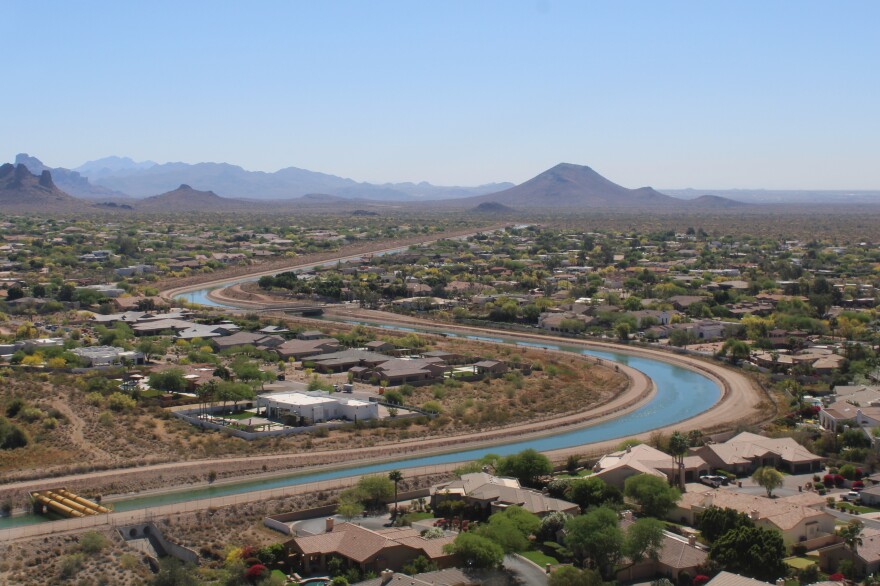
The Central Arizona Project canal stretches 336 miles across Arizona, delivering Colorado River water to Phoenix, Tucson, and surrounding communities. The CAP faces a 50% delivery cut under the new federal plan. (InsideTheValley.com)
What is an acre-foot? Translating Arizona’s cut into Phoenix homes
An acre-foot is about 326,000 gallons — roughly a year’s worth of water for three Phoenix-area homes, according to the Arizona Department of Water Resources. Arizona’s 760,000 acre-foot annual cut is equivalent to the yearly water supply for about 2.28 million Phoenix-area homes. That is the scale of what is being removed from the system.
The Central Arizona Project: why Phoenix’s main canal faces a 50% cut
The Central Arizona Project is a 336-mile canal that carries Colorado River water to Phoenix, Tucson, and surrounding areas. Under the new plan, CAP deliveries will be cut by 50%.
That sounds severe — and it is — but not all CAP users are affected equally. The CAP system runs on a priority ladder. Tribal users sit at the top. Municipal and industrial users like cities come next. Agricultural pool users sit near the bottom.
That priority structure has already hammered Pinal County farmers. CAP agricultural deliveries were cut 65% in 2022, cut to zero in 2023, and stayed at zero in 2024. The 2027 cuts will continue to fall hardest on agricultural users, not on Phoenix households.
Where does Phoenix water actually come from?
Phoenix does not rely solely on the Colorado River. About 40% of the city’s drinking water comes from the CAP. About 58% comes from the Salt and Verde rivers. About 2% comes from groundwater.
The city also holds a substantial backup supply. The Arizona Water Banking Authority has accumulated 4.48 million acre-feet of long-term storage credits through 2025 — with roughly 820,000 acre-feet of storage capacity located in the Phoenix Active Management Area alone. That stored groundwater is a key buffer against CAP cuts.
The 77% scenario Arizona dodged — and why it still matters
Earlier federal proposals would have cut Arizona’s CAP supply by up to 77%. Arizona officials warned that scenario could have devastated the state’s economy. The adopted 50% cut is painful, but it avoids that worst case — for now. The two-year review cycle means deeper cuts are possible at the next round of guidelines if reservoir conditions worsen.
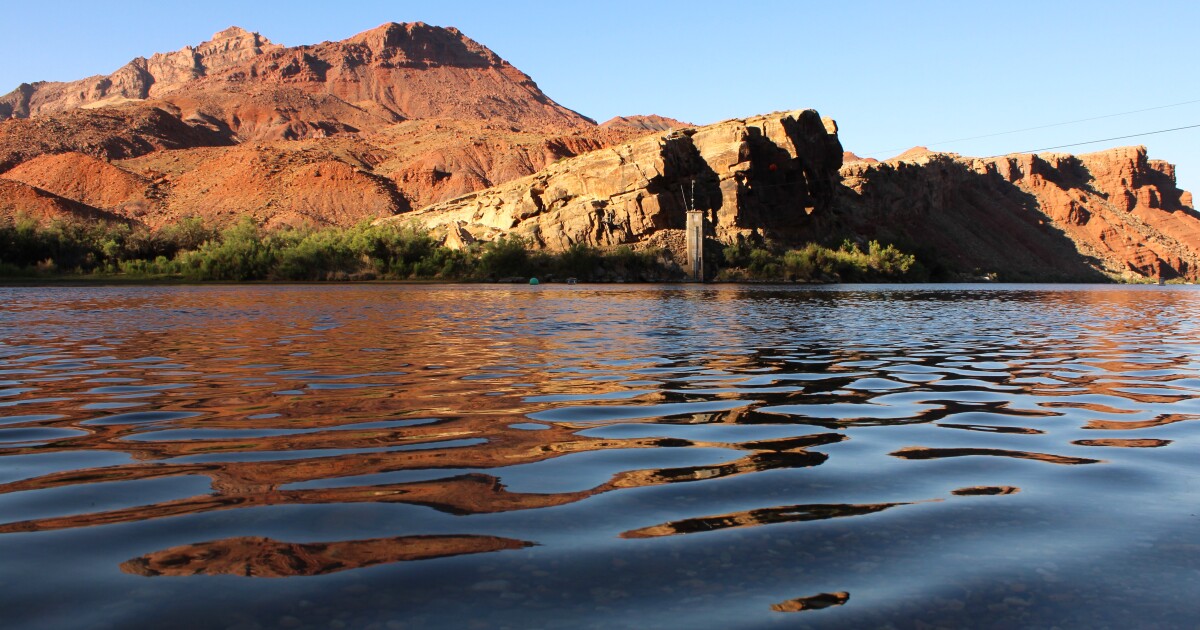
A water monitoring post along the Colorado River corridor. Lake Mead and Lake Powell reached record-low elevations in August 2026, triggering the new federal operating rules. (InsideTheValley.com)
Why Arizona bears 61% of the cuts while Upper Basin states sacrifice nothing mandatory
Arizona, California, and Nevada face mandatory reductions. Colorado, Utah, Wyoming, and New Mexico face only voluntary measures. Arizona alone absorbs 61% of the total mandatory cut.
Mayor Gallego called this arrangement “not fair, basin-wide leadership.” The imbalance is partly structural: the 1922 Colorado River Compact divides the river between Upper and Lower Basin states, and the new operating rules largely preserve that divide when assigning mandatory cuts.
The legislative wild card: Arizona is the only state that must vote on this
Arizona is the only Colorado River basin state whose Legislature must formally approve interstate water agreements. The legal basis is A.R.S. § 45-106, a 36-word provision from the 1980 Groundwater Management Act. It bars any agreement involving a “sovereign right or claim of this state” from taking effect without legislative approval by concurrent resolution.
This same statute required ratification for the 2017 forbearance agreement and other prior Colorado River deals. Governor Hobbs will need to call a special legislative session. No date has been announced. If the Legislature refuses or amends the agreement, Arizona’s position in the broader compact negotiation becomes complicated — and the legal exposure grows.
Phoenix lawyers up: what legal options remain
Phoenix retained two law firms to evaluate legal options: Culp & Kelly, LLP and O’Melveny & Myers LLP. The Phoenix City Council met in executive session to discuss strategy. No lawsuit has been filed. Mayor Gallego said: “We want to understand how we can best influence this process.”
Separately, the State of Arizona hired Sullivan & Cromwell to represent the state in possible Colorado River litigation. Three firms are now involved at the city and state levels. Legal challenges, if they happen, would run parallel to the legislative ratification process.
What comes after 2028 — and the risk of deeper cuts at the next review
The 10-year Decision Framework runs through 2036. Under it, the Bureau of Reclamation sets operating guidelines in two-year intervals. The 2027–2028 guidelines are now final. The next set — covering 2029 and 2030 — will go through the same negotiation and review process.
If Lake Mead and Lake Powell do not recover, the 2029 guidelines could require deeper cuts. The reservoir system was already at its lowest combined storage since before Lake Powell began filling in 1963. The adaptive management cycle means no agreement is permanent. Phoenix and Arizona will be back at this table in under two years.