Dutch Bros has a signed $105 million deal and a $10 million deposit in escrow to buy roughly 47 Phoenix Valley Salad and Go locations. A rival coffee chain, 7 Brew, is fighting that deal in a Texas bankruptcy court. A September 1 hearing will decide whether the deal holds or goes to open auction — and which brand shows up at your neighborhood corner in 2027.
Your corner is already dark, and the coffee fight decides what comes next
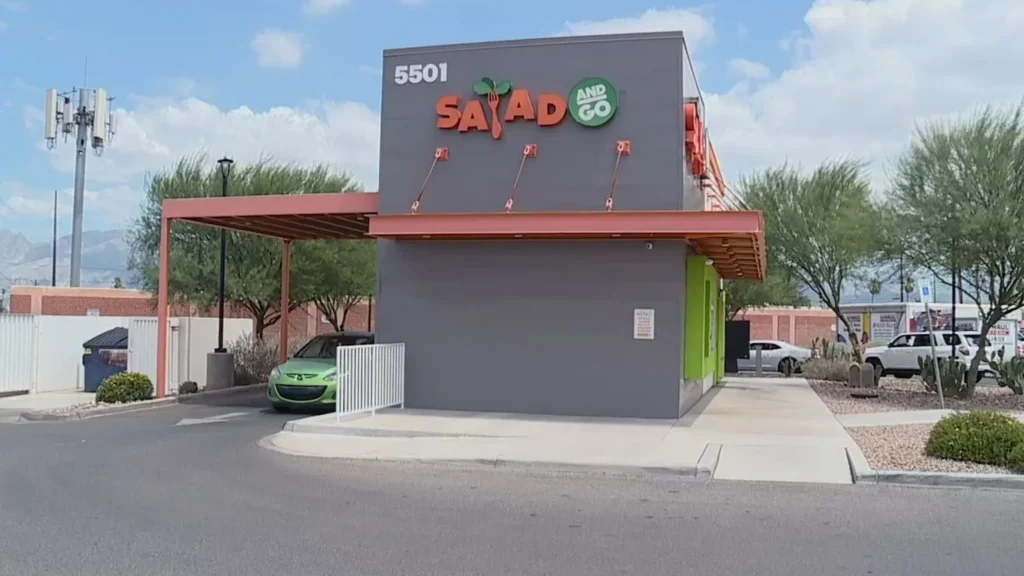
If you drove past a Salad and Go last month and found it shuttered, it is not coming back. Every location closed permanently on August 5, 2026 — the day after the company filed for bankruptcy. There was no wind-down, no clearance sale, no warning for customers or workers.
The good news: those drive-thru pads already work as drive-thru pads. No kitchen hoods to tear out, no dining rooms to gut. The sites are small — under 1,000 square feet — and purpose-built for single-lane service. That is exactly why two of America’s fastest-growing coffee chains want them.
If Dutch Bros wins on September 1, you will likely see those orange canopies come down and Dutch Bros windmill signs go up — sometime in 2027. Dutch Bros already has dozens of Valley locations. This just adds more.
If 7 Brew wins, something different happens. A brand that does not exist anywhere in the Phoenix metro today would open simultaneously across dozens of Valley neighborhoods. That is not a gradual market entry. That is an instant footprint.
Either way, the affordable salads and wraps are gone. Both bidders are coffee and beverage concepts. The quick-service healthy-food gap those locations filled is not being replaced.
What just happened: Salad and Go closes all Valley locations overnight
Salad and Go — operating legally as And Go Concepts, LLC out of Tempe — filed Chapter 11 bankruptcy on August 4, 2026, in the U.S. Bankruptcy Court for the Southern District of Texas, Houston Division. Every remaining location shut the next day.
The company was founded in Gilbert in 2013 by Tony and Roushan Christofellis. At its peak in 2022 it was valued at about $1.1 billion and ran 146 locations. By the time it filed for bankruptcy, it was down to 70 locations. Court filings list assets and liabilities each in the $500 million to $1 billion range.
The founders had already exited. Private equity firm Volt Investment Holdings bought the company outright in 2021 and moved headquarters to Texas. Volt brought in former Wingstop CEO Charlie Morrison to push national growth. Morrison left in 2024. The aggressive expansion strategy did not survive the attempt.
Who is Boersma Bros LLC — and why isn’t Dutch Bros Corp the named buyer?
The entity that signed the $105 million purchase agreement is not Dutch Bros Inc., the publicly traded company on the New York Stock Exchange. It is Boersma Bros, LLC — an Oregon-based holding company tied to Dutch Bros co-founders Travis and Dane Boersma.
Travis and Dane Boersma started Dutch Bros in 1992 from a coffee pushcart in Grants Pass, Oregon, after leaving their family’s dairy farm. Dane died in 2009. Travis now serves as executive chairman of the publicly traded company. Boersma Bros LLC is the family holding vehicle used for Dutch Bros’ acquisition deals, running alongside the public corporate entity.
This is Dutch Bros’ second acquisition in 2026. In January it paid about $20 million for Clutch Coffee Bar, a 20-unit drive-thru chain in North Carolina. That was the company’s first-ever acquisition. The Salad and Go deal is the second, signaling a deliberate strategy: buy existing drive-thru real estate rather than always building from scratch.
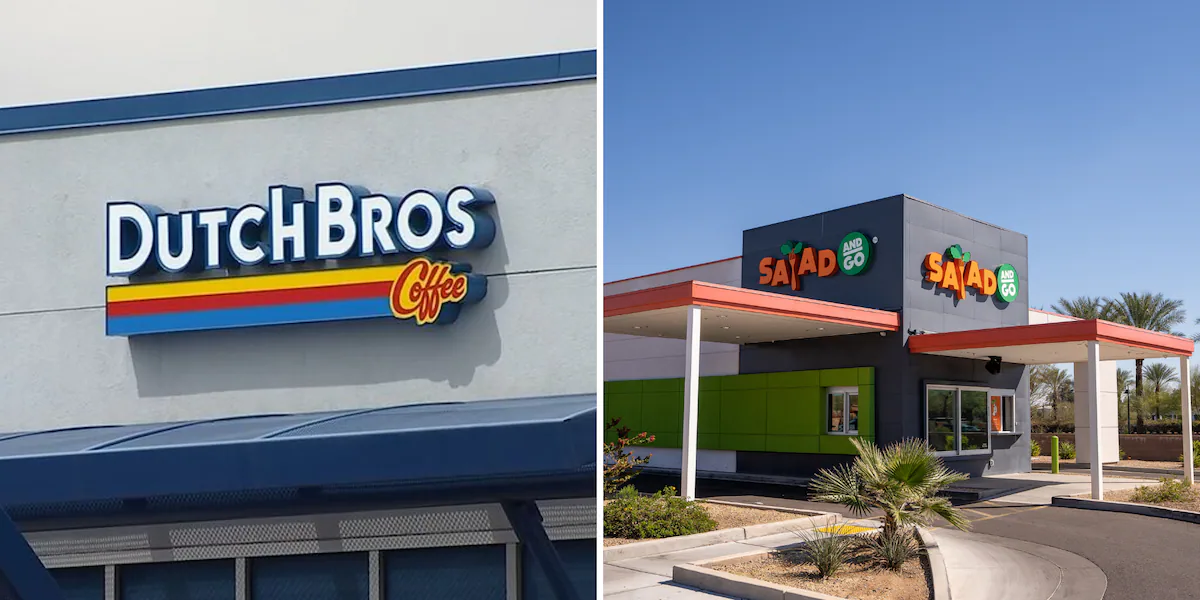
Dutch Bros and Salad and Go have operated in the same Phoenix Valley market. Now Dutch Bros is the named buyer of Salad and Go’s Arizona locations — though through a family holding company, not the public corporation. (InsideTheValley.com)
The $105 million deal — and the $50 add-on that raises eyebrows
Boersma Bros offered $105 million for 51 Salad and Go locations: 47 in Arizona and 4 in Nevada. Court filings confirm the 47 Arizona locations include 7 in Tucson, with the bulk concentrated in the greater Phoenix metro. Dutch Bros put $10 million into escrow to secure the deal.
The same agreement also gives Dutch Bros the option to acquire up to 14 additional sites in Oklahoma and Texas — for $50 total. That contrast is not a typo. Fifty dollars for up to 14 additional locations, alongside $105 million for the core 51. The Oklahoma and Texas sites are lower-value leases the company likely wants at minimal cost to clear competing claims.
Dutch Bros CFO Joshua Guenser said on the August 5 earnings call that the Salad and Go sites are comparable in size to Dutch Bros shops and that conversions would be straightforward. He confirmed converted locations would open in 2027. The overall deal is expected to close in the third quarter of 2026.
Dutch Bros finished Q2 2026 with 1,225 shops, $550.9 million in revenue — up 32.5% year over year — and net income of $51.6 million. The company is pursuing a goal of 2,029 locations by 2029. A deal of this size is within reach.
Enter 7 Brew: the rival with zero Valley locations making a courtroom play
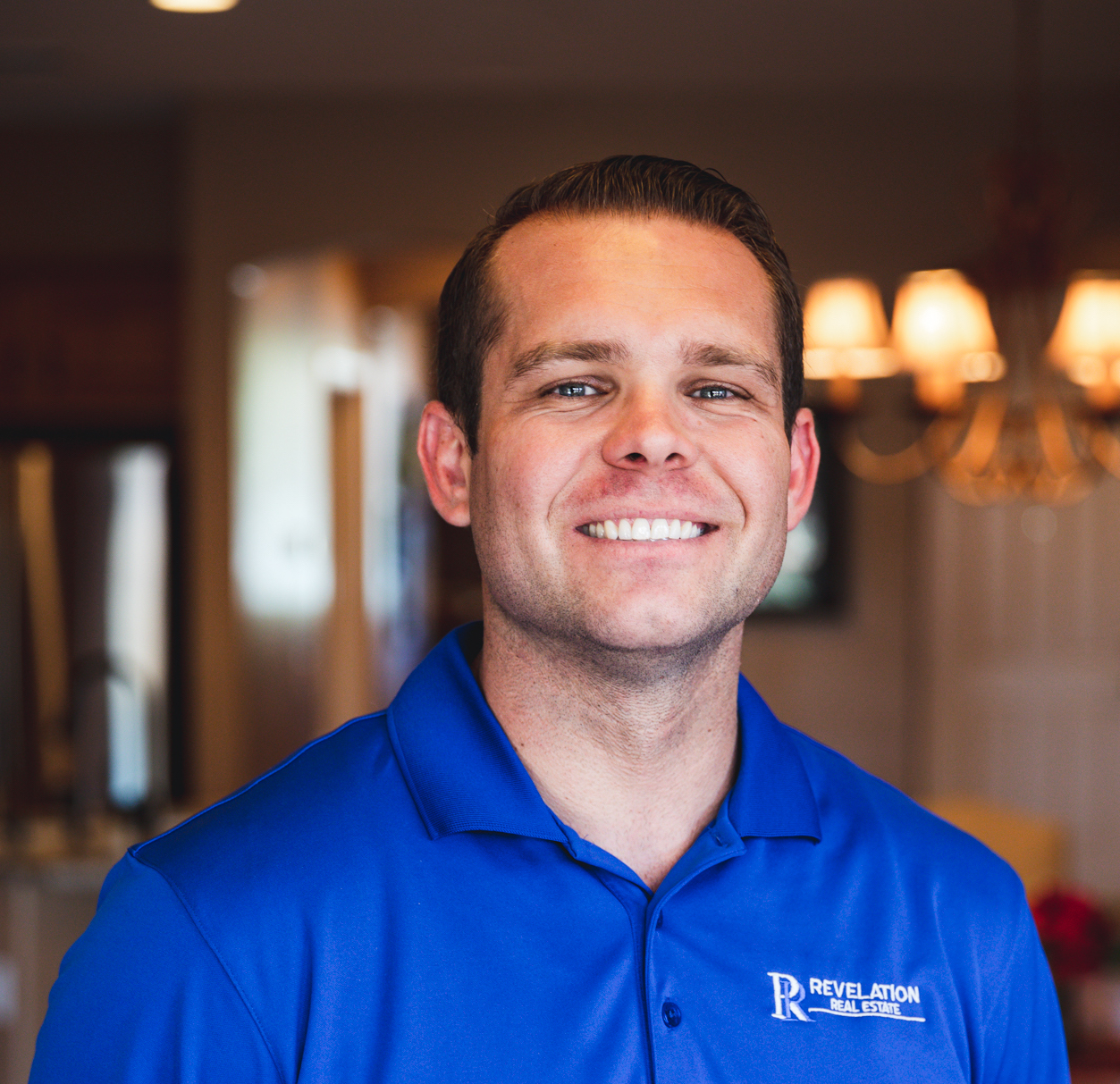
7 Brew Drive-Thru Coffee filed a motion arguing that the Dutch Bros deal was structured to shut out other bidders. Its attorney, Ross Fiedler of Kirkland & Ellis, appeared at an August 7 court hearing to push for a full open auction instead of approving the direct sale.
7 Brew claims it submitted a better offer. The company says a competitive auction would produce more money for Salad and Go’s creditors.
Here is the context that makes this unusual: 7 Brew has no Phoenix Valley locations at all. As of the bankruptcy proceedings, it had only two Arizona locations — both in Tucson. It has no Nevada locations. Winning this auction would not expand 7 Brew’s Valley presence. It would create it, all at once, across dozens of neighborhoods.
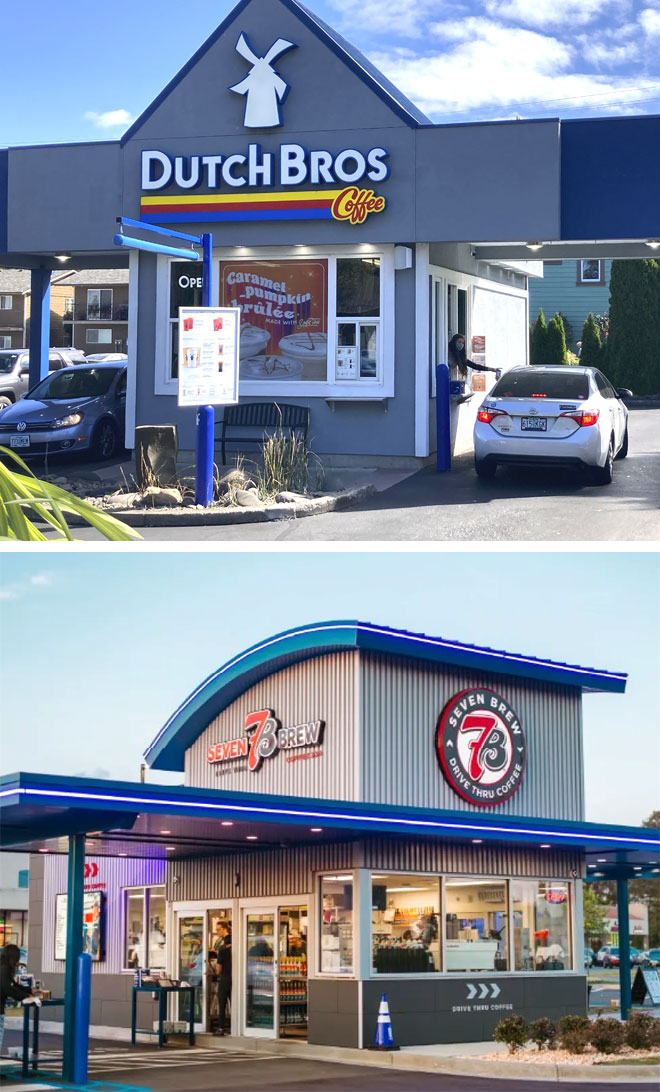
Dutch Bros (top) already operates dozens of Valley locations. 7 Brew (bottom) has no Phoenix presence today — a court win would change that immediately across every Valley neighborhood. (InsideTheValley.com)
Why the process is contested: direct sale versus open auction, in plain terms
In a standard bankruptcy, assets go to auction so creditors get the highest possible price. Dutch Bros’ deal was structured as a direct sale — meaning a single buyer negotiates a price and the court approves it without competitive bidding.
Direct sales are legal under Section 363 of the bankruptcy code. They happen when a buyer moves fast, puts serious money on the table, and the debtor argues that speed protects more value than a longer auction would add. Dutch Bros’ $10 million escrow deposit was part of making that case.
7 Brew’s argument is that a faster, quieter process benefited Dutch Bros at the expense of creditors. The September 1 hearing is where the judge decides who is right.
Every date Valley residents need to watch
Five dates control what happens to those neighborhood pads. All five come from court filings.
- Aug. 28: Deadline for stalking-horse bid letters on the roughly 82 Salad and Go leases not covered by the Dutch Bros deal.
- Sept. 1: The main event. Bankruptcy court hearing on the Dutch Bros direct sale. This is where 7 Brew’s objection is resolved.
- Sept. 17: Stalking-horse bids on the remaining leases are announced.
- Oct. 1: Open auction for remaining Arizona and Nevada leases.
- Oct. 2: Open auction for remaining Texas and Oklahoma leases.
If the judge approves the Dutch Bros deal on September 1, the 47 Valley locations move toward conversion and a 2027 opening. If the judge orders a full auction, October 1 is when competitive bids for those Arizona pads are heard openly in court.
The workers left behind: jobs gone with no warning
Salad and Go had about 1,300 employees when it filed for bankruptcy — 521 full-time and 779 part-time. Of those, 1,163 were hourly workers. All of them lost their jobs when locations closed on August 5. There was no advance notice.
Neither Dutch Bros nor 7 Brew has announced any preferential hiring program for former Salad and Go workers. That gap has not been addressed publicly by either bidder.
The September 1 hearing — and what follows it
The next hard date is September 1 in Houston. That single hearing will determine whether the Dutch Bros deal holds or whether the court orders competitive bidding. If the deal holds, watch for a Q3 2026 close and 2027 openings across Valley neighborhoods. If it falls apart, October 1 is the next decision point for Arizona locations.
Either outcome fills those pads with a drive-thru coffee brand. The question is which one — and when your corner’s new sign goes up.