
Yes, Glendale approved Project Eagle. The Glendale City Council voted 6-1 on October 27. The vote annexed roughly 160 acres west of Litchfield Road and Olive Avenue and rezoned it for a data center and natural gas power campus. Residents pushed back hard. The council sided with developers. Construction is planned to begin in 2027.
If you live near Litchfield and Olive, here is what just changed for you
The land west of Litchfield Road and Olive Avenue was open desert in Maricopa County until last Monday. Now it is inside Glendale city limits, zoned for one of the largest industrial campuses in the West Valley.
Neighbors like April Butler, who lives and works about a mile from the site, went to that meeting and spoke up. She said existing data centers nearby already degrade air quality. She left outvoted. Others in the room shared her frustration. They worried about 18 gas turbines running around the clock. They worried about water. They worried about what this does to a neighborhood that is still largely residential and rural in character.
What the city told them: the project will bring an estimated $190 million in tax revenue to Glendale over the next decade. Councilmember Lauren Tolmachoff argued that data centers are critical to keeping up with demand driven by artificial intelligence. The jobs-and-taxes argument won the room, six votes to one.
If you own a home nearby, the shift to heavy industrial zoning on a 160-acre parcel matters. It affects how buyers and appraisers think about the surrounding area. The questions residents are asking — about air, water, noise, and property values — are real. The rest of this article answers them with what is actually known.
What is Project Eagle — and why are there two project names?
Project Eagle is the data center. Project Baccara is the natural gas power plant built to run it. They share the same 160-acre site, but they are separate developments with separate developers.
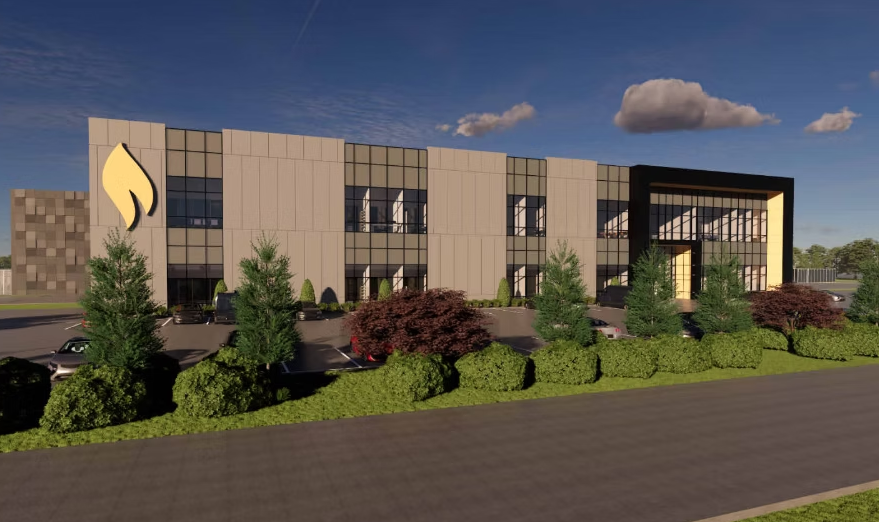
Michigan-based Takanock is developing the data center under the Project Eagle name. Montera Infrastructure is developing the natural gas power plant, called Project Baccara. The plan calls for three one-story data center buildings, each about 330,000 square feet, for a combined total of just over one million square feet. The power plant will have 18 turbines. An APS substation is also part of the plan.

Inside a modern data center server room. Project Eagle would house more than 1 million square feet of this kind of infrastructure across three buildings in Glendale. (Stock photo)
The 6-1 vote: what the Glendale City Council approved on October 27
The council approved both the annexation and the rezoning of the roughly 160-acre site. The vote was 6-1. The Glendale Planning Commission had recommended approval on September 24 by a 4-2 margin. That recommendation came with 11 stipulations attached.
The October 27 meeting was contentious. Residents raised concerns about air quality, water use, and noise. Others spoke in favor, citing jobs and tax revenue. The council sided with the project.
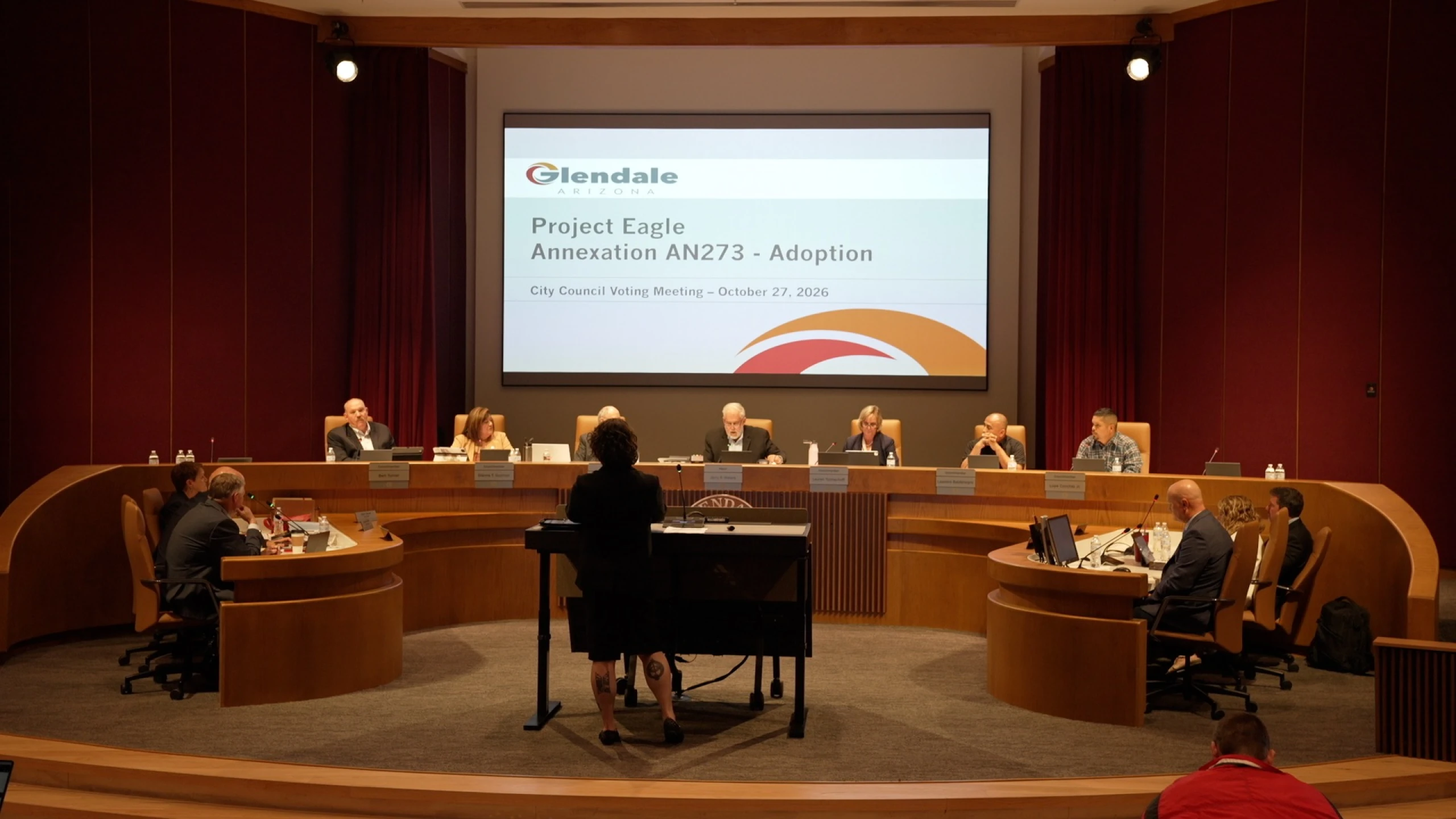
The Glendale City Council chamber during the October 27 vote on Project Eagle Annexation AN273. The measure passed 6-1. (InsideTheValley)
Who is actually building this? Meet Takanock and Montera Infrastructure
Takanock is a Michigan-based developer responsible for the three data center buildings. Montera Infrastructure is building the on-site natural gas power plant. Each entity is distinct — they are not the same company building one unified project. That matters because the concerns residents raise about emissions and the concerns about data infrastructure involve two different operators with two different regulatory footprints.
$10 billion or $36 billion? Understanding the investment figures
Both numbers are real. They measure different things.
At the September 24 Planning Commission hearing, the developer’s attorney said the project represents a more than $10 billion investment. The attorney put build-out at about five years. A later report put the overall project figure at $36 billion. The $10 billion figure appears to reflect a specific phase or component. The $36 billion figure reflects the broader full build-out picture. Neither number has been publicly reconciled by the developer in detail.
How the site got here: from county land in Waddell to the city of Glendale
The site was previously unincorporated Maricopa County land in the Waddell area. It sits west of Litchfield Road and Olive Avenue. The October 27 vote formally annexed it into Glendale city limits. The rezoning allows the data center and power plant to proceed.
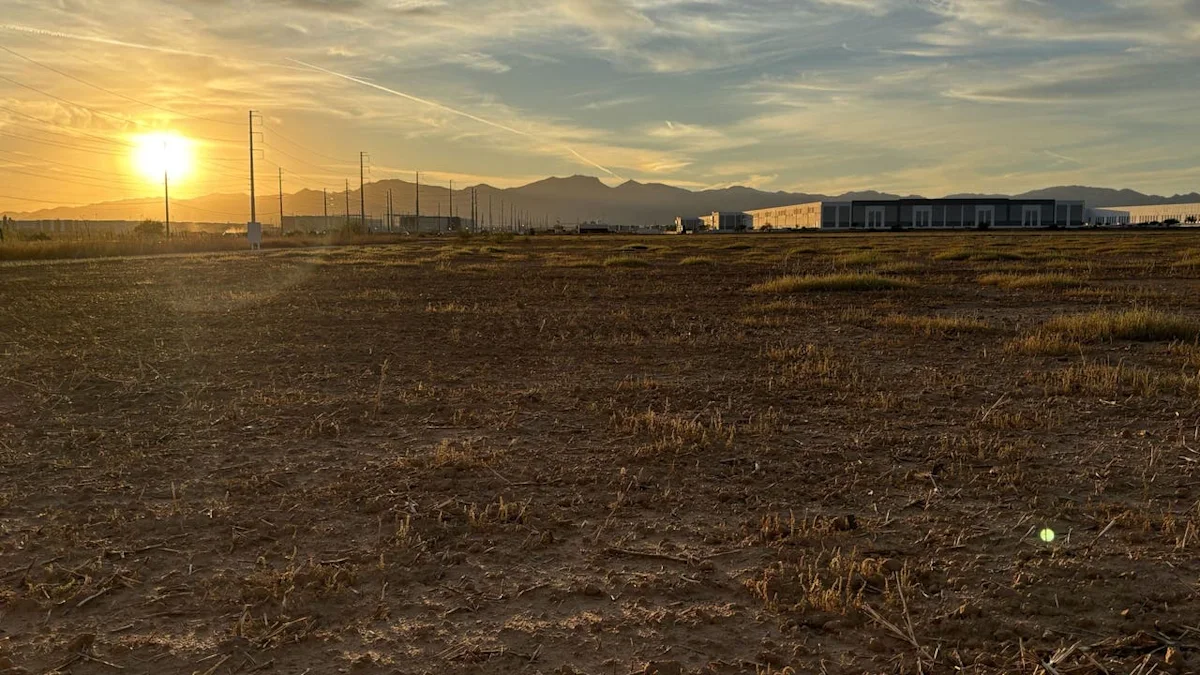
Vacant desert land in the Waddell area west of Litchfield Road and Olive Avenue, the location annexed for Project Eagle. (InsideTheValley)
Luke Air Force Base, pilot visibility, and the June 30 compatibility letter
The site sits near Luke Air Force Base. In a June 30 letter, the base said the development is compatible — but only if specific conditions are met. Those conditions include requirements addressing pilot visibility. This letter is part of the Planning Commission record. It is one reason the commission attached stipulations to its recommendation.
What residents like April Butler said — and why they feel dismissed
April Butler lives and works about a mile from the site. She told the council that existing data centers nearby already degrade air quality. She raised concerns about water use. She was on the losing side of a 6-1 vote.
Opponents felt the process moved fast. They felt financial arguments drowned out health concerns. The people who will live closest to 18 gas turbines had the least say in the outcome.
What the developers say about air quality and water
Takanock and Montera say the project uses EPA-approved emissions technology. On water, their argument is specific: the technology does not draw on the City of Glendale’s municipal water supply. Water service for the project comes from EPCOR, not Glendale. That distinction matters for residents worried about the city’s own water system. It does not address broader regional water concerns. Arizona Attorney General Kris Mayes has raised those statewide.
$190 million in tax revenue: what Glendale expects over the next decade
Glendale expects the project to generate about $190 million in tax revenue over the next ten years. Some media reports have cited $150 million; the $190 million figure is the higher verified number. Takanock is planning to start work on the site in 2027.
Arizona AG Kris Mayes called out this project by name — what happens now?
Arizona Attorney General Kris Mayes has called for a statewide pause on new data center approvals. Her stated reasons: a shrinking water supply and rising energy costs. She referenced this Glendale project specifically, citing its fiscal impact of $14.4 million annually.
The AG’s call is not a veto. Local zoning authority rests with the city, and Glendale has already voted. But the AG’s intervention signals that Project Eagle may face state-level scrutiny even after the council approval. See our coverage of the Arizona AG Mayes data center pause and its Valley impact. The broader statewide backlash is covered in our Arizona data center backlash guide.
Construction starts in 2027 — here is what comes before that
Takanock plans to break ground in 2027. The developer’s attorney told the Planning Commission the build-out takes about five years once underway. The 11 stipulations attached to the Planning Commission’s recommendation and the Luke AFB compatibility conditions must be addressed before work begins. What those stipulations require in detail has not been publicly enumerated in available sources. If you live near the site and want to track the file, watch for permit activity tied to the Project Eagle annexation through Glendale Development Services.