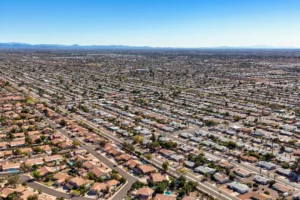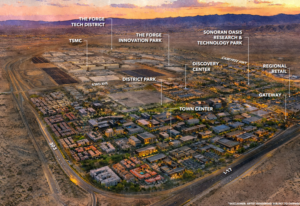

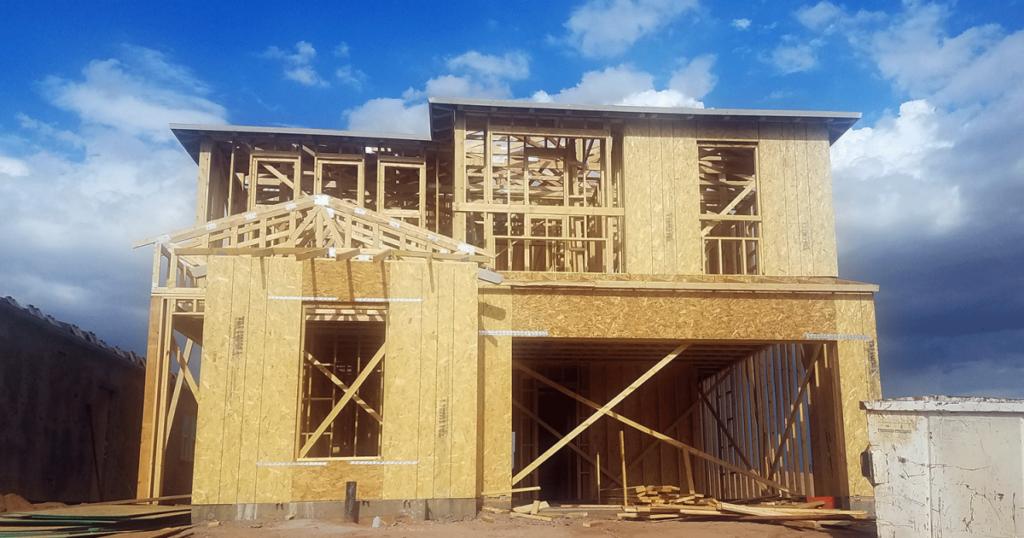
Phoenix is the number one city in the country for build-to-rent homes. Between roughly 33,000 and 72,000 single-family houses across the Valley are owned by institutional investors. A new federal law now blocks investors from buying more — but every home they already own stays theirs, permanently.
Your path to homeownership runs through a market Wall Street designed
If you have been trying to buy a starter home in the Valley and losing, you are not imagining it. Wall Street did not stumble into Phoenix by accident. Investors chose this market on purpose, and the rules here helped them win.
The consequences land on you in two ways. First, tens of thousands of homes that might have been sold to families are locked into rental portfolios indefinitely. Second, the new build-to-rent communities going up across the West Valley give you a house with a yard — but no equity and no path to ownership. You pay rent forever, and someone else builds wealth.
For renters already in institutional-owned homes, there is a documented junk-fee problem. The FTC won a $48 million settlement against Invitation Homes in 2024 over property neglect and hidden charges. Arizona’s eviction timeline — the entire process in under a month — was specifically cited as a draw for Wall Street capital. If your landlord is a large investor, that clock moves fast.
For buyers, the numbers are brutal. HUD’s 2026 Fair Market Rent for a two-bedroom in Maricopa County is $1,839 a month. To keep rent at 30 percent of income, you need to earn $74,000 a year — or about $35.58 an hour. And median home prices across the West Valley run well above $380,000.
Phoenix is Wall Street’s original housing lab
The American Economic Liberties Project released its Phoenix Case Study: Single-Family Rentals, Build-to-Rent, and Undoing the Corporate Capture of Housing in September 2026. Authors Laurel Kilgour and Allie Gross trace the experiment to the aftermath of the 2008 crash.
Invitation Homes began buying foreclosed homes in Phoenix in 2012. By 2013, it had launched the first-ever securitization backed entirely by single-family rental income — using Phoenix properties as the collateral. Wall Street had found a new asset class, and Phoenix was the proof of concept.
When Zillow shut down its Phoenix iBuying program, it sold several thousand homes directly to large rental operators including Invitation Homes, Pretium Partners, and American Homes for Rent, according to AELP co-author Laurel Kilgour.
Today Phoenix ranks second only to Atlanta in total institutional investor-owned homes. The AELP report estimates between 33,000 and 72,000 such homes in the Valley. A separate GAO report (GAO-26-108675, published March 2026) found Phoenix added at least 16,000 investor-owned homes between 2018 and 2024 — a roughly 177 percent increase. Urban Institute research using 2022 property records counted 33,406 homes held by “mega” operators in the Phoenix-Mesa-Chandler metro. The three figures use different methodologies and different years, so they do not contradict each other — they just measure different slices of the same problem.
Why Phoenix? The four things that made the Valley irresistible
The AELP report names four specific draws. Arizona’s property tax rate is very low, which cuts carrying costs for large portfolios. The state has no rent control. Population and job growth create reliable rental demand. And Arizona’s eviction process can be completed in under a month — a feature investors treated as a business advantage.
Supply consolidation made it worse. The top ten national homebuilders now control 70 percent of the Phoenix market, up from 44 percent two decades ago. Nationally, the rate of home construction is 20 percent lower than it was in the 1990s. The AELP report traces that shortage to a post-World War II policy trajectory and a 1970s crash that wiped out many smaller local builders.
Where build-to-rent communities are opening right now in the West Valley
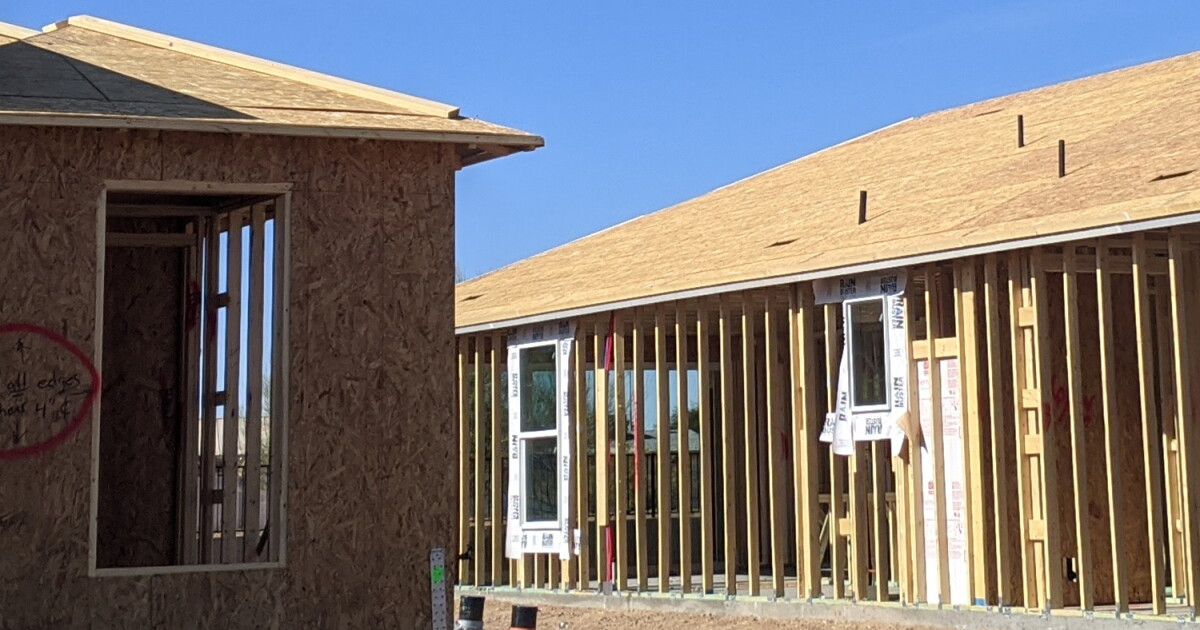
New single-family homes under construction in Phoenix, typical of the framing stage seen at build-to-rent developments opening across the West Valley in mid-2026. (InsideTheValley.com)
Build-to-rent means homes designed from the ground up never to be sold. Two communities opened in Surprise in mid-2026.
NexMetro Communities opened Avilla Foothills at 12350 N. Cotton Lane in Surprise. The community has 108 units on a 9.3-acre site near Loop 303. Mark-Taylor Residential opened Estia at Zanjero Trails at Perryville and Cactus roads, also in Surprise.
These communities offer single-family layouts, private yards, and no shared hallways. They do not offer the one thing that traditional homeownership provides: a chance to build equity over time.
What the Road to Housing Act actually does — and does not — do for Valley residents
The 21st Century ROAD to Housing Act became law on July 11, 2026. President Trump neither signed nor vetoed it within the required ten-day window. The acquisition ban takes effect January 7, 2027.
Here is what the law does: it blocks large institutional investors — those controlling 350 or more single-family homes — from buying more homes in bulk after that date.
Here is what it does not do. It contains no forced-divestiture requirement. Every home an institutional investor owned on or before July 11, 2026, is fully grandfathered. The earlier Senate drafts included a seven-year forced-sale framework. That provision was removed before the bill passed. The existing Valley portfolio of 33,000 to 72,000 investor-owned homes stays exactly as it is.
There is one more gap. The law explicitly carves out build-to-rent as a permitted activity. Large institutional investors may still purchase, construct, and hold newly built single-family homes under build-to-rent programs. The communities opening in Surprise are legal under the new law.
Arizona’s Own Something and Be Happy Act: what happened to it
Arizona HB2325 — the “Own Something and Be Happy Act” — would have capped institutional investor ownership at no more than 50 single-family homes statewide. The bill defined “institutional investor” as any entity owning or managing ten or more homes in Arizona.
It was introduced January 21, 2026. It died in the House Commerce Committee on June 14, 2026, without ever receiving a floor vote. Arizona has no cap on investor ownership today.
The City of Phoenix’s response, and the affordability math behind it

The Phoenix downtown skyline at dusk. The City of Phoenix, under Mayor Kate Gallego, set a goal of creating or preserving 50,000 homes by 2030 through the Housing Phoenix Plan. (InsideTheValley.com)
Mayor Kate Gallego’s Housing Phoenix Plan set a goal of creating or preserving 50,000 homes by 2030. That goal exists against a backdrop where HUD’s 2026 Fair Market Rent for a two-bedroom in Maricopa County is $1,839 a month. Affording that without spending more than 30 percent of income requires earning $74,000 a year, or $35.58 an hour.
Most working families in the Valley earn less. Most first-time buyers cannot compete in a market where the top ten builders control 70 percent of new supply and tens of thousands of existing homes are off the for-sale market permanently.
The January 2027 deadline, and what stays the same after it
The Road to Housing Act’s acquisition ban starts January 7, 2027. That is the clearest near-term milestone. After that date, large institutional investors cannot buy additional single-family homes in bulk — with the build-to-rent exception still in place.
What does not change: the 33,000 to 72,000 homes already in Valley investor portfolios stay there. Arizona has no state law capping ownership. HB2325 is dead. There is no forced-divestiture mechanism at any level of government. If you are a Valley renter or buyer watching this space, the supply picture in early 2027 looks almost identical to today’s — just with a new rule about future purchases that leaves the existing inventory untouched.