
Scottsdale’s City Council voted unanimously on June 23, 2026 to adopt Ordinance No. 4719. It bans short-term rentals from operating as event centers. The rule took effect July 23, 2026. If you live near a party-house rental, you now have a clearer legal tool behind every noise complaint. If you own an STR, commercial-event income is off the table.
Your neighborhood just got a new enforcement tool — here’s what changes
For years, Scottsdale neighbors faced a frustrating problem. Police could respond to a loud party. But the city code gave officers no clean legal handle on a home run as a de-facto event venue. Old Town, South Scottsdale, and Arcadia-adjacent streets felt it most.
That gap is closed now. The Scottsdale Police Department can cite a property for operating as an event center. A complaint about a wedding or a corporate party next door maps directly onto a named violation in the city’s STR complaint portal.
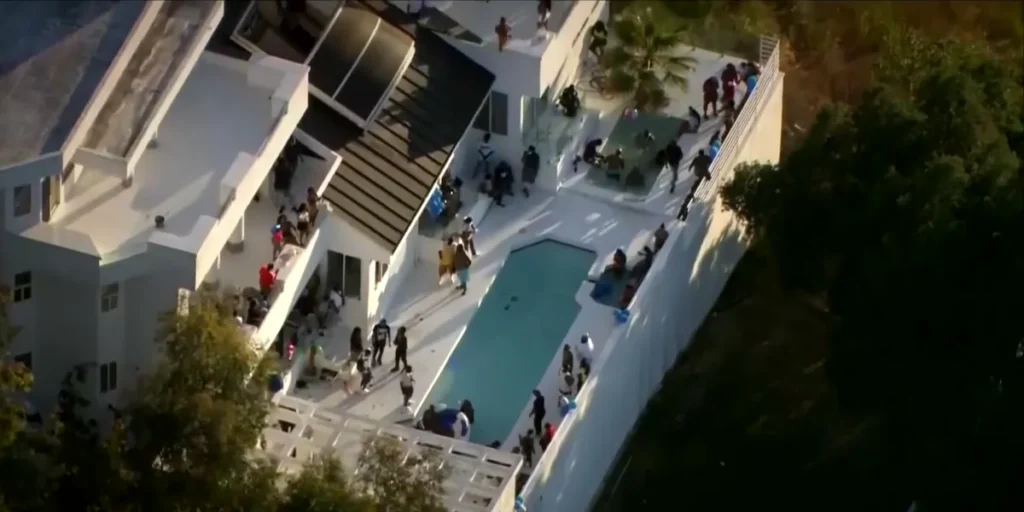
The stakes were real before the ordinance passed. In May 2026 alone, Scottsdale police answered 48 nuisance calls at short-term rentals. A shooting at a rental party in the Maya complex led to arrests on aggravated assault and weapons charges. That incident pushed the Council to act. Mayor Lisa Borowsky told council members the city had reached its limit.
For STR hosts, the financial exposure is immediate. Running a property as a venue now puts your city license at risk. The penalty ladder reaches license suspension.
What Scottsdale Ordinance 4719 actually does — and why it passed when it did
A.R.S. §9-500.39 already banned STRs from operating as event centers or banquet spaces. The problem was simple: the statute never defined “event center.” Without a definition in city code, enforcement was nearly impossible.
Ordinance 4719 fixes that. It inserts a formal definition of “event center” into S.R.C. §18-2. That is the definitions chapter of Scottsdale’s city code. Enforcement then flows through S.R.C. §18-171. That section prohibits STRs from non-residential use. The two sections play separate roles. Section 18-2 supplies the definition. Section 18-171 is the enforcement hook.
The Council adopted the ordinance on June 23, 2026. The July 23 effective date was set deliberately. It landed just before one of the busiest vacation-rental weekends of the year. City Manager Greg Caton said the definition gives Scottsdale tools for “protecting residents’ quality of life while ensuring short-term rentals operate as intended under state law.”
Scottsdale’s STR Resource Center at str.scottsdaleaz.gov already listed commercial uses — such as “corporate events, large parties, or weddings” — as an explicit violation category. Ordinance 4719 anchors that practice in the formal code.
The enforcement stack and the one-hour rule
Every Scottsdale STR host already faces a compliance floor under Ordinance 4566. That means:
- An annual city license at $250 per year
- $500,000 in liability insurance
- A 24/7 emergency contact who can appear on-site within one hour of a police call
- Neighbor notification within 30 days of license issuance
The one-hour appearance rule is where remote ownership gets complicated. If your emergency contact is in another city, a police call at 2 a.m. can trigger a violation. No one showing up is not a gray area. It is a chargeable failure.
Scottsdale’s code enforcement team joined the Police Department on June 1, 2025. The city’s 19-member code team gained direct access to police resources and command structure. Police Commander Jeromie O’Meara said officers are now “better equipped than ever to respond to short-term rental-related issues quickly and effectively.”
The violation ladder: fines, TPT suspension, and the permanent-ban path
Arizona SB 1168, signed in 2022, set the civil-penalty structure for every STR violation statewide:
- First verified violation: up to $500 or one night’s rent
- Second violation: up to $1,000 or two nights’ rent
- Third violation and beyond: up to $3,500 or three nights’ rent, within a 12-month lookback window
A third violation within 12 months can suspend the property’s transaction privilege tax (TPT) license. Without a TPT license, legal STR operation ends. Enough violations can lead to a permanent ban on STR use for that property.
That 12-month window matters right now because of what did not happen in the Arizona Legislature.
What happened to HB 2429 — and which rules still govern
Rep. Selina Bliss (R-Prescott) introduced Arizona HB 2429. It passed the Arizona House 37–14 on March 16, 2026. The bill would have extended the violation lookback from 12 months to 24 months. It would also have added a single-violation suspension trigger for serious health-and-safety violations and set a statewide occupancy standard.
The bill never got a Senate committee hearing. The Arizona Legislature adjourned sine die on June 13, 2026. HB 2429 is dead. It has no effective date and no operative effect on Scottsdale’s rules.
Scottsdale’s existing 12-month lookback under Ordinance 4566 still governs TPT suspension proceedings. A host who thinks they can run out the clock on violations has 12 months to do it — not 24.
Buying a Scottsdale luxury property with STR income? Reprice it now
Some luxury properties in Scottsdale were underwritten with event-venue income built into the return model. Weddings, corporate retreats, and large buyout parties command rates that standard vacation rentals do not.
Ordinance 4719 eliminates that income stream. If a property’s pro forma includes event revenue, that revenue is no longer legal. Police are actively enforcing the new rules. The STR Resource Center complaint workflow already names commercial events as a violation category.
Scottsdale collected roughly $15 million in STR sales tax in 2025. About $8 million came in through May 2026 from approximately 3,000 STRs citywide. The city has a strong financial interest in keeping compliant STRs operating. That same interest means it will pursue violators aggressively.
From January through March 2026, Scottsdale filed 185 charges. Nearly 88 percent were tied to non-compliance with rental rules and licensing. Citations for unlicensed operation rose 26 percent year over year. Total calls for service fell 29 percent in the same period. Stricter enforcement is concentrating pressure on operators who are not following the rules.
For more on how investor-owned properties are reshaping the Phoenix Valley, see our guide to build-to-rent and investor homes in Phoenix.
Why Scottsdale can tighten STR rules but cannot ban them outright
Arizona state law, rooted in A.R.S. §9-500.39, bars cities from prohibiting short-term rentals entirely. Scottsdale cannot ban Airbnb. What it can do is use every tool the legislature grants. That means licensing, insurance mandates, emergency-contact rules, and nuisance penalties. It also means pushing for more authority at the state level.
HB 2429 failing in the Senate shows the legislature has not expanded that authority yet. Until it does, Scottsdale works at the edge of what state law permits. It defines terms the state left vague. It enforces penalties the state authorized. And it has built an enforcement infrastructure that can act on complaints fast.
Scottsdale STR compliance checklist for 2026
If you operate an STR in Scottsdale right now, this is your minimum floor:
- City license: $250/year; no license means a $1,000/month penalty
- Liability insurance: $500,000 minimum
- Emergency contact: reachable 24/7, on-site within one hour of a police call
- Neighbor notice: within 30 days of license issuance
- No event-center use: weddings, corporate events, large parties, and similar gatherings are prohibited under S.R.C. §18-2 and enforced through §18-171
- TPT registration: required for all short-term rental income
If you are buying a Scottsdale property with STR intent, verify the license history and the violation record. Check whether event-venue income is baked into the listing price — then reprice accordingly.
The next enforcement signal to watch
The July 23 effective date was not accidental. City leadership set it to land at peak summer rental season. That was a deliberate signal to the market. The Scottsdale Short-Term Rental Working Group has operated since April 2021. It now uses AI tools and mapping technology through the STR Resource Center. It is not slowing down.
No further legislative action is scheduled. HB 2429 is gone for this session. What governs now is Ordinance 4719, the SB 1168 penalty ladder, and a police department with code enforcement embedded inside it. If a successor bill reaches the Arizona Senate next session, it would likely revisit the 24-month lookback and occupancy standards. That is a 2027 story. For now, the rules described here are the rules on the ground.