

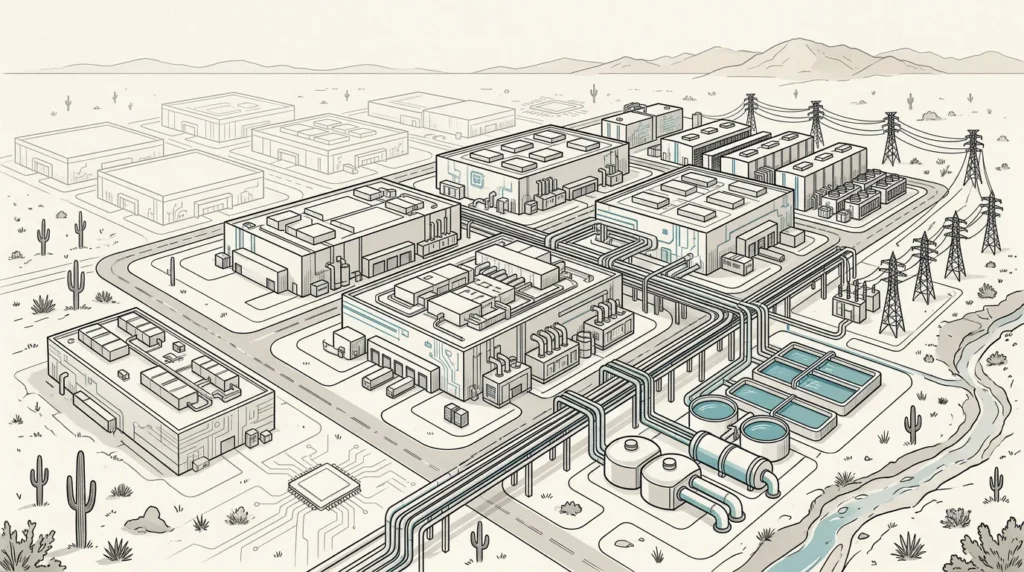
TSMC’s one operating fab in north Phoenix uses 4.75 million gallons of water every day. When all three planned fabs are running, the gross demand hits 16.4 million gallons daily. But Phoenix only needs to supply about 4.2 million of those gallons, because TSMC recycles the rest. That math matters right now. Phoenix is already on a Stage 1 Water Alert, and a Stage 2 Warning — with real billing consequences — could follow before year’s end.
Your tap, your yard, your bill — here is what is actually at risk
If you own or are shopping in the 85085 or 85086 zip codes, you are probably asking a simple question: does a massive chip factory competing for the same water supply mean a higher bill or a dry yard?
The honest answer: not directly because of TSMC — but the backdrop is worrying. Phoenix is on Stage 1 Water Alert right now. City code says Stage 1 triggers public education and enforcement of existing water rules. Outdoor watering restrictions stay voluntary. No mandatory cutbacks apply to residents yet.
If conditions worsen, the Water Services Director can declare a Stage 2 Water Warning. Stage 2 makes mandatory watering-day limits and drought surcharges enforceable. Surcharge revenue goes into a special fund for enforcement and new supply projects.
Federal guidelines post-2026 could push Phoenix into Stage 2 territory before December. The Colorado River system sat at about 33% of capacity as of July 2026. Combined Lake Powell and Lake Mead storage was the lowest since May 1957. Arizona’s Central Arizona Project deliveries had already been cut by 512,000 acre-feet. TSMC adds a large new claim on a system already under stress.
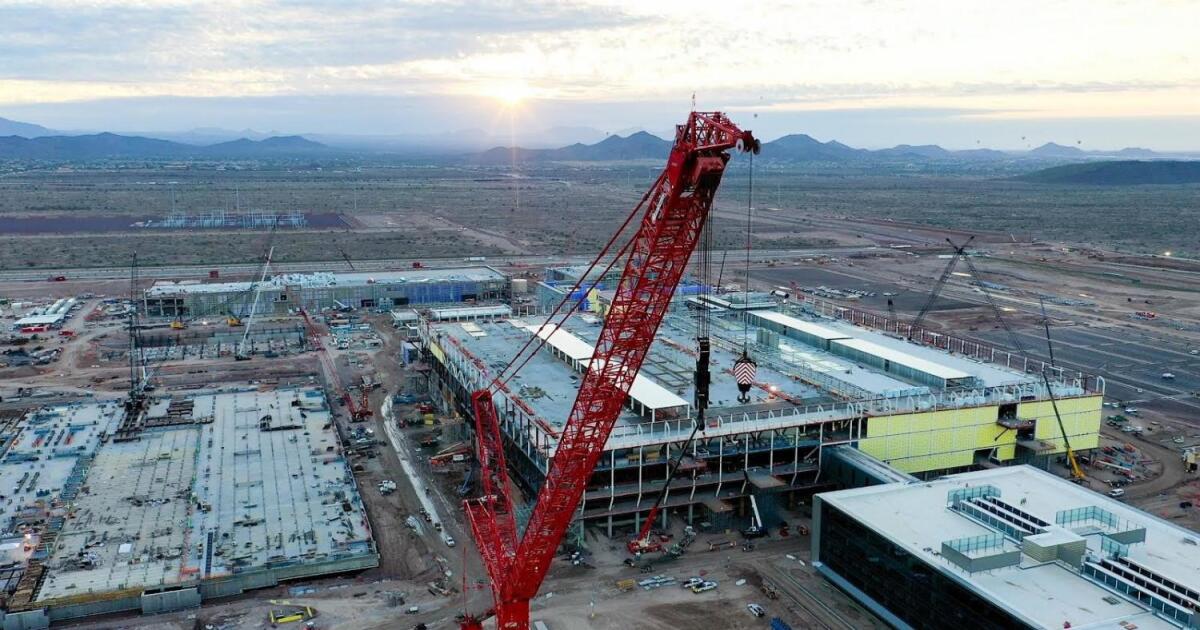
TSMC’s north Phoenix campus under active construction. The first fab is operational; two more are planned for this site before the larger 902-acre southern campus takes shape. (File: tsmc_site.jpg)
By the numbers: what TSMC actually draws — and what Phoenix supplies
Chipmaking needs ultrapure water. Tiny particles that are harmless in a drinking glass can ruin a wafer worth thousands of dollars. So fabs rinse again and again — using enormous volumes with little room to cut on quality.
Here is where the numbers stand today:
- One fab running: 4.75 million gallons per day from the city supply.
- Three fabs running: 16.4 million gallons per day gross demand.
- Net city supply required for all three: about 4.2 million gallons per day.
- Current recycling rate: 65%, equal to about 3.5 million gallons per day — the daily use of roughly 12,000 homes.
- Evaporative loss: about 15% of intake. It disappears through cooling towers and cannot be recovered.
That 4.2 million gallon net figure is what Phoenix actually has to find. It is far smaller than the gross headline — but it is not small in a drought year.
The water recycling stack: from sixty-five percent today to near-zero by 2028
TSMC broke ground on a 15-acre Industrial Water Reclamation Plant at its Phoenix campus. The goal is “Near Zero Liquid Discharge” — a target of 90% or higher recycling. Engineers expect the plant to hit 85% when it first opens, then climb from there.
The deadline is contractual, not aspirational. Under TSMC’s agreement with the City of Phoenix, the reclamation plant must be operational by June 2028. As each new fab comes online, TSMC must add more reclamation capacity. Miss the deadline and the company is in breach of its city contract.
If the plant hits its 90%-plus target, net water demand on Phoenix drops sharply. That is the scenario city officials are counting on.
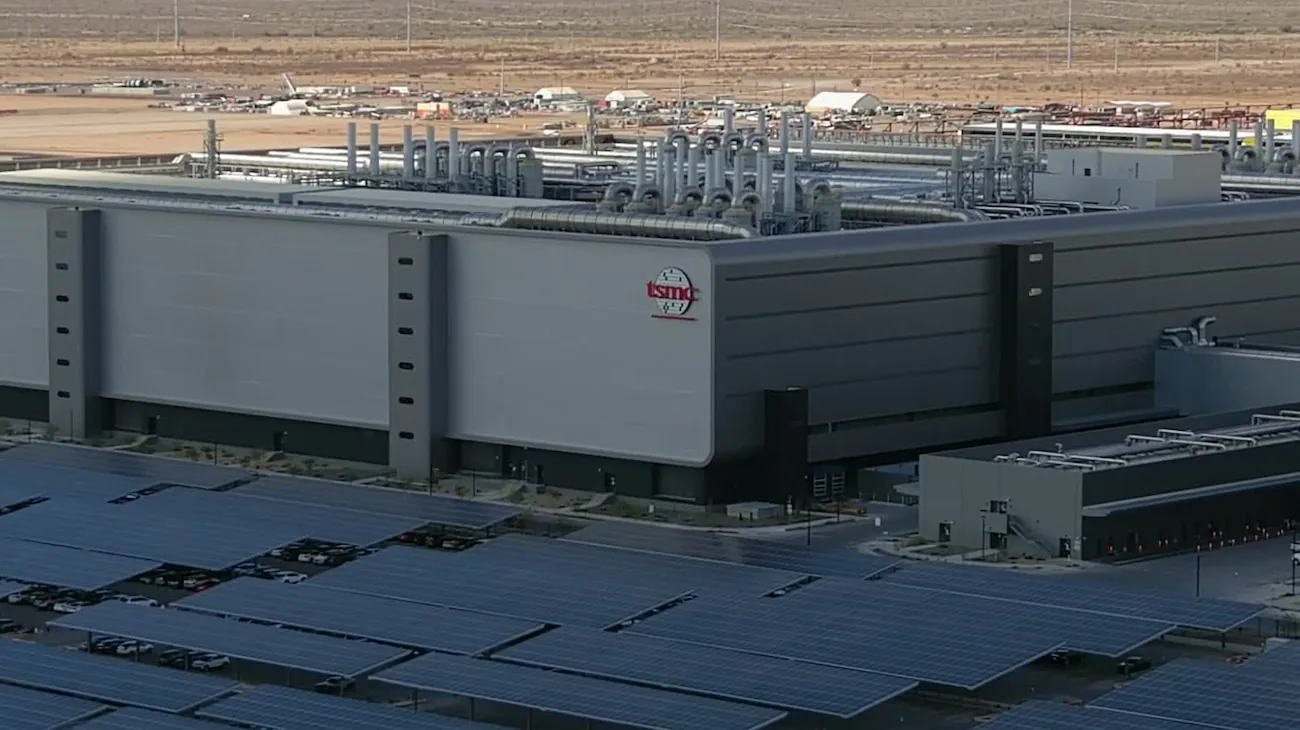
TSMC’s operational north Phoenix fab, showing the solar canopy over parking and rooftop pipe infrastructure that supports its water and process systems. (File photo)
What the city built for TSMC: sewer lines, lift stations, and a binding deadline
Phoenix did not just promise water — it rebuilt the pipes. The city approved new sewer lines and upgrades to two lift stations. That work raised maximum wastewater flow from TSMC’s campus from about 333,000 gallons per hour to 755,000 gallons per hour. The upgraded infrastructure is sized for up to three fabs at the original site.
The June 2028 IRWP deadline sits inside TSMC’s contract. Each new fab triggers an obligation to expand reclamation capacity. Phoenix holds that lever. It is the city’s clearest enforcement tool if TSMC falls behind.
A ten-fab campus and Phoenix’s long-term water budget
The three-fab campus was already a major commitment. The longer-term picture is much bigger. TSMC’s total Arizona plan calls for ten fabrication plants, two advanced packaging facilities, and an R&D center. Total investment: $265 billion. The Arizona Commerce Authority and TSMC both call it the largest foreign direct investment in a greenfield project in U.S. history.
The new 902-acre campus was purchased for $197.25 million at a State Land auction on January 7, 2026. TSMC Arizona President Rose Castanares placed the winning bid. The parcel sits near Loop 303 and Interstate 17, south of the original site. Fabs four through ten would be built there.
Water contracts for those fabs do not yet exist in public form. Phoenix’s Assured Water Supply designation — a 100-year legal guarantee of sufficient supply — requires the city to account for every new industrial commitment. Each additional fab will need its own water agreement and reclamation obligation before construction begins.
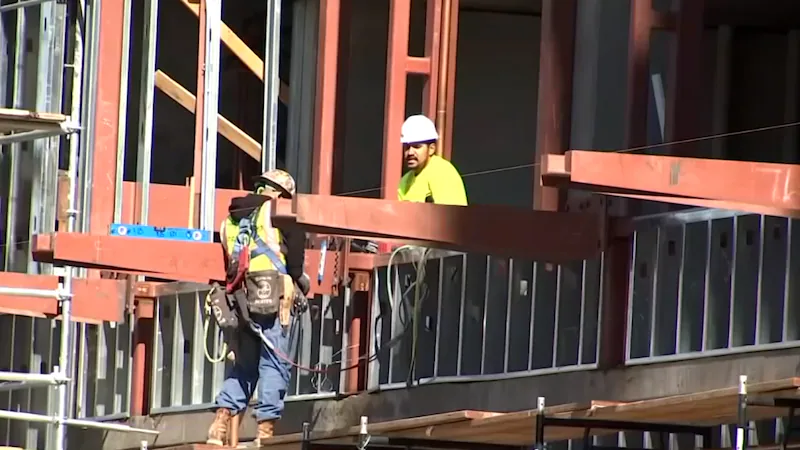
Construction workers on a steel-frame structure at a Phoenix-area semiconductor site. TSMC’s three-fab expansion is projected to require more than 20,000 accumulated unique construction jobs. (File photo)
The economic equation: jobs, taxes, and a decision made without a public vote
Phoenix officials did not hold a public vote before committing water to TSMC. A Greater Phoenix Economic Council analysis of the first three fabs projects $1.4 billion in total tax revenue over 13 years. It also projects $9.3 billion in personal income and $32.9 billion in total economic output. The three-fab build-out alone is projected to require more than 20,000 accumulated unique construction jobs and 6,000 direct high-tech positions. Outside experts project the full ten-fab expansion could add 12,000 more high-paying jobs.
ASU Kyl Center Director Sarah Porter says she does not expect TSMC’s water use to prevent Phoenix from approving large housing projects. The NorthPark master plan around the campus calls for roughly 15,000 new homes — each one a new water customer in the same supply corridor.
The June 2028 deadline, and what comes after it
The next hard milestone is June 2028. TSMC’s Industrial Water Reclamation Plant must be running by then. If it hits 85% at startup and climbs toward 90%-plus, net demand on Phoenix shrinks to a level the city says it can manage in drought. If construction slips or the plant underperforms, TSMC is in breach and Phoenix has contractual grounds to act.
For north Phoenix homeowners, the more immediate watch is the Stage 2 Water Warning trigger. The Water Services Director can declare Stage 2 when supply conditions warrant it. Federal guidelines post-2026 could create that condition before year’s end. Stage 2 means enforceable watering-day limits and potential surcharges on your bill — not because of TSMC specifically, but because of the same Colorado River stress shaping every water decision in this city right now.
If you are buying or selling in the 85085 or 85086 corridor, the water story is inseparable from the housing story. TSMC’s campus drives job creation, infrastructure spending, and commercial development along Loop 303 and I-17. The risk and the opportunity are the same campus.