
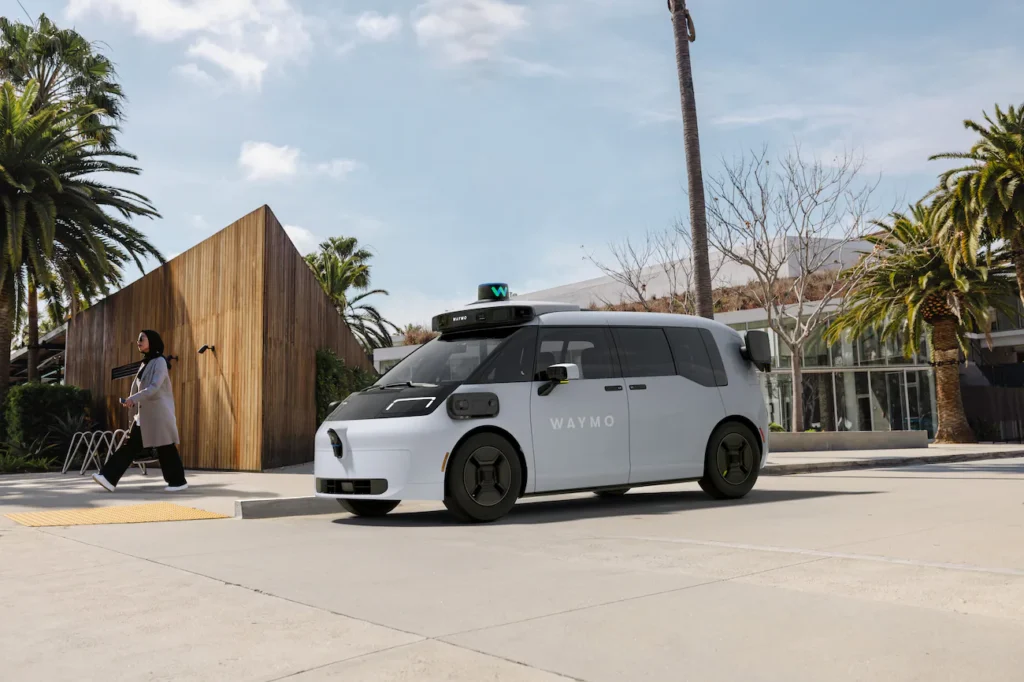
As of August 19, 2026, any Phoenix rider with the Waymo One app can hail an Ojai robotaxi — no waitlist, no invite required. The Ojai is a roomier, van-style vehicle with a flat floor and accessible entry. East Valley neighborhoods, Sky Harbor airport connections, and West Valley exclusions all remain exactly as they were before the announcement.
Gilbert and Scottsdale riders get a bigger vehicle; your neighbors in the West Valley still wait
If you live or work in Scottsdale, Tempe, Chandler, or Mesa, the Ojai adds a bigger option to your existing Waymo service. It is especially useful for airport trips — the SkyTrain stations at Sky Harbor are within the service area, so you can ride all the way to the terminal without a driver. Groups, riders with strollers, and anyone who struggles with low-slung sedans will notice the difference immediately.
If you live in the West Valley — Surprise, Peoria, Glendale, Avondale — nothing changed on August 19. Waymo has not announced a West Valley launch date. The Ojai is available only where Waymo One already operates in the Phoenix metro.
The bigger fleet picture matters too. With 953 Ojai vans staged at the Mesa factory right now — 684 sensor-ready and 269 still being converted — wait times should improve as those vehicles roll into service. That is a forward-supply signal no national outlet reported in the context of this announcement.
What changed on August 19: the Ojai is now open to any Phoenix rider
Waymo opened the Ojai to the full public on August 19, 2026, across Phoenix, Los Angeles, and San Francisco at the same time. The company had been running a limited early-access program since May 28, 2026, giving select riders free rides to collect feedback.
Right now, about 300 Ojai vehicles are in the active commercial fleet across all three cities. Research firm MoffettNathanson projects that number will reach 5,000 in the United States by end of 2026. In July 2026 alone, 725 Ojai vehicles entered the country through the Port of Los Angeles.
Inside the Ojai: flat floor, gondola doors, three screens, and a grab bar

Waymo’s Ojai van features elevator-style gondola doors on both sides and a flat, step-friendly floor. (Waymo)
The Ojai was built with accessibility in mind. You step in through elevator-style gondola doors on either side. The floor is flat — no hump, no step. Inside, three adaptive screens display your route and ride controls. There are charging ports, cup holders, grab bars, and braille labeling throughout the cabin.
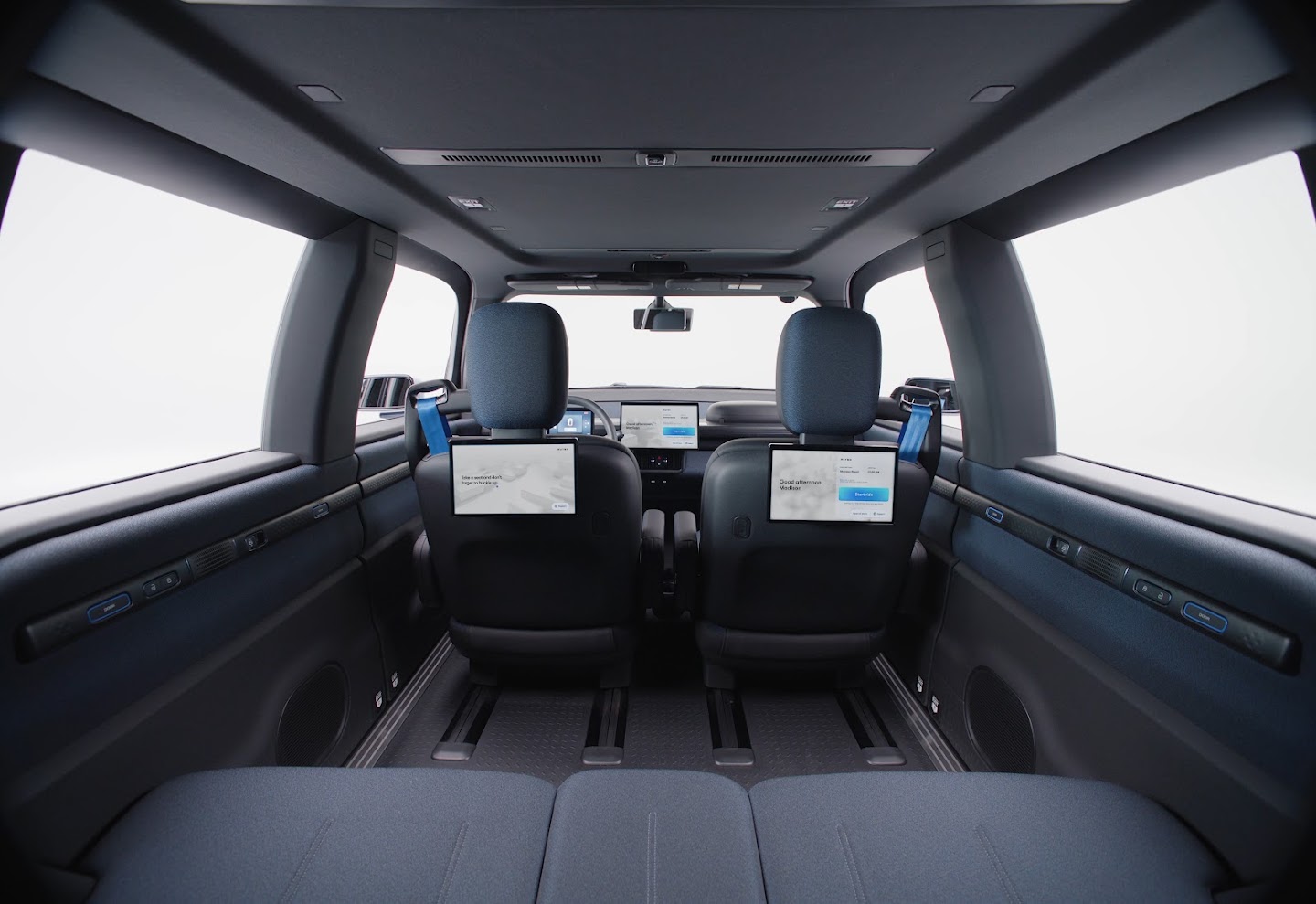
Two passenger-facing touchscreens mounted on the front headrests display the ride interface inside the Ojai cabin. (Waymo)
The sensor setup running all of this is leaner than its predecessor. Waymo’s sixth-generation Driver uses 13 cameras, four lidars, and six radar units — 42% fewer sensors than the prior generation. The full hardware package costs under $20,000 per vehicle, which is more than half what the fifth-generation system cost on the Jaguar I-PACE fleet.
How it works: why you can’t request an Ojai yet — and when you will be able to
Open the Waymo One app, request a ride, and you may get an Ojai. Or you may get a Jaguar I-PACE. Right now, the app matches you with whatever vehicle is closest. You cannot specifically request the Ojai at no extra cost.
Waymo does let you choose your vehicle type — but that choice carries a fare surcharge. If you just want a ride and do not care which vehicle shows up, the default matched ride carries no surcharge. Waymo says it plans to eventually offer vehicle selection as a standard feature, though no timeline has been announced.
Made in China, finished in Mesa: Zeekr, Geely, and Magna
The Ojai starts life as a Zeekr van built in Ningbo, China. Zeekr is owned by Geely Holding Group, one of China’s largest automakers. Each van is shipped to Waymo’s facility near Pecos Road in Mesa, where supplier Magna International retrofits it with the sixth-generation Waymo Driver system.
That import path is expensive. Waymo pays a tariff of roughly 127.5% on each Ojai brought from China. More than 3,200 Zeekr vehicles have moved through the Port of Los Angeles since 2024, with over 2,600 of those arriving in 2026 alone.
The Senate threat: how S.4429 and the Polestar precedent could ground the Ojai by 2027
There is a real legislative threat to the Ojai’s future in the United States, and it is worth understanding before you get too attached to the vehicle.
A bipartisan Senate bill, S.4429, would ban the import of vehicles “designed or made by” companies with more than 15% Chinese ownership — starting in 2027. The bill has 32 cosponsors. The Senate Commerce Committee advanced it on July 15, 2026, at a markup called by Chairman Ted Cruz. Because it would be written into permanent statute, no future administration could simply waive it.
The live precedent is Polestar. On June 25, 2026, the Commerce Department’s Bureau of Industry and Security denied Polestar authorization to sell vehicles from model year 2027 onward in the United States. The reason: Polestar is majority-owned by Geely — the same Chinese conglomerate that owns Zeekr. If BIS or Congress applies the same logic to Zeekr, Waymo loses the chassis it is currently betting its entire fleet expansion on.
The bill’s ownership-threshold provision could also affect Mercedes-Benz, which carries nearly 20% Chinese investment, per committee discussion. But the most immediate exposure is Waymo’s, given the scale of its Zeekr-dependent pipeline.
953 vehicles staged in Mesa right now: what the factory ramp means for East Valley jobs and real estate
The Waymo facility in Mesa is not just a garage. It is a high-tech manufacturing and conversion campus scaling toward tens of thousands of vehicles per year. Magna International does the sensor-retrofit work on site. That kind of operation creates sustained demand for skilled technicians, logistics workers, and support staff.
For East Valley buyers and renters, proximity to that facility is an emerging factor worth watching. Tech campuses at this scale tend to pull housing demand — and rental rates — upward in the surrounding zip codes. If you are evaluating a purchase or lease near the Mesa corridor, the Waymo factory is part of the economic story of that neighborhood right now.
The 953 staged vehicles tell you something about the near-term supply picture too. Once those 269 remaining vans finish sensor conversion, the Phoenix fleet could grow significantly faster than the current 300-vehicle commercial count suggests.
Expansion planned for Denver, Las Vegas, and San Diego — Phoenix stays ahead of the curve
Waymo plans to bring the Ojai to Denver, Las Vegas, and San Diego later in 2026. Phoenix was part of the initial three-city launch alongside Los Angeles and San Francisco — a sign of how seriously Waymo treats the Valley as a core market.
What no one knows yet: if S.4429 becomes law, Waymo would need an alternative vehicle platform to keep scaling. The company has not publicly named a backup chassis. That is the open question hanging over every Ojai ride you take between now and the end of this legislative session.