
The federal government released a new ten-year Colorado River plan on July 31, 2026. Arizona takes the heaviest cuts of any state. Phoenix-area residents face higher water bills, possible new-home permit delays, and rising electricity costs as early as spring 2027. The new rules take effect October 1, 2026.
Your water bill, your home purchase, your neighborhood — here is what changes
If you live in Phoenix, about 40% of your tap water comes from the Colorado River. If you live in Cave Creek — roughly 30 miles north of Phoenix — that number is closer to 90%. Either way, the new federal framework forces Arizona to give up water it has depended on for decades.
Phoenix is already in Stage 1 of its Drought Management Plan. The city says it could move to Stage 2 before the end of 2026. That shift flips conservation rules from voluntary to mandatory. It also lets the city add a drought surcharge directly to your water bill.
If you are buying a newly built home in Maricopa County, water matters in a different way. Developers need a “will-serve” letter proving a long-term water supply before permits can be issued. Deep CAP cuts shrink that supply. Fewer letters means slower permitting and potential pressure on new-home prices.
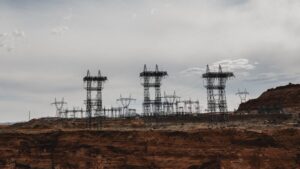
Glen Canyon Dam could lose its ability to generate hydropower as early as spring 2027. The Central Arizona Project moves Colorado River water uphill to your tap. It is one of the largest buyers of that federally contracted power. If replacement power costs rise, they have historically been passed on through water rates.
What just happened: the federal EIS released July 31, 2026
The U.S. Bureau of Reclamation released its Final Environmental Impact Statement for Post-2026 Colorado River Operations on July 31, 2026. It sets a flexible framework for managing Lake Powell and Lake Mead through 2036. Current guidelines expire September 30, 2026. The new rules start the next day.
The plan allows total Lower Basin shortages of up to 3.0 million acre-feet per year. That is a roughly 40% reduction from current delivery levels. The cuts are spread across Arizona, California, and Nevada.
By the numbers: how deep could Arizona’s cuts go?
Under the modeled shortage scenario for 2027 and 2028, Arizona would lose 760,000 acre-feet. California would lose 440,000. Nevada would lose 50,000. Mexico would lose 250,000.
One acre-foot supplies roughly three Phoenix-area homes for a year. So 760,000 acre-feet is enough water for about 2.3 million Valley homes for a full year. The Central Arizona Project normally delivers about 1.5 million acre-feet annually. That makes Arizona’s cut roughly half of normal CAP delivery.
From 2029 through 2060, Arizona would carry 77.40% of the first 1.814 million acre-feet of Lower Basin shortage each year.
The reservoirs tell the story plainly. Lake Mead and Lake Powell together held just 12.5 million acre-feet as of late July 2026. That is only 23.4% of combined capacity. Lake Mead sat at 25% full. Lake Powell was at 21.6%. Six Colorado River experts published a peer-reviewed analysis finding combined storage hit its lowest point since May 1957 — before Lake Powell even existed.
Why Arizona takes the biggest hit: junior water rights explained
The Central Arizona Project holds the most junior water rights on the Colorado River. The 1968 Colorado River Basin Project Act established that status. Under the prior-appropriation system, junior rights are cut first when water runs short.
In 2027 and 2028, Arizona absorbs 80% of the first 300,000 acre-feet of Lower Basin shortage. From 2029 onward, it carries 77.40% of the first 1.814 million acre-feet. Colorado, Utah, Wyoming, and New Mexico — the Upper Basin states — face zero mandatory cuts under this framework.
Your Valley, your risk: Phoenix, Scottsdale, and Cave Creek compared
Not every Valley community faces the same exposure. Here is where major communities stand, based on how much of their water supply comes from the Colorado River.
Cave Creek (~90% Colorado River dependent): The highest risk of any named Valley community. Without robust groundwater backup, deep CAP cuts create a genuine supply threat.
Scottsdale (~70% Colorado River dependent): Significant exposure, though Scottsdale has invested in reclaimed water and groundwater storage.
Phoenix (~40% Colorado River dependent): Better buffered. About 58% of Phoenix water comes from the Salt and Verde river systems. About 2% comes from groundwater. Taps are not expected to run dry. But Stage 2 rules and surcharges are a near-term reality.
Cities with larger Salt and Verde River allocations and deep underground water storage banks are in better shape. Smaller outlying communities with high CAP dependence and limited groundwater are most exposed.
What Stage 2 Water Warning means for your Phoenix water bill
Phoenix City Code Section 37-127 governs the Stage 2 Water Warning. Right now the city is in Stage 1 — all conservation measures are voluntary. Once the Water Services Director declares Stage 2, measures become mandatory and enforceable.
The city’s July 31, 2026 statement listed specific Stage 2 actions. Those include expanded conservation education, increased financial incentives, and water-efficiency consultations. The city also named “potential drought surcharges to help offset the cost of Colorado River reductions.” The director is authorized under Section 37-127 to impose that surcharge on your city services bill.
Phoenix says it could reach Stage 2 before the end of 2026. That is not a distant scenario — it is a before-the-holidays possibility.
The real estate chokehold: how CAP cuts could freeze new home permits
Arizona law requires developers to prove a 100-year assured water supply before a municipality issues building permits. That proof relies heavily on CAP allocations and underground water credits. When CAP supply shrinks, fewer will-serve letters can be issued. Fewer letters means slower permits and a potential brake on new construction across Maricopa County.
If you are under contract on a new build, or evaluating a new community with high CAP dependence, ask your agent about the project’s water supply documentation before you proceed. For context on how resource limits are reshaping Valley development, see our coverage of the Arizona data center backlash.
The energy wildcard: Glen Canyon Dam and your electricity bill
Glen Canyon Dam generates up to 1,320 megawatts of carbon-free hydropower. The minimum power pool elevation is 3,490 feet. Below that level, water bypasses all eight turbines and power generation stops entirely. A July 2026 Bureau of Reclamation report said Lake Powell could fall below that threshold as early as spring 2027.
The CAP is a major buyer of federally contracted power from the Western Area Power Administration. That power helps move Colorado River water more than 2,900 feet uphill from Lake Havasu to Phoenix and Tucson. When WAPA has had to buy replacement power on the open market, it paid more per megawatt-hour than it charged customers. That happened in every fiscal year from 2023 through 2025. Those costs have historically been passed through to water ratepayers. Losing Glen Canyon power entirely would make that problem worse.
Arizona fights back: Hobbs, Gallego, Sullivan & Cromwell, and the path to court
Arizona’s political response is unusually unified. Governor Katie Hobbs called options in the federal EIS “unacceptable.” She argued they force Arizona to absorb the majority of “draconian water cutbacks.” Mayor Kate Gallego said on July 31, 2026: “Phoenix has spent decades planning for a moment like this, and is prepared to use less Colorado River water, but it is wrong to lay a disproportionate share of the burden on Arizona.”
Arizona hired Sullivan & Cromwell in March 2026. The New York-based firm has represented Microsoft, Goldman Sachs, and JPMorgan Chase. The state is funding the fight from a $3 million Colorado River Litigation Fund created during the 2025 legislative session. The Arizona House also passed HB 2116 in early 2026 to add more funds.
The legal theory centers on Article III(d) of the 1922 Colorado River Compact. That provision requires Upper Basin states not to deplete flow at Lee Ferry below 75 million acre-feet over any ten consecutive years. Arizona argues this creates a firm delivery obligation to the Lower Basin. A case could go directly to the U.S. Supreme Court, which holds original jurisdiction over disputes between states.
October 1, 2026: the date that triggers everything
Current Colorado River guidelines expire September 30, 2026. The new post-2026 framework takes effect the next day. If reservoir levels keep falling through winter and Lake Powell approaches the minimum power pool, spring 2027 could bring simultaneous water and power cost pressure to Valley residents.
Phoenix’s move from Stage 1 to Stage 2 drought status could happen before December 2026. Watch for an announcement from the Phoenix Water Services Director. That announcement puts a drought surcharge on your bill and makes conservation rules enforceable.
Arizona’s legal fight is underway, but a Supreme Court case takes years. The cuts arrive in months. Audit your outdoor irrigation schedule now. Ask your water provider which drought stage it is in. If you are buying a new build, verify the project’s assured water supply documentation before you sign.