

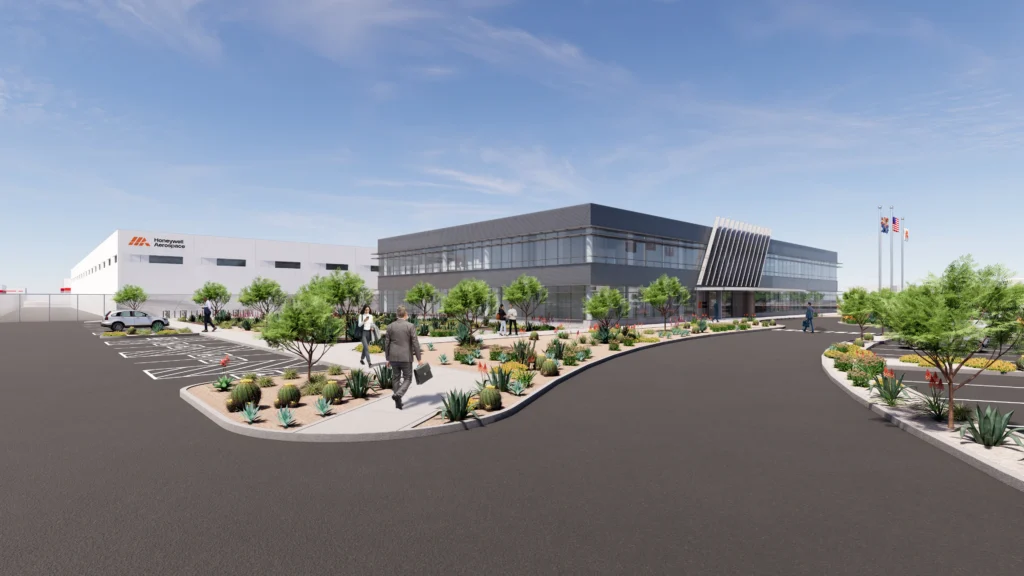
Honeywell Aerospace is building a new $500 million, 300,000-square-foot manufacturing facility at its existing Tempe campus near Priest Drive and Warner Road. The plant is expected to open in late 2028 and employ about 600 people. Mayor Corey Woods called it “the largest aerospace investment in Tempe’s history.”
If you live or work near Priest Drive and Warner Road, here’s your direct stake
This is not an abstract economic announcement. It is a two-phase jobs story landing in your backyard. For the next two-plus years, more than 1,000 construction workers will be on site. When they finish, roughly 600 permanent, high-skill aerospace and engineering positions open up inside the walls. Those are real incomes, and they tend to move near where the work is.
If you are renting or buying in south Tempe or the nearby East Valley, that kind of demand matters. Aerospace jobs pay well above the median. Workers who take them look for housing close to the campus. The Priest Drive and Warner Road corridor does not have unlimited housing supply, which puts pressure on what is already there.
On the commercial side, 600 permanent employees eat lunch, buy supplies, and use services. Expect the streets around the campus to attract more of all three. This ripple starts the moment shovels go in the ground.
What Honeywell Aerospace is building — and where in Tempe
The new facility adds 300,000 square feet to Honeywell Aerospace’s existing Tempe campus near Priest Drive and Warner Road. The company expects the plant to open by late 2028.
Inside, the factory will run an integrated digital production system. It includes modular robotics and automated inspection. Honeywell also describes digital twins and an end-to-end digital thread — a connected data trail from design through delivery. This is a purpose-built smart factory, not a retrofitted warehouse.
What the factory will actually make: Assure, Attune, and $15 billion in new program wins
The plant has two primary product families: Assure and Attune.
Assure is Honeywell’s family of electromechanical actuation systems. They combine advanced sensors, digital controls, and health monitoring to move an aircraft’s flight surfaces precisely and reliably. For missiles, Honeywell describes Assure systems as “the most precise and speed-responsive systems available,” used across interceptor, tactical, and strategic applications.
Attune is a vapor-cycle cooling subsystem. It circulates an advanced refrigerant around heat-generating components — avionics, batteries, generators, electronics — then moves the heat to an exchanger. Honeywell says Attune is up to 35 percent lighter and 20 percent more efficient than conventional systems with comparable cooling. It is designed for sixth-generation defense platforms and commercial aircraft alike.
The business case is straightforward. Honeywell Aerospace reported $15 billion in new Control Systems program wins. CEO Jim Currier said on the Q3 2026 earnings call that Assure and Attune sit at the center of those wins. They are tied to next-generation narrowbody aircraft and sixth-generation fighter jets. The Tempe facility is required to deliver against those contracts.
The supply chain play: bringing complex machining in-house
Right now, Honeywell relies on outside suppliers for complex machining. The company calls it “a key area of the supply base that is currently constrained.” The new facility adds that capability internally.
That matters because supply chain bottlenecks are one of the main reasons aerospace programs slip their deadlines. Bringing machining in-house gives Honeywell direct control over quality and schedule. It also reduces exposure when outside suppliers face their own capacity problems.
Why now? The HONA spinoff, a Q3 earnings beat, and a first-ever dividend
Honeywell Aerospace completed its spinoff from Honeywell International and began trading on Nasdaq as HONA on June 29, 2026. The factory announcement came October 28, 2026. That was the same day HONA reported third-quarter results that beat Wall Street profit estimates. The company also declared its first quarterly dividend as an independent company.
The timing is not coincidental. A newly independent public company that beats its first major earnings sends a signal. Committing $500 million to a domestic plant the same day makes that signal concrete. It tells investors, customers, and employees that the standalone business is healthy and investing in its own future.

Honeywell Aerospace leadership in front of a company flight test aircraft. Honeywell Aerospace began trading independently on Nasdaq as HONA on June 29, 2026. (Honeywell Aerospace)
Defense dimension: the U.S. Department of War supplier framework agreement
The new facility will also increase Honeywell’s capacity under a supplier framework agreement with the U.S. Department of War. That agreement was signed on March 25, 2026. Under Secretary of War for Acquisition and Sustainment Michael Duffey stated: “Our strategy is to provide the long-term demand signals that unlock private investment.” He added: “This half-billion-dollar commitment from Honeywell Aerospace demonstrates we are succeeding.”
Note the agency name. The agreement is with the U.S. Department of War — not the Department of Defense. Several other outlets have reported it differently. The precise name comes from Honeywell’s own investor relations release.
Jobs by the numbers: construction roles now, permanent positions by 2028
Construction is expected to support more than 1,000 local jobs through the build phase. Once the plant opens in late 2028, it will employ approximately 600 people permanently. Mayor Woods called it the largest aerospace investment in Tempe’s history. Greater Phoenix Economic Council President and CEO Christine Mackay weighed in as well. She said Honeywell Aerospace “is building upon the legacy of aviation in Greater Phoenix.” She described the Tempe commitment as “this massive new investment.”
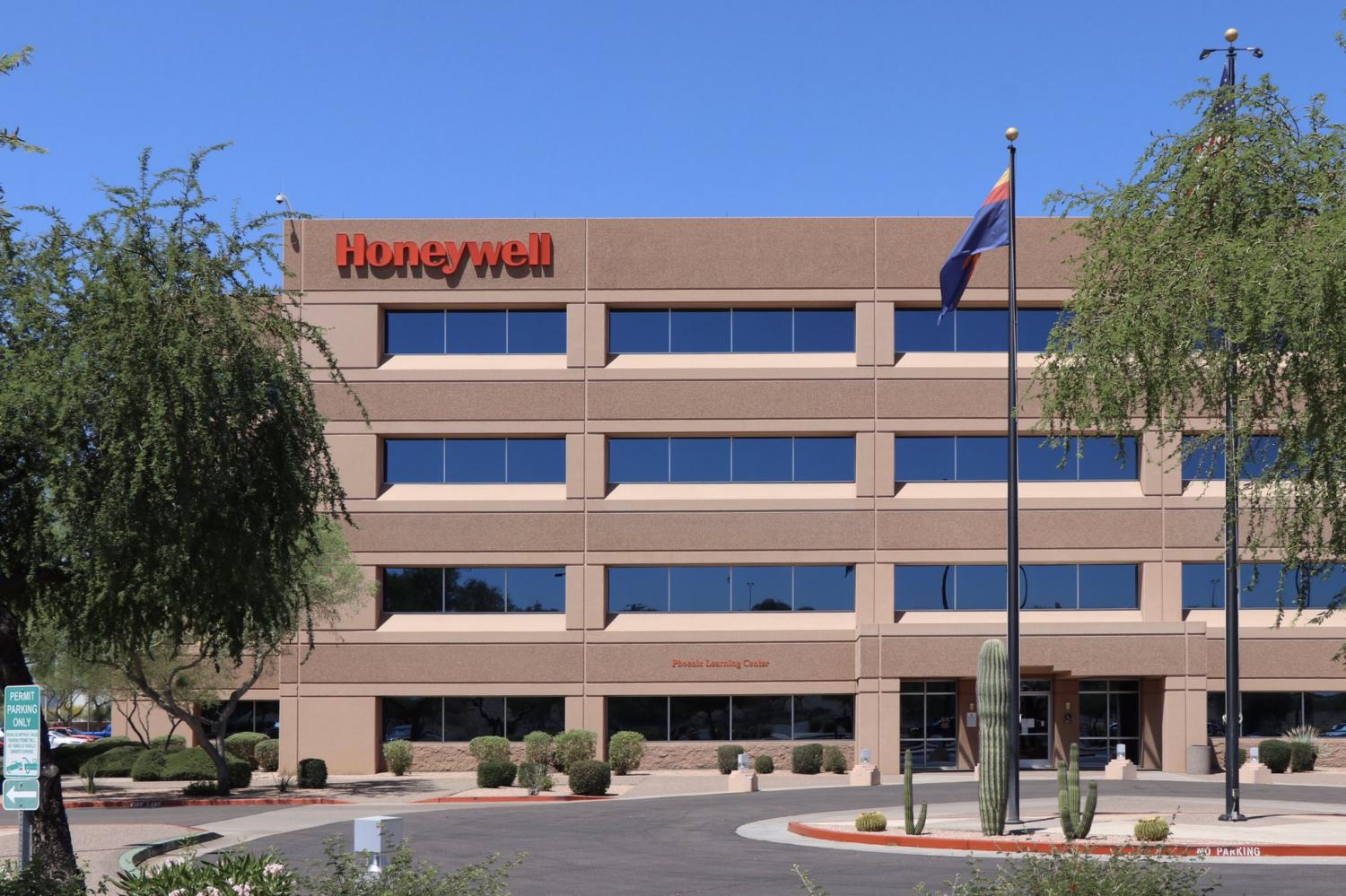
An existing Honeywell building in the Phoenix area, showing the company’s established Valley footprint before the new $500 million Tempe facility opens. (Honeywell)
Construction timeline: what to watch for before late 2028
No groundbreaking date has been announced in the verified sources available at publication. The facility is confirmed to open in late 2028, so construction must begin well before then. Honeywell has not publicly named a general contractor or filed permits as of the publication date.
Watch for construction permit filings with the City of Tempe. A formal groundbreaking event would signal the start of the 1,000-plus construction jobs phase. InsideTheValley will update this page as those milestones are confirmed.
The East Valley is seeing a broader wave of manufacturing investment. See our coverage of Intel Fab 62 in Chandler and the SEMICON West permanent move to Phoenix. Both projects are reshaping the region alongside this Honeywell expansion.