
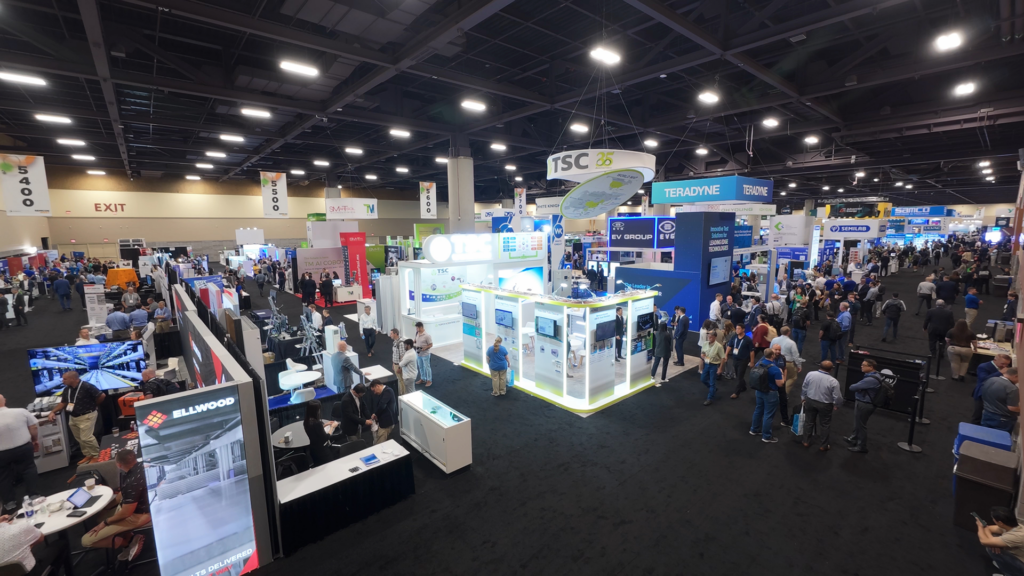
SEMI, the global semiconductor industry association, announced on July 30, 2026 that Phoenix will be the permanent home of SEMICON West. The conference ran in the San Francisco Bay Area for more than 50 years. Starting March 30, 2027, it belongs to Phoenix.
Your paycheck, your neighborhood, and your commute just got new stakes
This is not abstract trade-show news. If you live in north Phoenix, Chandler, or Scottsdale, it touches where you work, what your home is worth, and how long your drive takes every spring.
Joe Stockunas, president of SEMI Americas, projects Arizona could add between 40,000 and 60,000 semiconductor jobs by 2030. Those roles cover engineers, technicians, and manufacturing staff. Those workers need homes. A permanent world-class conference gives employers a reason to keep choosing Phoenix every year.
Phoenix Community and Economic Development Director Ryan Touhill said the city expects 35,000 industry decision-makers to arrive every spring. The 2025 debut showed what that looks like. Registrations jumped 60%. Exhibitors grew nearly 50%. Twenty-seven Valley hotels filled up. Restaurants, rideshare services, and retailers downtown all absorbed that spending.
The flip side is traffic. Thirty-five thousand conference-goers at the Phoenix Convention Center each spring will create real congestion. If you use the I-17/I-10 interchange or light rail downtown, plan ahead during conference week. It will happen every year now.
On home values, the effect is slower but real. Semiconductor construction is already reshaping north Phoenix, Scottsdale, and Chandler. SEMICON West’s permanent presence raises employer visibility globally. That drives more company relocations and more workers moving in. Both support housing demand in those corridors. For more on how TSMC’s campus is already affecting north Phoenix, see our TSMC Phoenix resident guide.
Every confirmed date in one place: 2027, 2028, and 2029
SEMI has already locked in three years of spring dates at the Phoenix Convention Center:
- March 30–April 1, 2027 — the first exclusive Phoenix edition
- May 9–11, 2028
- April 3–5, 2029
The spring window was chosen on purpose. The back half of the year already hosts SEMICON India, SEMICON Taiwan, SEMICON Europa, and SEMICON Japan. Moving SEMICON West to spring clears calendar space for the whole industry. It also gives Phoenix a slot all its own.
Why San Francisco lost it — and why one Phoenix event sealed the deal
SEMICON West ran in the San Francisco Bay Area every year since 1971. That is more than 50 years in a row. In 2023, SEMI announced a rotation plan. Phoenix would host odd years. San Francisco would keep even years through at least 2027.
Then Phoenix hosted its first edition in 2025. Registrations surged 60%. Exhibitors grew nearly 50%. It became the most widely attended SEMICON West in nearly 20 years. After one event, SEMI scrapped the rotation plan entirely.
San Francisco’s final edition runs October 13–15, 2026 at Moscone Center. After that, no San Francisco dates remain on SEMI’s calendar. The San Francisco Chronicle called the loss “a setback for a city that has promoted the return of conventions as evidence of its downtown recovery.” No significant opposition inside the Valley has been reported.
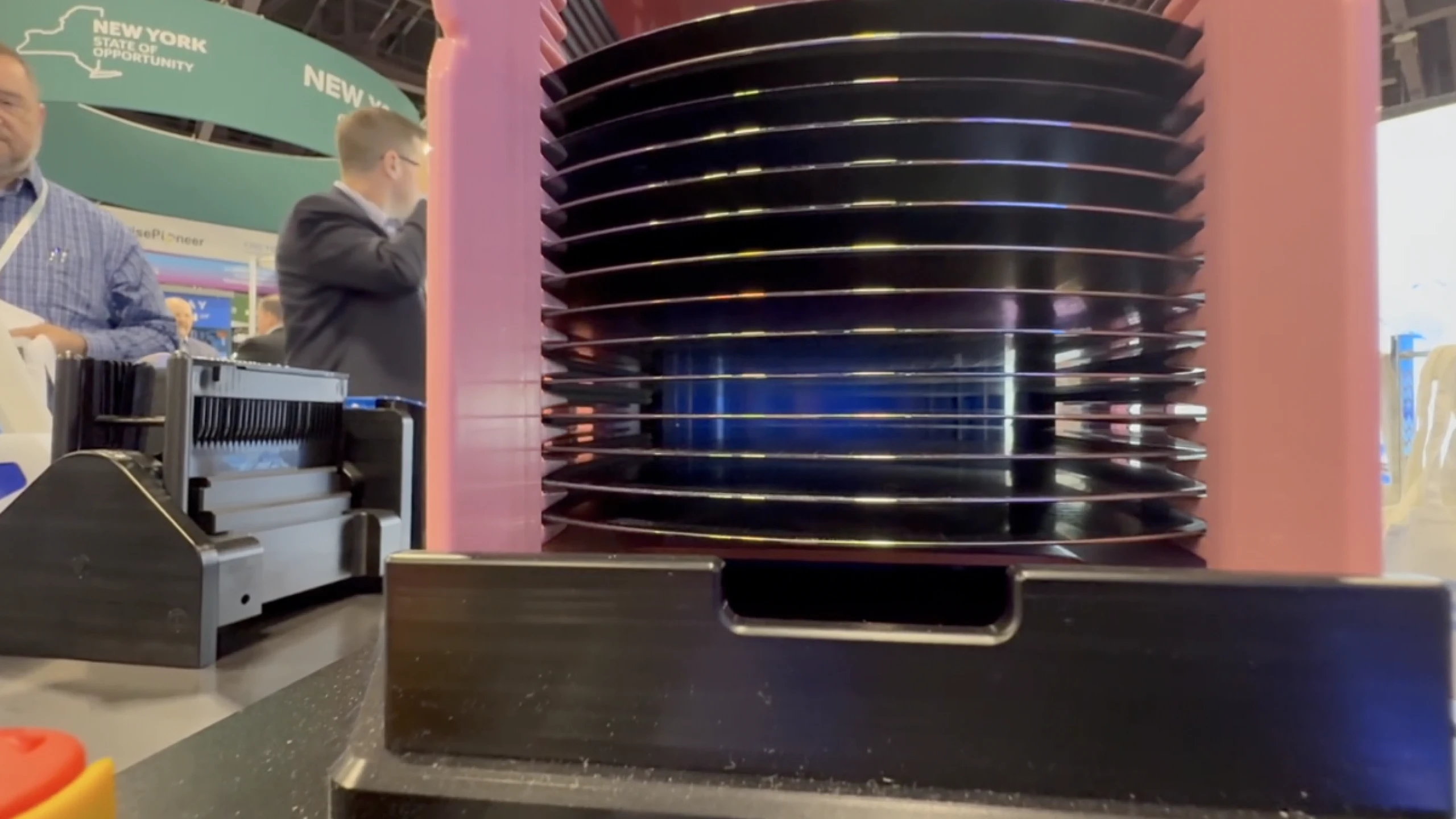
Semiconductor wafers on display at a SEMICON trade show booth. Events like this draw tens of thousands of industry professionals annually. (InsideTheValley.com)
The supply chain that is already here
SEMICON West did not create Arizona’s semiconductor industry. It is moving to Phoenix because that industry is already massive.
Since 2020, Arizona has attracted more than 70 semiconductor expansions. Those represent over $314 billion in total announced investment. That is more than any other state. Business Facilities ranked Arizona number one in the nation for semiconductors in its 2025 State Rankings Report.
TSMC’s Arizona investment stands at $265 billion. That covers 10 fabs, two advanced packaging facilities, and an R&D center. Intel’s Ocotillo campus anchors Chandler’s corridor. The Arizona Commerce Authority confirms that Intel, ASML, Applied Materials, Amkor, and many others have expanded in Arizona over the past year.
Stockunas said the entire supply chain follows the anchor manufacturers. Visible construction is underway across the region. Applied Materials, Tokyo Electron, and ASM have all set up or expanded locally. ASM moved its North American headquarters to a new 250,000-square-foot campus in Scottsdale. That was a $300 million expansion. It added 500 jobs and brought ASM’s Scottsdale payroll to about 1,300 employees. ASM first set up in Phoenix in 1976.
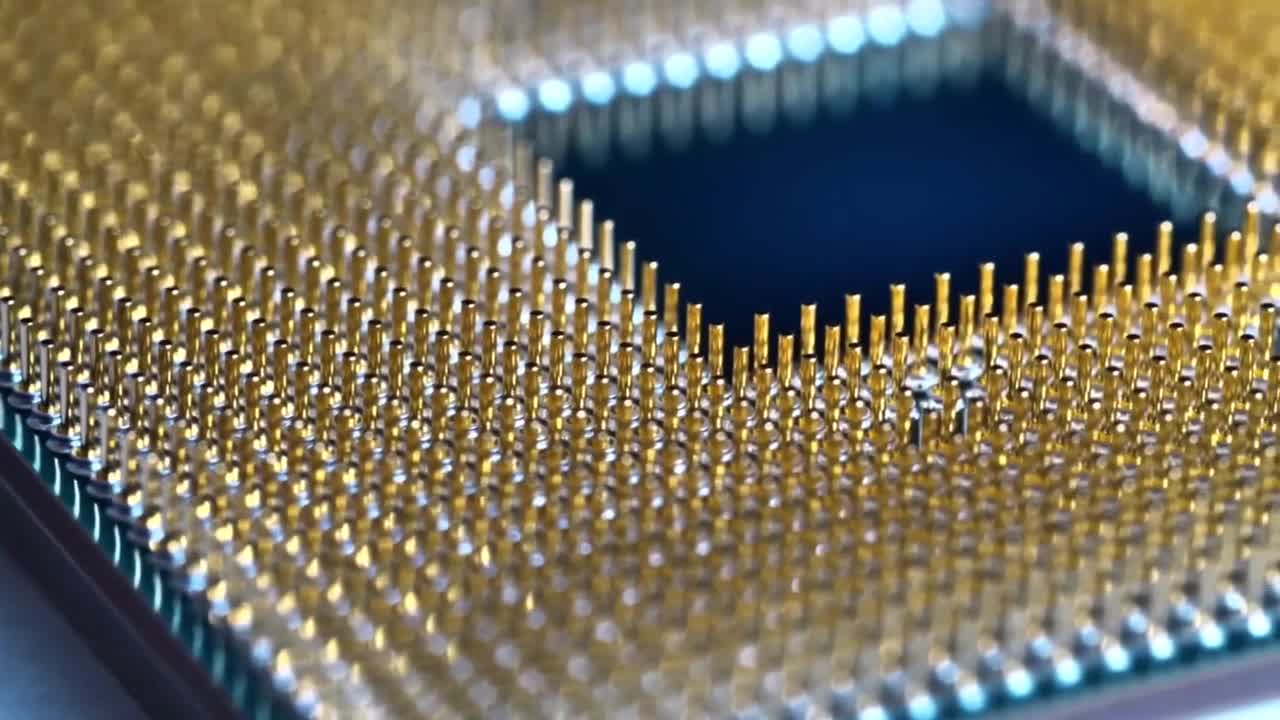
A close-up of a CPU processor’s gold-plated pin array — the type of component made and tested by companies expanding across the Phoenix Valley. (InsideTheValley.com)
The training pipeline for Valley residents is already being built
Forty thousand to sixty thousand new semiconductor jobs by 2030 is a big projection. The tools to fill them are already under construction.
The Arizona Commerce Authority put $100 million in ARPA funds into university semiconductor programs. That includes $47.5 million to ASU. Those funds enabled the Applied Materials/ASU Materials to Fab Laboratory at ASU’s MacroTechnology Works facility. Another $35.5 million went to the University of Arizona to expand its Micro/Nano Fabrication Center. Northern Arizona University received $13 million for a Microelectronics Metrology certificate program and research lab.
At the community level, GateWay Community College’s Central City Campus in Phoenix is building the Future48 Workforce Accelerator. Funding includes $13 million from the Arizona Commerce Authority, $5 million from the Governor’s Office, and $4.5 million in federal money. It will feature a full-size mock clean room with 11 modular training stations. Separately, ASU and TSMC Arizona launched a free Foundations for Equipment Technician Program. It is open to anyone with a high school diploma or GED. Graduates are guaranteed a job interview at TSMC when they finish.
March 30, 2027 is when this becomes real for the Valley
The announcement is confirmed and contractual. SEMI published the schedule on July 30, 2026. Three years of Phoenix dates are locked in. San Francisco has one final event — October 13–15, 2026 — then Phoenix is the only host.
The clearest near-term signal is conference week itself. March 30 through April 1, 2027 at the Phoenix Convention Center. That is when 35,000 industry professionals arrive. Downtown hotels fill. The economic impact hits every restaurant patio and rideshare app in the metro. If you work downtown, plan your commute. If you own a nearby business, prepare for your best spring week of the year.