
Yes, the new I-10 bridges over the Gila River are done. The Arizona Department of Transportation finished the eastbound bridge deck—the surface drivers actually roll on—completing the pair of new Gila River spans on the Wild Horse Pass Corridor Project, a near-$1 billion effort to widen 26 miles of I-10 south of Chandler into three lanes in each direction.
Your commute south on I-10: why this crossing matters
If you drive I-10 between the East Valley and Casa Grande, you’ve been squeezing through the last two-lane stretch of freeway between Phoenix and Tucson. That gap has made this corridor one of the most congested on the whole route. The Gila River bridges were the first thing crews had to fix before anything else could widen out.
Now that both spans are standing, the roadway can carry three lanes in each direction at this crossing. That matters whether you’re a Chandler resident heading south for the weekend or a Pinal County commuter making the daily run north for work. It also matters for freight—trucks moving goods between Phoenix and Tucson use this stretch constantly.
Construction won’t be invisible through 2029. Later segments are still active, so expect lane shifts and construction zones as crews move through the remaining work. But the bridge piece is behind you.
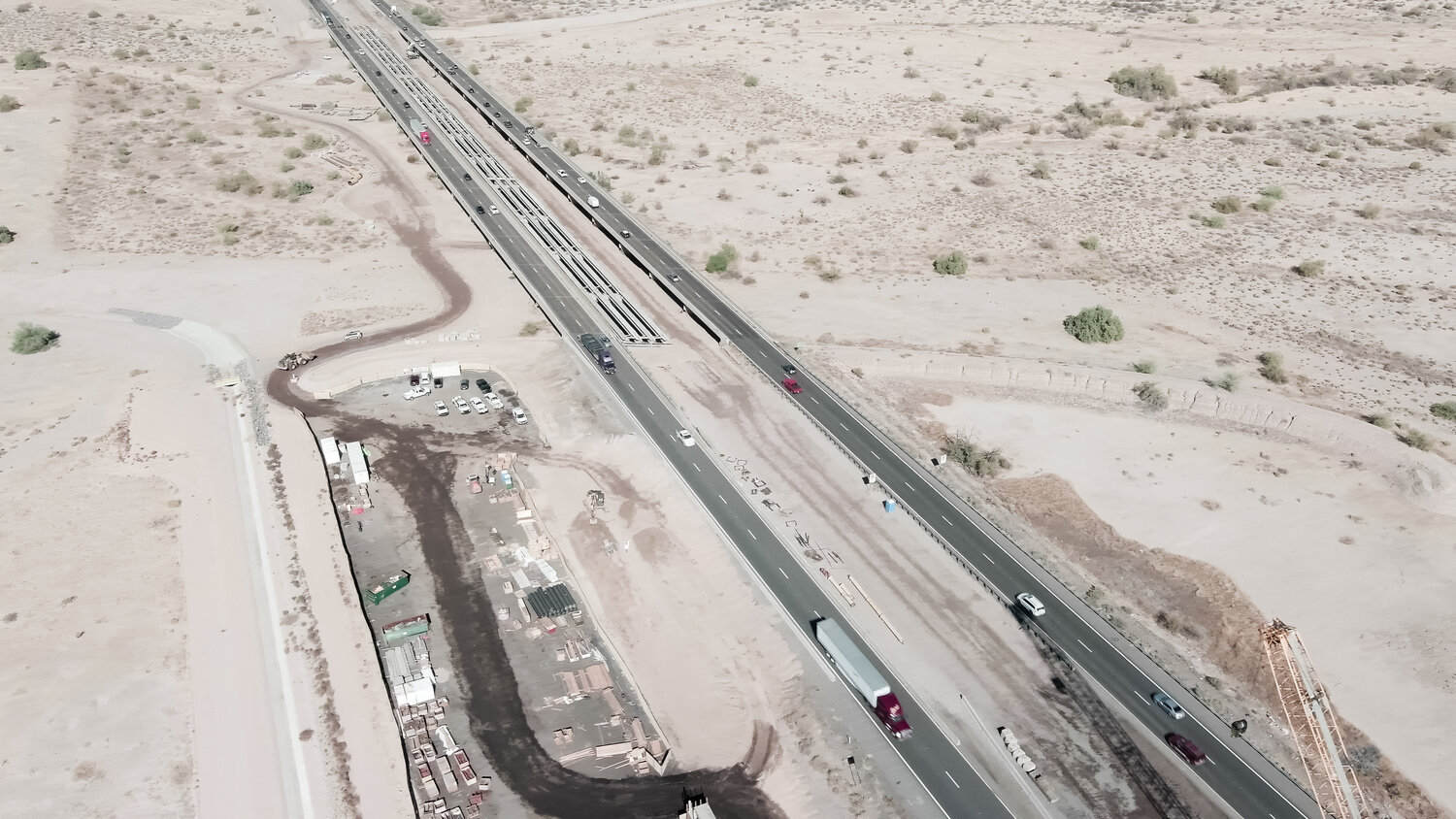
An aerial view shows a completed bridge span alongside active construction staging on the I-10 Wild Horse Pass Corridor. (ADOT)
What just finished: the Gila River bridge numbers
Bridge construction on this stretch started in May 2024 and was scheduled to wrap in fall 2026. Westbound came first—that span was done in 2025. The eastbound bridge followed, with its deck pour finishing the job.
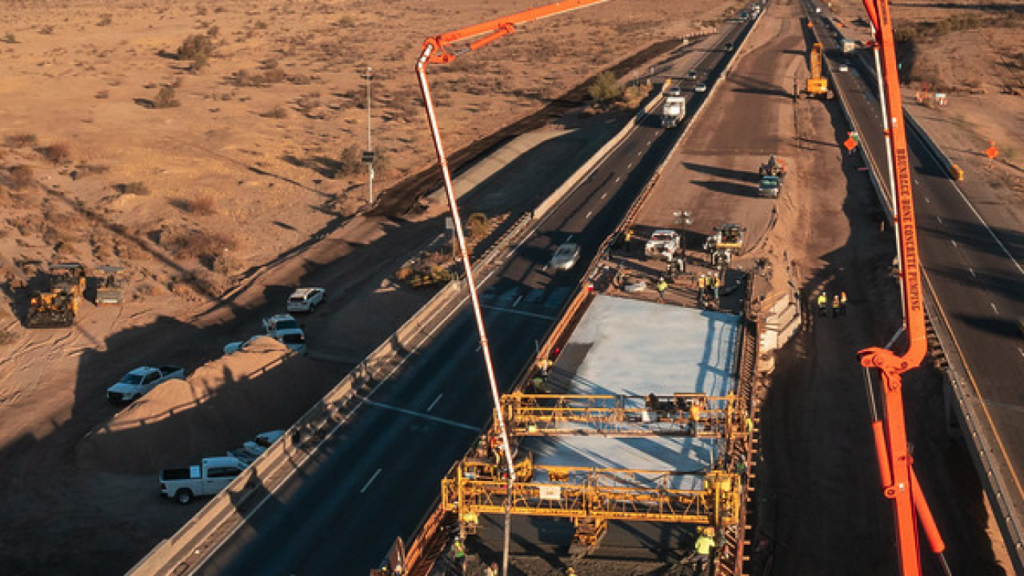
Pouring the deck alone took about a month. Crews placed more than 1,350 cubic yards of concrete across a roughly 62-foot span. That’s 2,734 tons of material, delivered by 135 fully loaded concrete trucks.
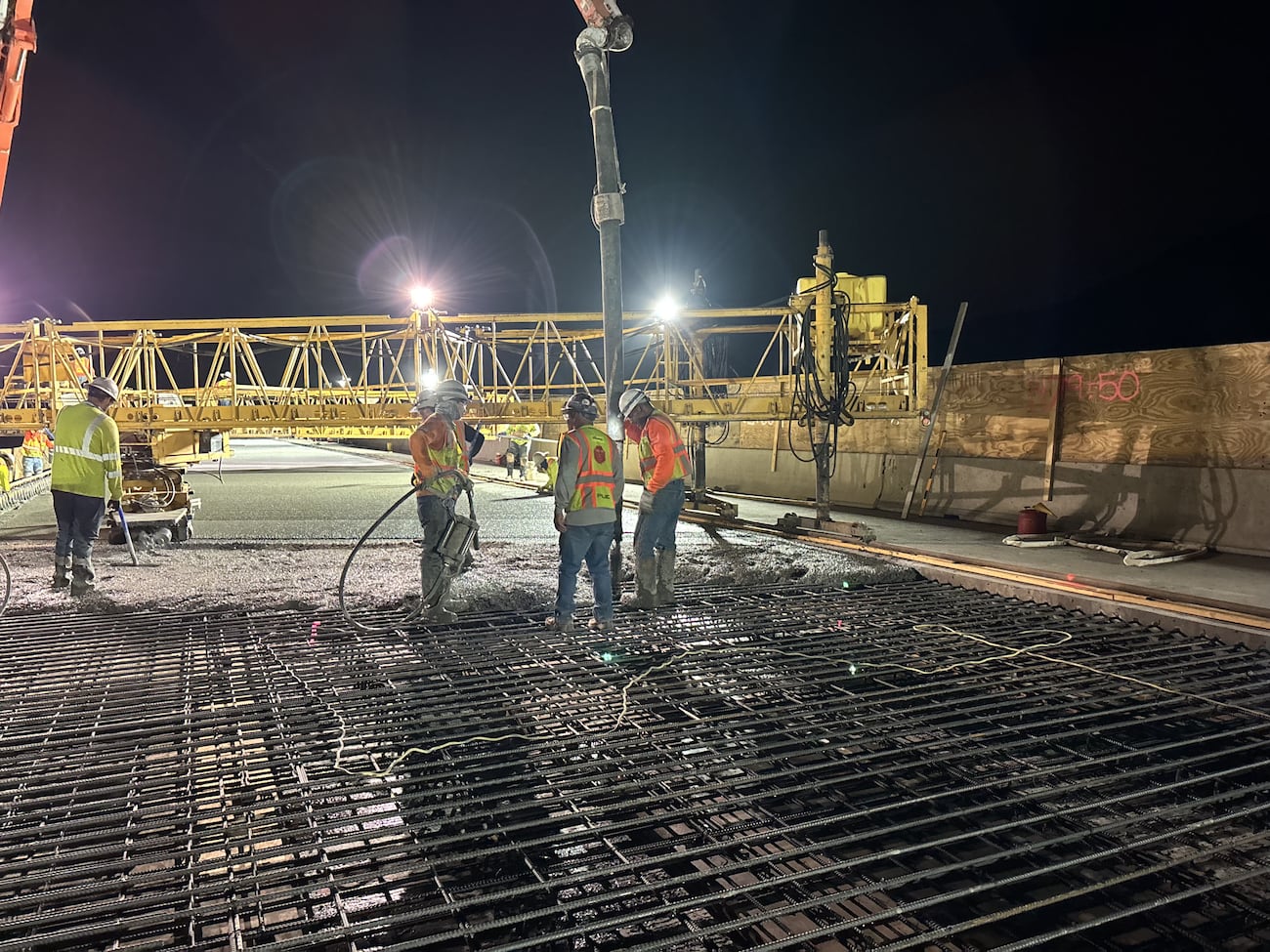
Night crews pour concrete on the I-10 eastbound bridge deck. The pour required 135 fully loaded trucks delivering more than 1,350 cubic yards of concrete. (ADOT)
The bridges sit about 11 miles south of the Phoenix-Chandler border. Once fully open, each span carries three lanes. Westbound went first partly because of construction sequencing—you generally keep one direction of traffic moving while the adjacent span is built, then flip.
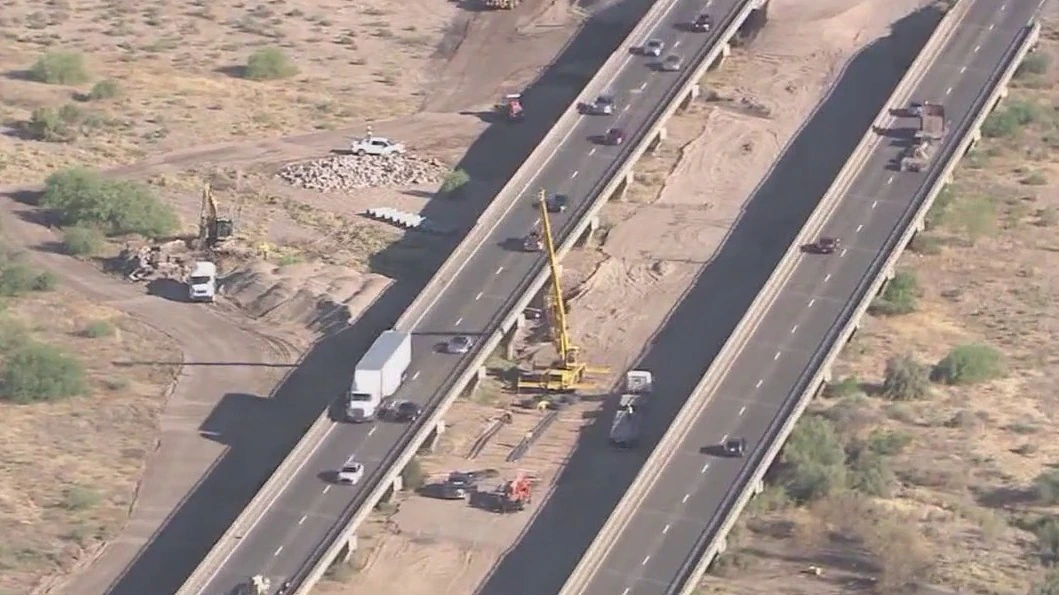
A crane works in the median between the two I-10 Gila River bridge spans during active construction. (ADOT)
All four segments of the Wild Horse Pass Corridor Project
The Gila River bridges were only the start. The full project widens 26 miles of I-10 from Loop 202—the Santan/South Mountain Freeway—south to State Route 387 near Casa Grande. That is the last unwidened stretch of I-10 between Phoenix and Tucson.
Four segments cover that distance. Here’s where each one stands:
- The Gila River bridges (Segment 1 anchor): Complete. Construction ran May 2024 through fall 2026.
- Segment 2 — Gas Line Road to just south of SR 387 (Pinal County): A 10-mile stretch. Construction started in January 2026 and runs through late 2027.
- Segment 3 — Loop 202 to the Gila River (11 miles near Chandler): Started October 2026. Adds a third lane both ways, extends the HOV lane from Loop 202 to Riggs Road, builds a new interchange at Koli Road, and rebuilds interchanges at Wild Horse Pass Boulevard, Riggs Road, and Queen Creek Road/SR 347. A new Seed Farm Road interchange is also part of the corridor work.
- Segment 4: The full four-segment project is on track for completion by late 2029.
New HOV lane, new interchanges, and what Segment 3 delivers near Chandler
Segment 3 is the piece most relevant to East Valley drivers. The 11 miles between Loop 202 and the Gila River is where the daily Chandler and Ahwatukee commuter feels the most friction today.
When Segment 3 is done, the HOV lane will run from Loop 202 all the way to Riggs Road. That’s new for this stretch. Drivers who currently merge from two lanes into two lanes through here will have a third lane and a dedicated carpool option.
The interchange at Koli Road—between Wild Horse Pass Boulevard and SR 347—is brand new. It didn’t exist before this project. Wild Horse Pass Boulevard, Riggs Road, and Queen Creek Road/SR 347 interchanges are all getting rebuilt. Seed Farm Road gets a new interchange too, adding access that isn’t there now.
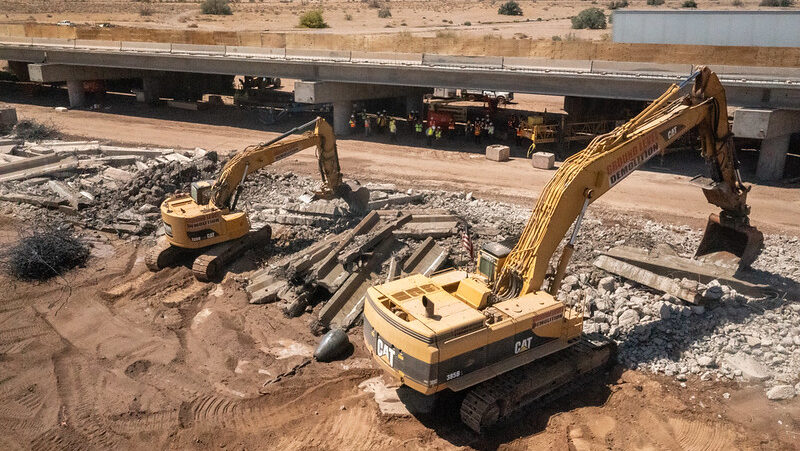
Excavators remove old bridge structure at the I-10 corridor construction site south of the Phoenix metro. (ADOT)
Who paid for it: Prop 400, federal funds, and a near-$1 billion total
The Wild Horse Pass Corridor Project costs close to $1 billion across all four segments. That money comes from three buckets: federal funds, state funds, and Proposition 400.
Prop 400 is the half-cent sales tax Maricopa County voters approved in 2004. It funds regional transportation projects identified in the Maricopa Association of Governments’ Regional Transportation Plan. Every time a Maricopa County resident buys something taxable, a fraction of a cent goes toward projects like this one.
The project is also one of the few that crosses a county line—Segment 2 runs into Pinal County—so federal money fills a key part of the gap that local sales tax can’t cover.
Late 2029: what has to happen before the corridor is finished
All four segments are expected to be complete by late 2029. Segment 2 in Pinal County runs through late 2027. Segment 3, which just started in October 2026, covers 11 miles near Chandler and will take several years. Segment 4 details have not been released in a source this article can cite.
Until then, if you drive I-10 south of Chandler regularly, plan for active construction zones. Lane shifts are part of that. The Gila River bridges being done removes one major constraint, but the corridor won’t feel fully finished until all four segments close out.
For East Valley residents, the bigger picture is straightforward: a freeway that has been two lanes in each direction for decades is becoming three. That takes time and money. The bridge milestone is real progress—and the work clock is running.
For more on other ADOT highway projects affecting Valley drivers, see our coverage of the I-10 Segment 3 guide, the Phoenix Mini Stack improvements, and I-10 Central Phoenix lane changes.