Construction is now active on the third segment of the I-10 Wild Horse Pass Corridor Project. The segment runs 11 miles between the Loop 202 (Santan/South Mountain Freeway) interchange and the Gila River. It is the longest of the four phases. If you drive I-10 south of Chandler toward Casa Grande, this project will affect your commute through 2029.
Your commute south of Chandler is changing for years — here is what to expect
Do you use I-10 to reach Casa Grande or points south from Ahwatukee, Chandler, or South Phoenix? This is the construction zone closest to you. It covers the most heavily traveled part of the corridor.
Lane closures and shifting traffic patterns near Loop 202 and Riggs Road will be routine. Active work at four interchanges runs through 2029. Expect disruption on weekday mornings and weekends.
The long-term payoff is real. You will gain a third general-purpose lane in both directions across all 11 miles. Between Loop 202 and Riggs Road, crews are also adding an HOV lane in each direction. If you carpool to work, that lane becomes yours once it opens.
The new Koli Road interchange will give drivers between Wild Horse Pass Boulevard and Queen Creek Road a direct access point that does not exist today.
Concrete pavement is replacing all the existing asphalt. Stantec says the concrete lasts about 30 years. The cost is nearly the same as new asphalt. Once crews finish, this stretch should not need major pavement work for decades.
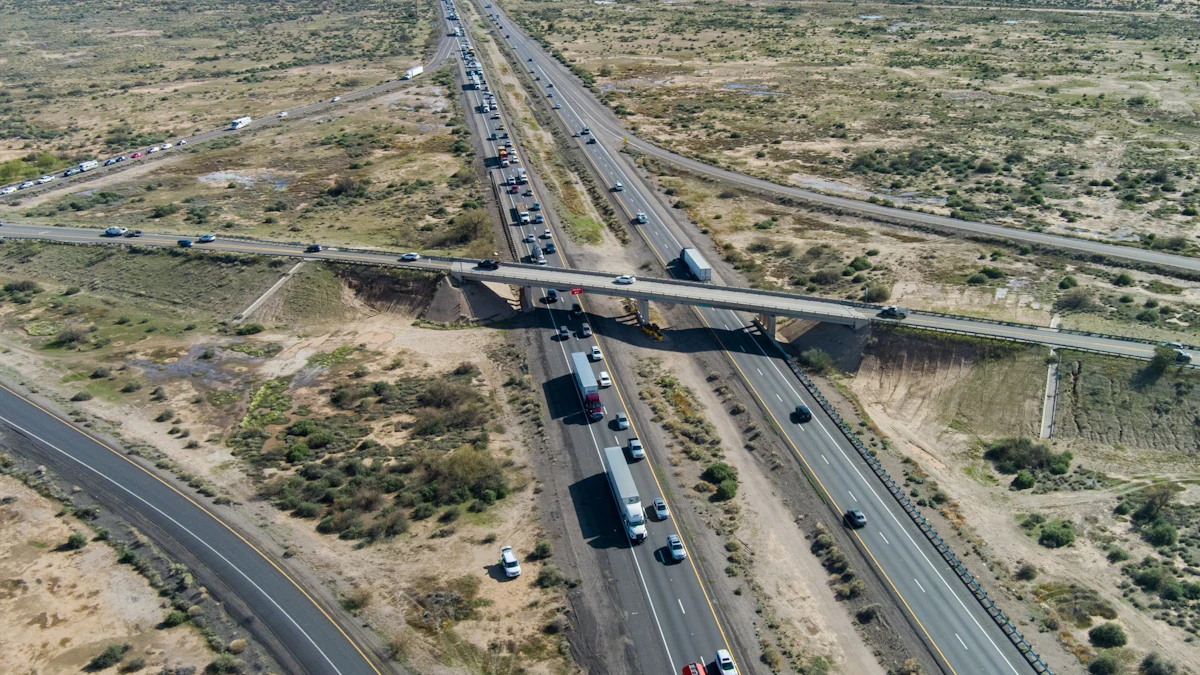
Heavy truck and passenger traffic moves through the Wild Horse Pass corridor — the most heavily traveled stretch of the four-segment project. (InsideTheValley.com)
What the I-10 Wild Horse Pass Corridor Project actually is
The I-10 Wild Horse Pass Corridor Project is a nearly $1 billion widening program. It stretches 26 miles from Loop 202 in south Phoenix to State Route 387 near Casa Grande. ADOT divided the work into four segments to manage construction across Maricopa and Pinal counties.
The project replaces aging infrastructure, adds travel lanes, and installs modern safety technology. When all four segments are done, the full corridor will be wider, safer, and paved in concrete.
Every improvement coming to the 11-mile Loop 202–Gila River stretch
Here is what crews are building in segment 3:
- A third general-purpose lane in both directions across the full 11 miles
- An HOV lane in both directions between Loop 202 and Riggs Road — not the full 11 miles
- Reconstruction of three existing interchanges: Wild Horse Pass Boulevard, Riggs Road, and Queen Creek Road/State Route 347
- A brand-new interchange at Koli Road, between Wild Horse Pass Boulevard and Queen Creek Road/SR 347 — a new access point, not a rebuild
- Full replacement of asphalt pavement with concrete, designed to last about 30 years
- Overhead messaging boards, freeway cameras, and wrong-way detection systems installed throughout
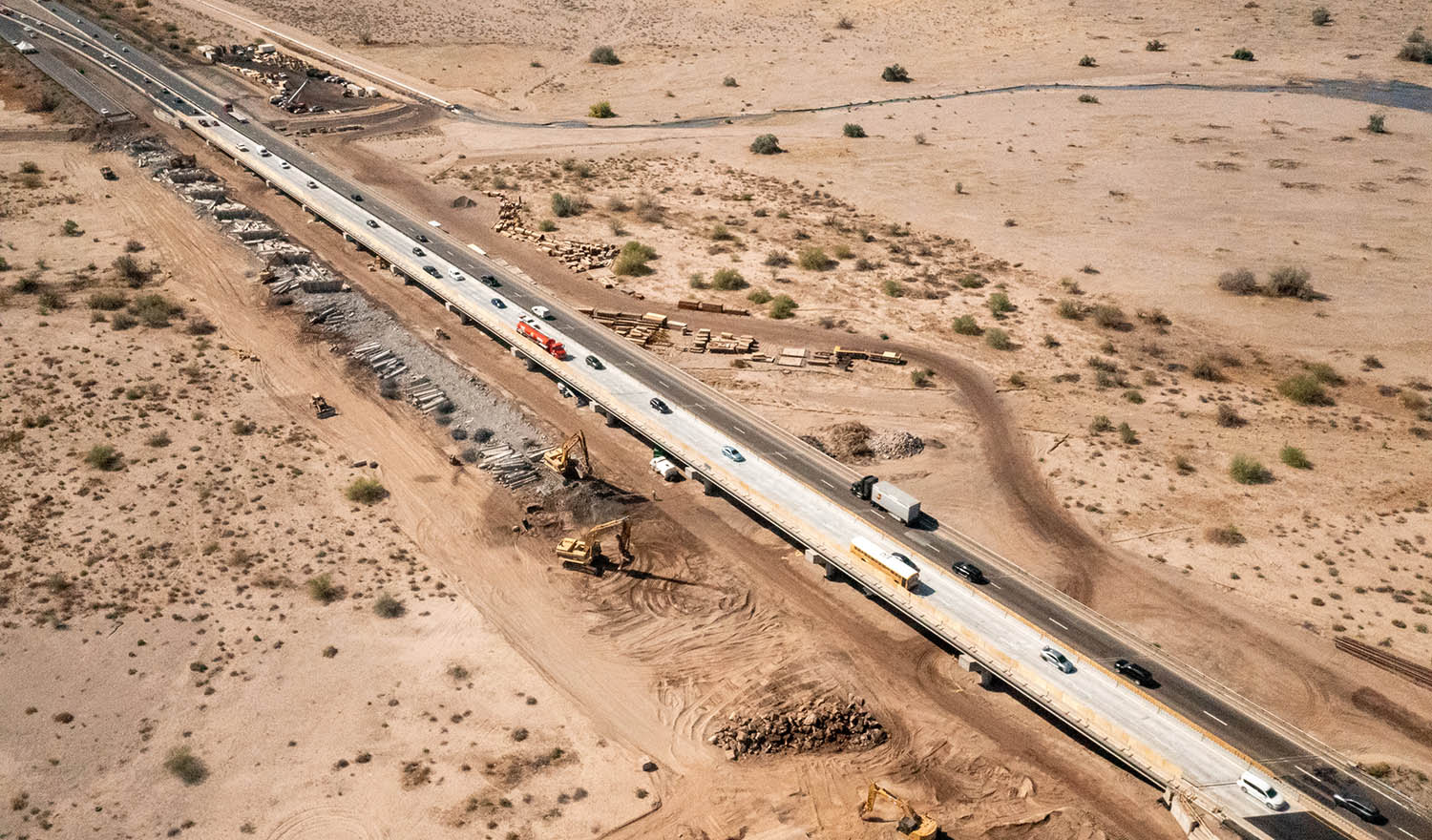
Active construction equipment and staged materials visible along the Wild Horse Pass corridor during an earlier phase of work. (InsideTheValley.com)
Who is building it: the Coffman-Fisher joint venture
The design-build team for segment 3 is called Coffman-Fisher. It is a joint venture of three firms: Coffman Specialties, Inc., Fisher Sand & Gravel Company, and lead designer Stantec Consulting Services Inc. ADOT selected this team through a design-build procurement. The estimated value of segment 3 is $410 million.
Segment 1 — the Gila River bridge replacement — was built by Pulice Construction for $71.2 million. The cost difference reflects how much longer and more complex segment 3 is.
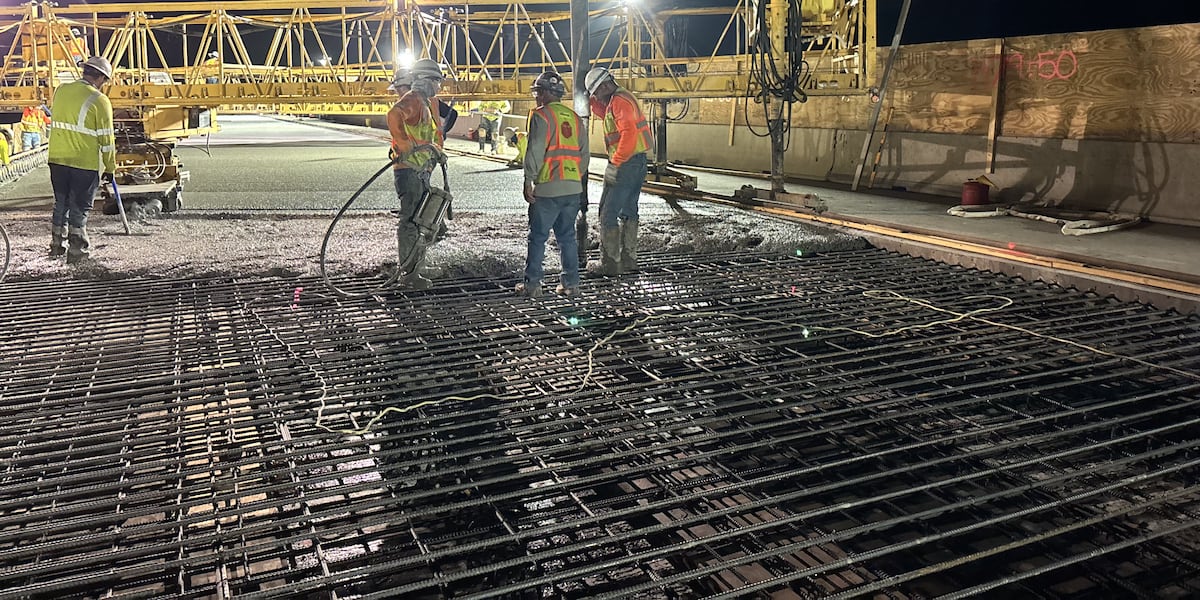
Night crews work a concrete pour on the Wild Horse Pass corridor — concrete pavement is replacing asphalt across all 11 miles of segment 3. (InsideTheValley.com)
All four segments: where each one stands right now
The 26-mile corridor is split into four segments. Here is where each stands:
- Segment 1 — Gila River bridges: Built by Pulice Construction for $71.2 million. Construction started May 2024. Finishing touches on the new bridges were scheduled for completion around October 2026.
- Segment 2 — Gas Line Road to near Pinal Avenue/SR 387: Covers about 10 miles in Pinal County near Casa Grande. Construction started January 2026 and is underway.
- Segment 3 — Loop 202 to Gila River: The longest segment at 11 miles. Active construction started October 2026. Built by Coffman-Fisher ($410 million). Expected to run through 2029.
- Segment 4 — Gila River bridges to Gas Line Road: A 3-mile connector between segments 1 and 3. Expected to start in 2027 or early 2028, with a completion date of late 2029.
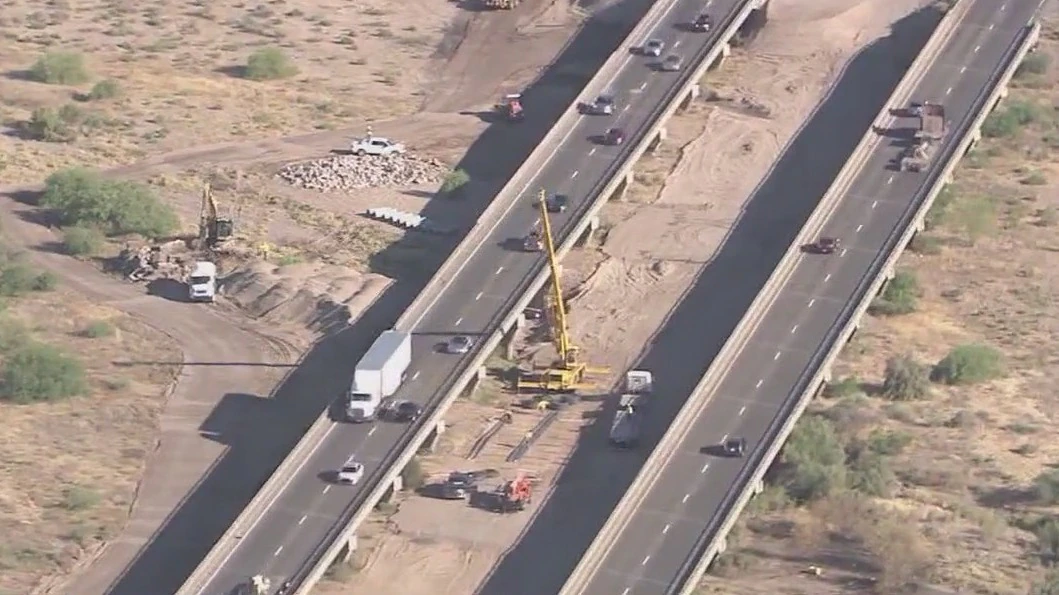
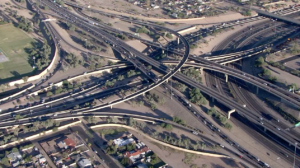
A freeway interchange along the I-10 Wild Horse Pass corridor, where three existing interchanges are being fully reconstructed as part of segment 3. (InsideTheValley.com)
Segment 4 start date — and what has to happen before the full corridor is done
Segment 4 is a 3-mile connector. It links the Gila River bridge work to the Gas Line Road area, filling the gap between segments 1 and 3. ADOT spokeswoman Marcy McMacken said it is expected to start in 2027 or early 2028. All four segments should be finished by late 2029.
Segment 3 runs the longest and costs the most. Until it is done, plan for construction on the stretch of I-10 closest to Chandler and Ahwatukee every time you head south.