
Phoenix Sky Harbor is getting its first new terminal in more than 30 years. The West Terminal will cost roughly $4.5 billion. It opens in late 2033 with American Airlines as anchor carrier. Valley travelers gain more international options. The airport needs them badly.
Your next decade of Sky Harbor trips will look different
Think about the last time you drove to Sky Harbor for an international flight. The existing terminals weren’t built for wide-body jets. Those are the planes that fly to Europe or Asia. And passenger numbers have long since outpaced what the terminals were designed to handle.
Sky Harbor served more than 51.6 million passengers in 2025. The airport’s goal is 90 million by 2050. That gap is real. You feel it every time you can’t find a direct long-haul route out of Phoenix.
The West Terminal fixes that. It’s designed for wide-body aircraft from the start. More nonstops from Phoenix. Fewer connections through Dallas or Los Angeles. That’s the practical payoff for Valley travelers.
The tradeoff is time. Design procurement doesn’t start until 2027. Construction begins in late 2029. Nothing changes at the terminal level for your next few trips. But if you own a home in the Valley, this project signals that Phoenix’s airport is catching up to the region’s growth.
American Airlines employs about 8,000 people in Arizona. It runs more than 300 departures on peak days to over 100 destinations. That’s a major piece of the regional economy anchored to this terminal’s success.
What is the West Terminal and where will it be built?
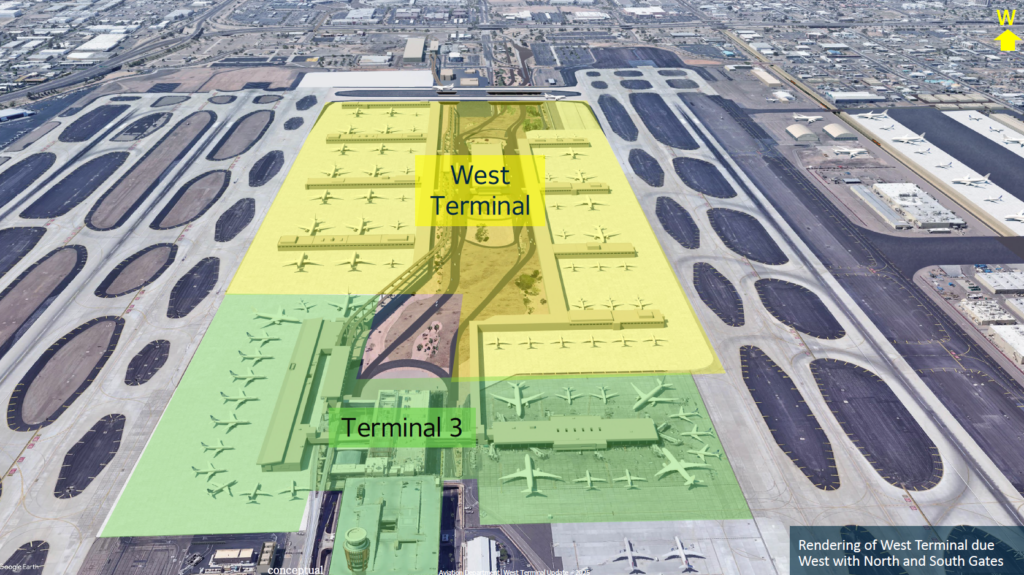
The West Terminal goes on the airport’s west side. It sits between Terminal 3 and Taxiway U. That’s near the former sites of Terminals 1 and 2. If you’ve driven that side of the airport, you know the cleared stretch of land.
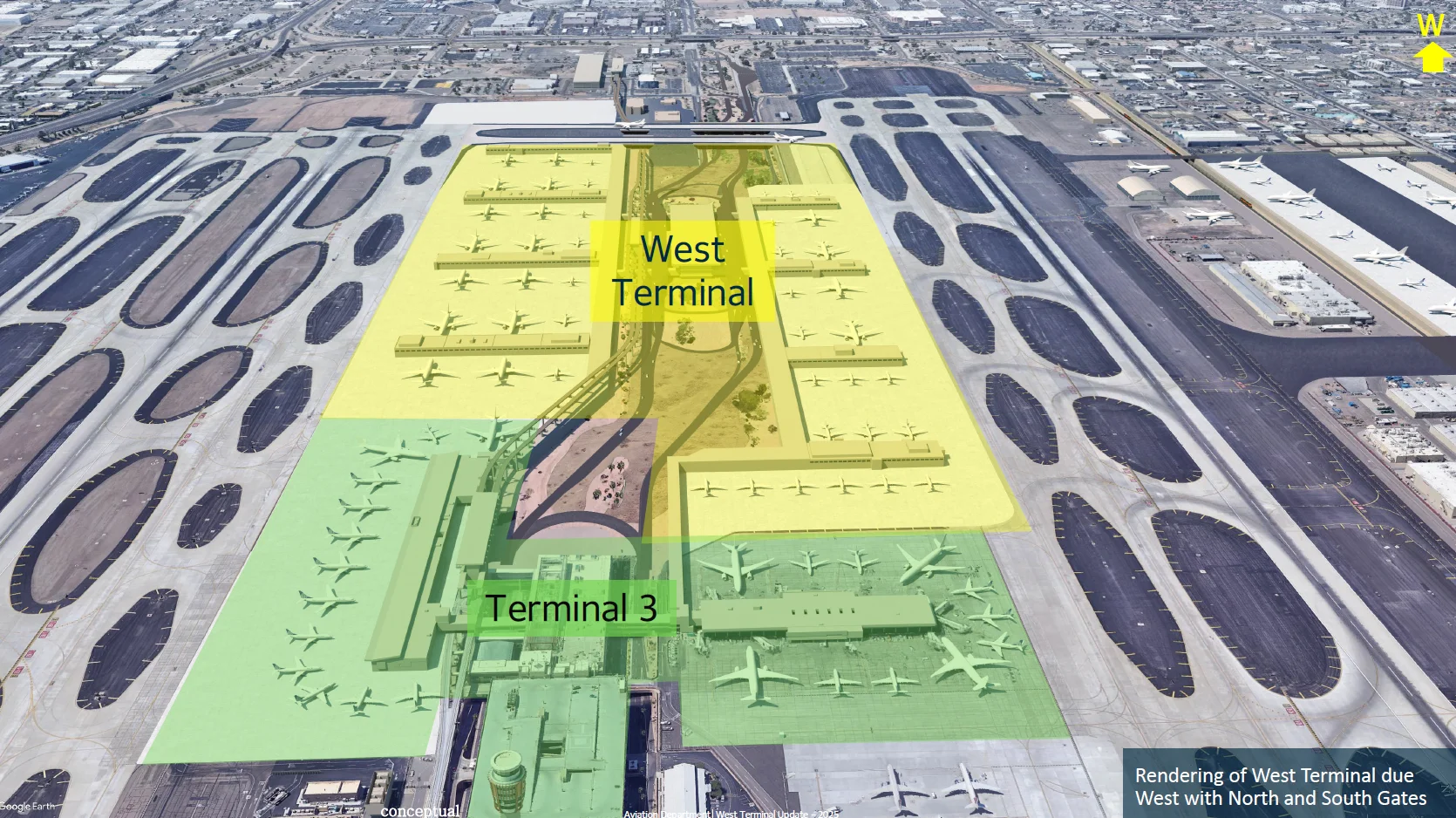
Conceptual aerial rendering showing the proposed West Terminal (yellow) positioned west of Terminal 3 (green), with north and south gate concourses and aircraft positions. Labeled “conceptual.” (Phoenix Sky Harbor)
This will be the airport’s first entirely new terminal since Terminal 4 opened in 1990. Terminal 4 was built in phases over time. The West Terminal follows the same approach. At full build-out, Aviation Director Chad Makovsky says it could have “over 60 gates,” added as demand grows. The modular design means Phoenix isn’t forced to build everything at once.
The terminal is designed to be Sky Harbor’s front door for international traffic. It will handle larger wide-body jets on long-haul routes.
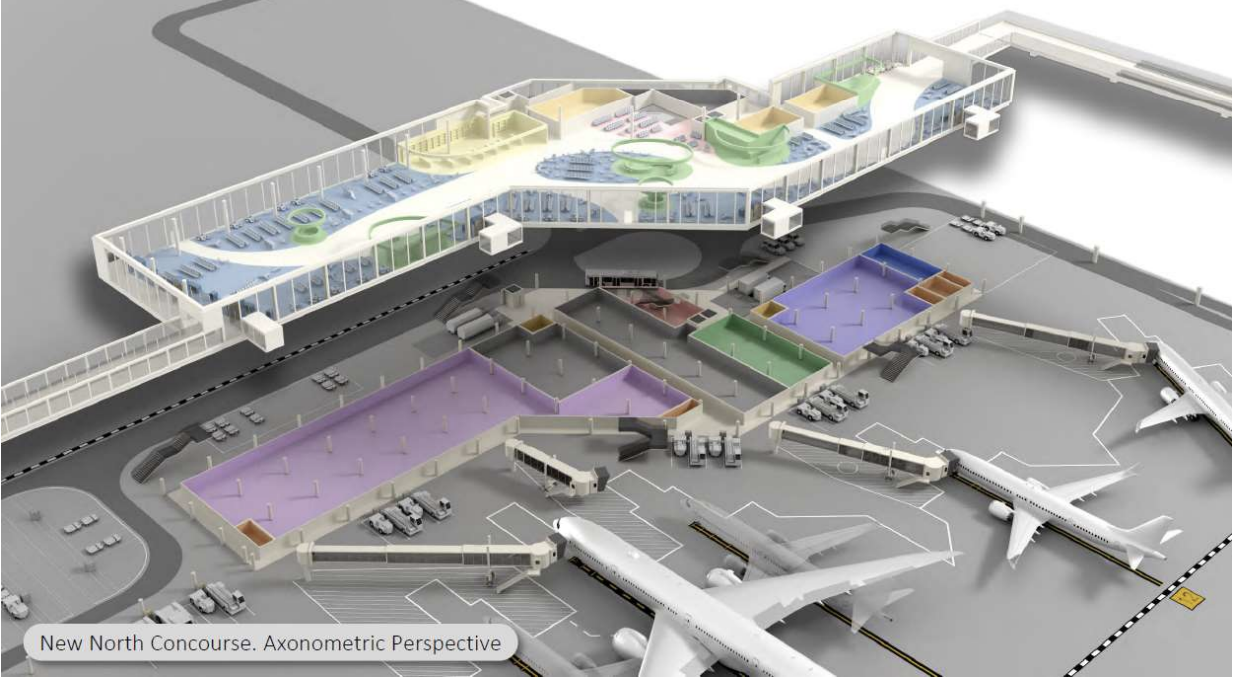
Axonometric rendering of the proposed New North Concourse, showing gates, jet bridges, and aircraft at the apron. (Phoenix Sky Harbor)
Why American Airlines was chosen — and what “months of careful analysis” means
American Airlines wasn’t handed the anchor spot. Aviation Director Chad Makovsky said the Aviation Department spent “months of careful analysis” weighing both operational needs and fiscal responsibility before making the selection.
The numbers make the case plainly. In 2025, American carried 20,893,285 passengers through Sky Harbor. That’s 40.5% of all traffic. Southwest was second at 17,201,906 passengers — a 33.3% share. No other carrier comes close to American’s footprint here. Building a terminal around your largest carrier is a straightforward fiscal argument. The anchor fills the gates and supports the bonds.
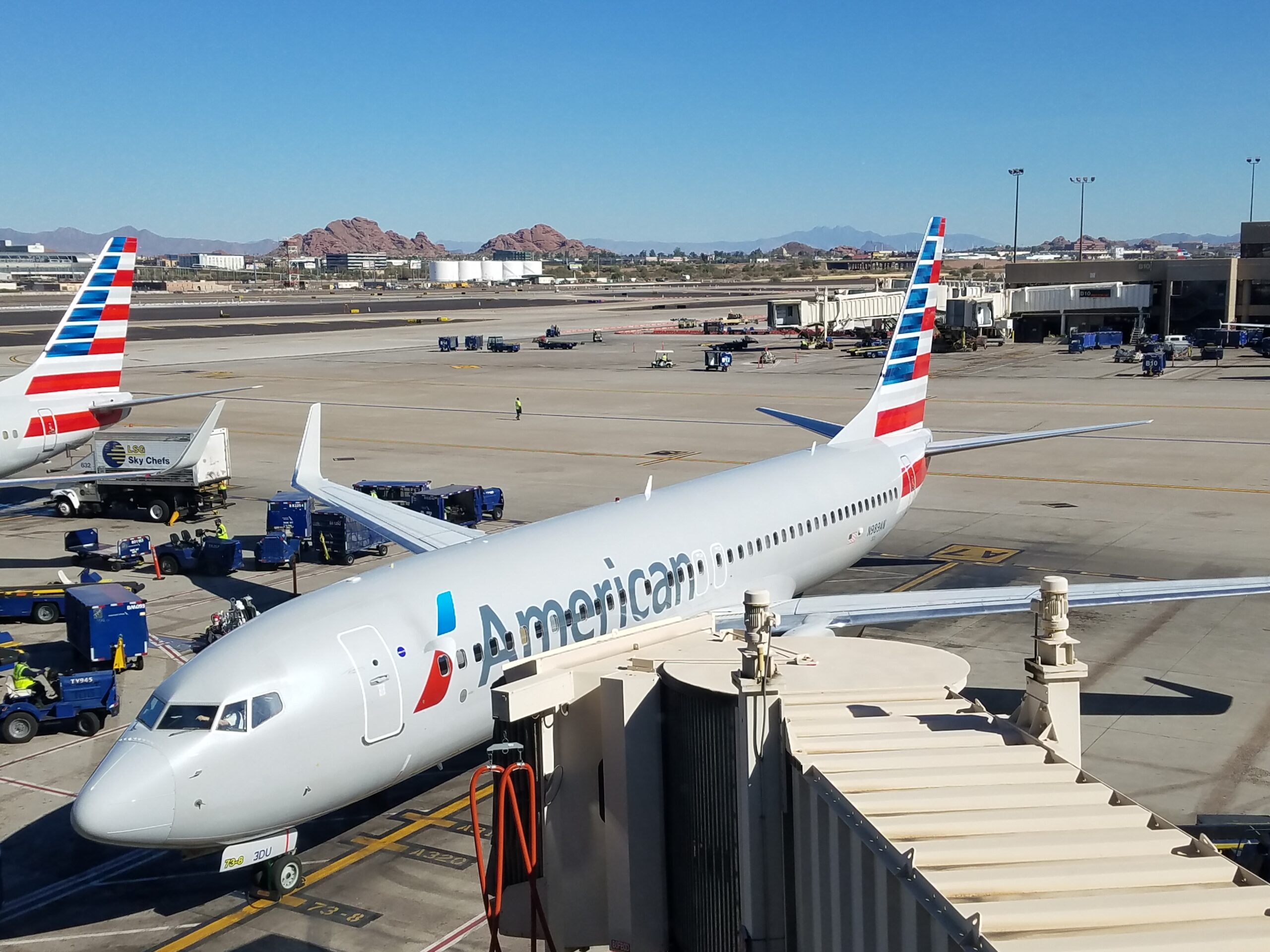
American Airlines aircraft at a Sky Harbor gate. The carrier accounted for 40.5% of the airport’s 51.6 million passengers in 2025. (File photo)
The project is part of Destination PHX 2050. That’s the city’s long-range program targeting 90 million annual passengers by mid-century.
The full construction timeline: six phases, one opening date
The airport has published a clear sequence of milestones. Early 2026 is collaborative visioning and planning — already underway. Design procurement comes in 2027. Detailed design runs from 2028 through 2030. Construction begins in late 2029. The potential opening is late 2033.
The overlap between detailed design and construction start is intentional. Large airport projects often begin foundation work while upper-floor design is still being finalized.
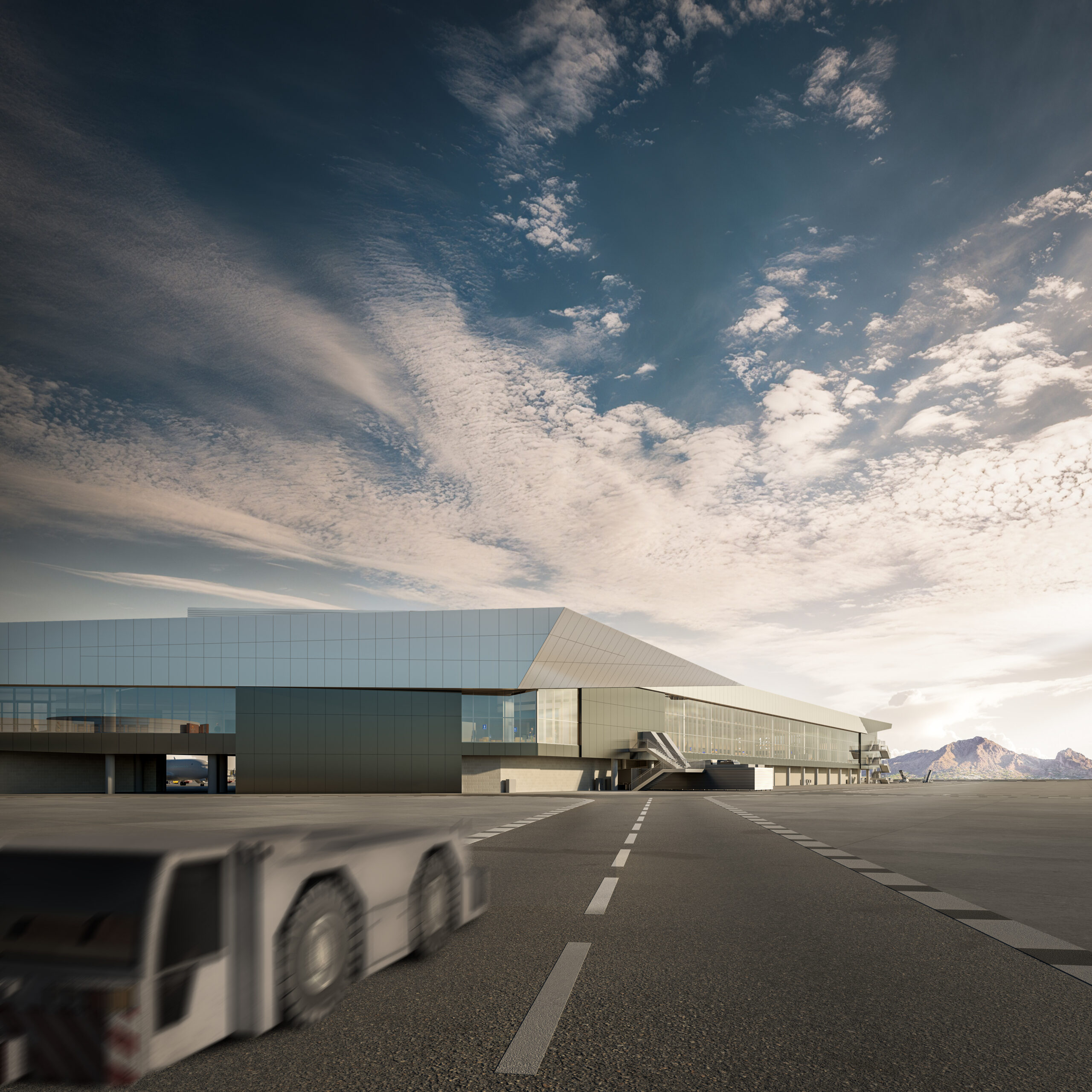
Architectural rendering of the West Terminal facade viewed from the apron, showing the sloped glass exterior and desert mountain backdrop. (Phoenix Sky Harbor)
Who pays — and why Phoenix property owners are not on the hook
The $4.5 billion is funded through three streams: passenger facility charges, airport bonds, and airport revenue. Not one dollar comes from local property taxes or city general funds.
Passenger facility charges are small fees added to every ticket sold at Sky Harbor. You’ve paid them every time you’ve flown out of PHX. Those fees, combined with bonds backed by airport revenue, fund major capital projects at airports without touching municipal budgets.
For Valley residents worried about a $4.5 billion line item on their property tax bill: it won’t be there. The airport funds itself through the people who use it.
Southwest’s opening — and what Terminal 4 looks like after American moves
American’s move doesn’t just affect American fliers. When American vacates its Terminal 4 gates, that space opens up. Southwest Airlines is already the airport’s second-largest carrier at 33.3% of passengers. Analysts say Southwest could be a major beneficiary of the freed-up capacity.
More gates for Southwest could mean more Southwest departures from Phoenix. That typically brings more fare competition on shared routes. For travelers who book on price, that outcome is worth watching.
American already controls 40.5% of Sky Harbor traffic. It will now anchor the airport’s newest, largest terminal. That’s a significant concentration of influence over a public facility. It’s worth tracking as leasing negotiations develop over the coming years. If you fly other carriers, Mesa Gateway Airport continues to add amenities as an alternative for certain routes.
Design procurement starts in 2027 — here’s what comes before that
The collaborative visioning phase is already underway in early 2026. That phase shapes the terminal’s layout and phasing strategy. Design procurement — the competitive process to select architecture and engineering teams — is anticipated in 2027.
To follow the project, track the airport’s Destination PHX 2050 program. That’s where milestone announcements will appear as the work moves from planning to construction documents to groundbreaking.
Sky Harbor already runs autonomous ground transportation between terminals and parking. The West Terminal will eventually connect to that network. If you’re watching international routes expanding at PHX, the West Terminal is where that growth ultimately lands.