
The Maricopa County Stadium District board has hired Valley businessman Mark Winkleman as its executive director. He will manage daily operations, oversee finances, and deal directly with the Arizona Diamondbacks as the team’s stadium gets a major overhaul. The hire puts a named leader on a project that affects every fan, downtown business, and property owner in central Phoenix.
Your seat, your downtown, your tax bill — here is what changes
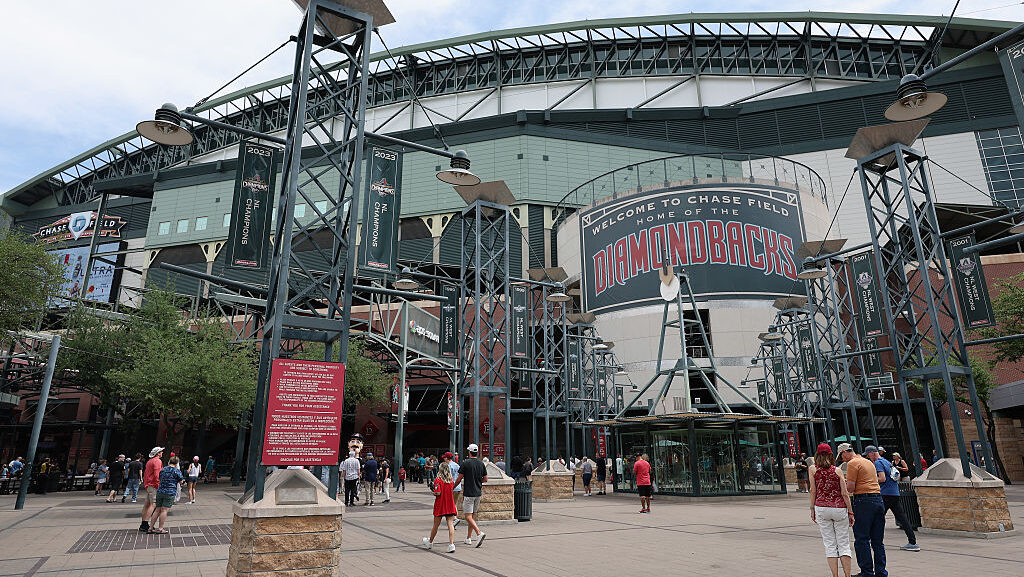
If you go to D-backs games, the most visible payoff is a modernized building. Chase Field opened in 1998. It is now the fourth-oldest ballpark in the National League. That age shows. The renovation will tackle the HVAC system — a real quality-of-life issue in a Phoenix summer — along with concrete, the roof, and structural work that has been put off for years.
No new tax is being created to pay for this. House Bill 2704 recaptures sales taxes already generated at Chase Field and nearby buildings. That money gets reinvested into the stadium over 30 years. Your regular tax bill does not go up.
Beyond game days, Diamondbacks CEO Derrick Hall has described a vision of “365 days of activation” — retail, restaurants, hotel, and office space built around the ballpark. If that vision is realized, it could lift foot traffic and property values near 401 East Jefferson Street. That matters whether you own a business downtown, rent an apartment nearby, or watch central Phoenix real estate. For more on how major projects are reshaping downtown, see our coverage of the JW Marriott office tower conversion in downtown Phoenix.
The catch: none of this is guaranteed yet. The D-backs’ lease expires in 2027, and a new long-term deal still has to be signed.
Who is Mark Winkleman and why did the board choose him
Winkleman founded MGS Realty Partners around 1999 to 2000 and still serves as its president. The firm owns and manages real estate assets and provides advisory services across the Southwest.
Before that, he spent six years in state government. From 2003 to 2009, he served as Arizona State Land Commissioner. He directed the Arizona State Land Department and sat on the cabinets of Governors Janet Napolitano and Jan Brewer. In that role he was responsible for roughly 9.3 million acres of Arizona state land.
That combination maps directly onto what this job demands. Private real estate experience plus public-sector leadership. Winkleman will oversee the Stadium District’s finances and day-to-day operations. He will put the board’s policies into practice. He will also deal directly with public officials, community groups, and the Diamondbacks. He is, in effect, the general manager of a large public construction program that must also negotiate a lease with a Major League Baseball franchise.
The board ran a national search before selecting him. The position was advertised publicly at up to $400,000 per year and drew candidates from across the country.
How HB 2704 works: where the money comes from and what it cannot pay for
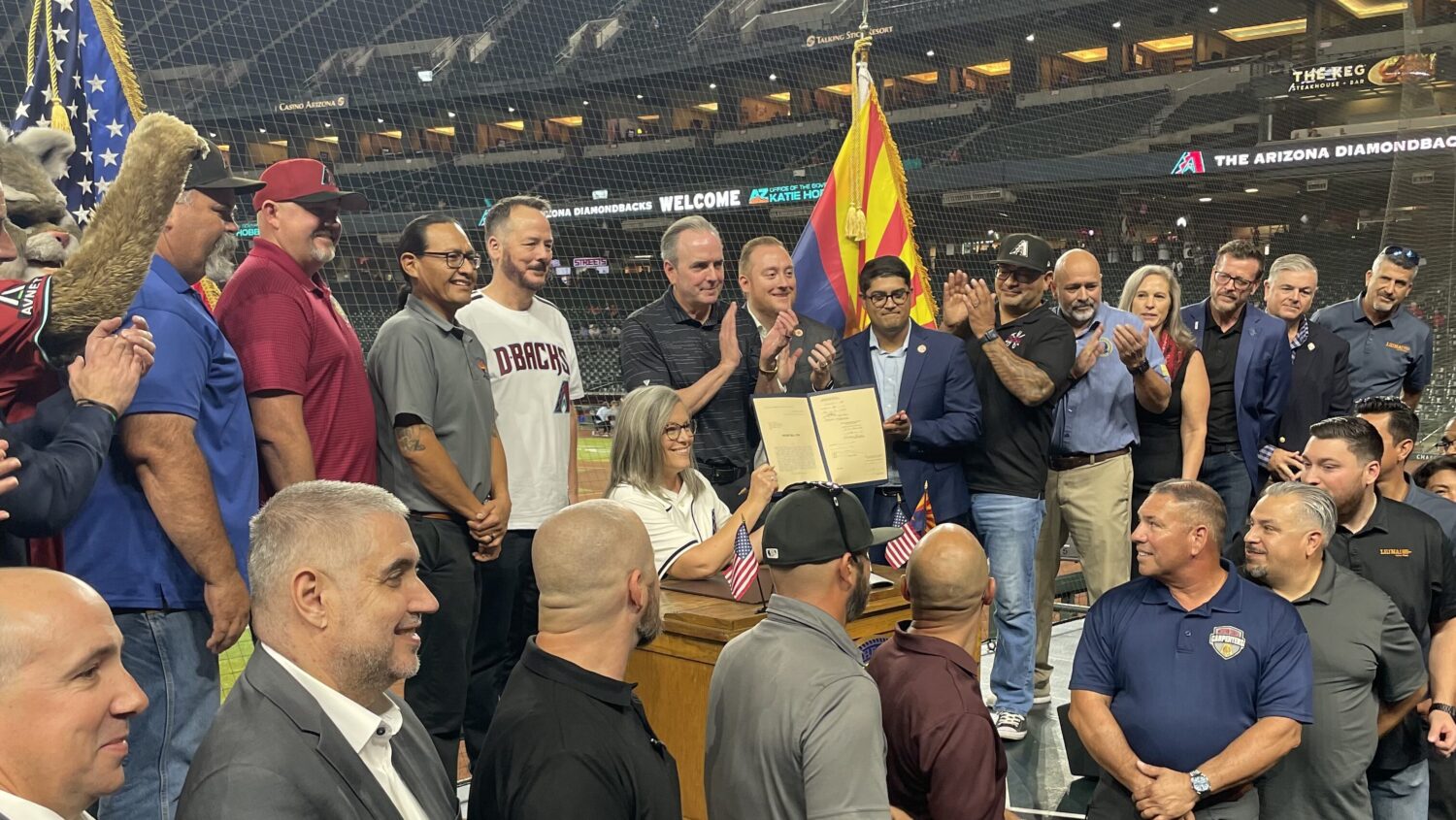
Gov. Katie Hobbs signs HB 2704 at Chase Field on September 3, 2025, locking in the funding structure for the renovation. (InsideTheValley.com)
Gov. Katie Hobbs signed HB 2704 on September 3, 2025. The ceremony was on top of the Diamondbacks’ dugout at Chase Field. The law lets sales taxes generated at the stadium and nearby buildings be recaptured and reinvested in stadium infrastructure over 30 years. The public funding is capped at $500 million, adjusted for inflation.
The law is specific about what that money can and cannot do. It covers infrastructure and repairs. It cannot pay for luxury suites or the stadium’s swimming pool. Phoenix Mayor Kate Gallego pushed for those restrictions during the debate, and they are written into the statute.
Gov. Hobbs cited $5.4 billion in GDP that Chase Field has generated for Arizona as the economic rationale for signing the bill.
The $250 million question: the D-backs’ pledge is not locked in

Chase Field has drawn an average of 31,420 fans per game — the highest in two decades — since the Diamondbacks’ 2023 World Series run. (InsideTheValley.com)
The Diamondbacks have pledged $250 million in private team funds. That is separate from the public money and would bring the total renovation budget close to $750 million. The problem: that pledge is not legally enforceable under HB 2704 as written.
Some Phoenix city leaders raised this gap during the debate. If the team’s contribution is a handshake rather than a contract, the Stadium District and the public carry more risk. Winkleman’s job will include negotiating how — and whether — that pledge gets formalized in the new lease.
Average attendance at Chase Field hit 31,420 fans per game after the 2023 World Series run. That is the highest figure in two decades. It strengthened the public case for investment and gives the D-backs real leverage in any negotiation.
Who runs the Stadium District board
The board has ten members. John Graham, CEO of Sunbelt Holdings, serves as chairman. Two members are appointed by the Phoenix Mayor. One comes from the Maricopa County Board of Supervisors chairperson. The Governor’s Office appoints two residents with backgrounds in construction, redevelopment, architecture, economic development, or public finance. The Senate President and Senate Minority Leader each appoint one such resident. The House Speaker and House Minority Leader each appoint one business owner located within three miles of Chase Field. The Diamondbacks hold one non-voting, ex-officio seat. Derrick Hall, the team’s president and CEO, fills that seat.
Winkleman reports to that board. His job is to carry out its decisions, not make them on his own.
The 2027 lease deadline and the Coyotes lesson

Chase Field regularly fills its concourses and stands; average attendance of 31,420 per game is the highest the ballpark has seen in two decades. (InsideTheValley.com)
The Diamondbacks’ lease at Chase Field expires in 2027. That date drives everything. A renovation plan and a new long-term lease both have to be in place before then. If not, the team is legally free to leave.
Arizona legislators passed HB 2704 with that risk in mind. The Arizona Coyotes’ move to Utah in 2024 was cited during debate as a warning. Losing a second major-league franchise would remove another anchor from downtown Phoenix. That departure was described during the Senate debate as “still a bitter memory.”
Winkleman steps into this job with roughly two years before that deadline. Getting the D-backs’ $250 million pledge into a binding agreement, and getting a new lease signed, are the biggest items on his list.
Before the board votes on a lease, these steps still have to happen
The executive director hire is one piece. The next steps include finalizing the renovation scope, converting the team’s voluntary pledge into contract language, and signing a new lease before 2027. None of those has a publicly announced date yet.
What is known: the funding mechanism is active, the board is seated and chaired, and the executive director is in place. The machinery is built. Whether it produces a signed lease on time depends on talks that are just beginning.
If you own property or a business near Chase Field, or you are watching downtown Phoenix real estate, the next milestones to track are the lease framework announcement and any formal commitment on the D-backs’ $250 million share. For broader context on how large development projects are reshaping the Valley, see our coverage of the Algodón Center Loop 101 Phoenix rezone.