
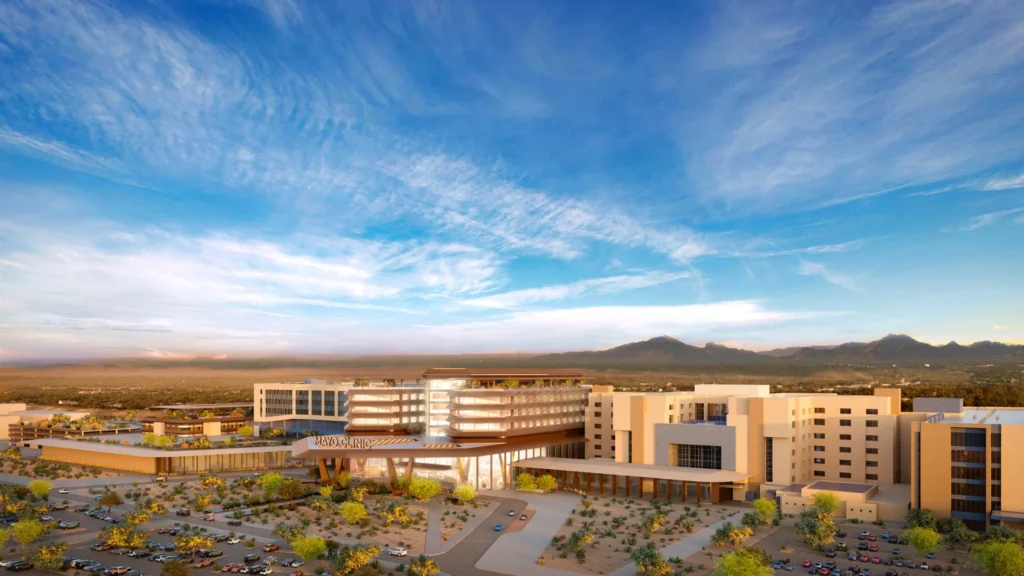
Mayo Clinic is moving forward with a $2.2 billion expansion of its Phoenix campus at 5777 E. Mayo Blvd. Two new buildings will add 1.2 million square feet of space. The project creates roughly 3,500 jobs, and construction runs through at least 2032.
If you live near Loop 101 and 56th Street, here’s your timeline
The Mayo campus sits just south of Loop 101 and east of 56th Street. If that’s your commute route or your neighborhood, years of construction are coming. Dr. Mitchell Humphreys directs the capital transformation project. He says construction will continue through at least 2032. That’s six-plus years of cranes, deliveries, and traffic shifts in a busy medical corridor.
The scale here is unusual. Three general contractors and five design partners are sharing the work. That’s not how a typical hospital wing gets built. It signals a project being treated more like a small city district than a building addition.
Beyond the construction noise, the expansion should matter to you as a patient. Two new buildings will deliver nearly 60% more room to treat patients. That includes 11 new operating rooms, 48 patient rooms, and 14 more intensive-care units. For anyone in the Valley needing complex care, more capacity generally means shorter waits and more options closer to home.
The Scottsdale Road corridor near the campus is also expected to feel the pull. One industry voice told AZ Business Journals that the corridor “will, over the next few years, become tremendously in demand.” Commercial and residential development tends to follow anchor institutions of this size. If you own property nearby, that’s worth watching.
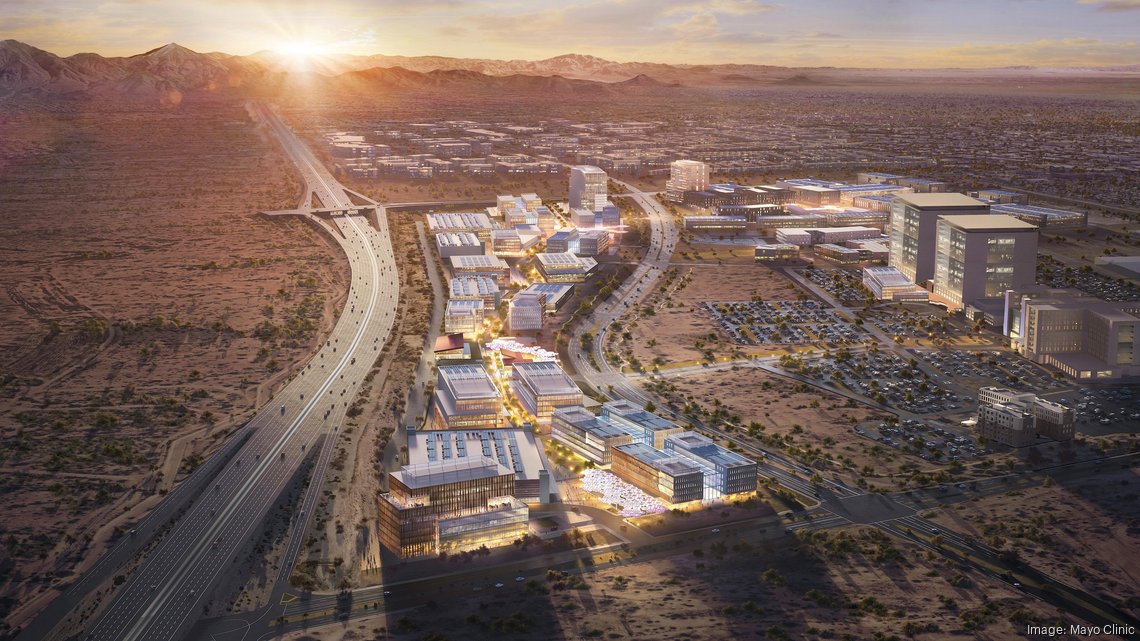
An aerial rendering shows the Mayo Clinic Phoenix campus expansion near Loop 101, with multiple new buildings surrounded by desert landscape. (Mayo Clinic)
From $1.9B to $2.2B: why the price went up
When Mayo Clinic announced the broader expansion in March 2025, total development cost was pegged at $1.9 billion. The figure now stands at $2.2 billion — a jump of about $300 million. Dr. Humphreys put it plainly: “We’ve got more demand than what we have capacity.” Patient volume is growing faster than the campus can handle. That March 2025 announcement already built on an earlier $748 million investment, so this latest figure layers onto significant prior spending.
‘Hope Unbound’: what Mayo’s city filing actually says
Mayo Clinic recently filed a project narrative with the city of Phoenix titled “Hope Unbound.” This is a formal document, not a marketing tagline. It lays out the first steps of the campus transformation. The March 2025 plan described a new procedural building. It also called for a multi-floor expansion of the Mayo Clinic Specialty Building — both vertical and horizontal. A two-story indoor promenade wrapping the campus was included as well. The “Hope Unbound” filing builds on that framework as design moves forward.
Richard Gray, M.D., CEO of Mayo Clinic in Arizona, described the stakes plainly. He said the investment “will forever change the patient and staff experience in Arizona.” Mayo Clinic, he added, is growing and reinventing its clinical care, research, and education.
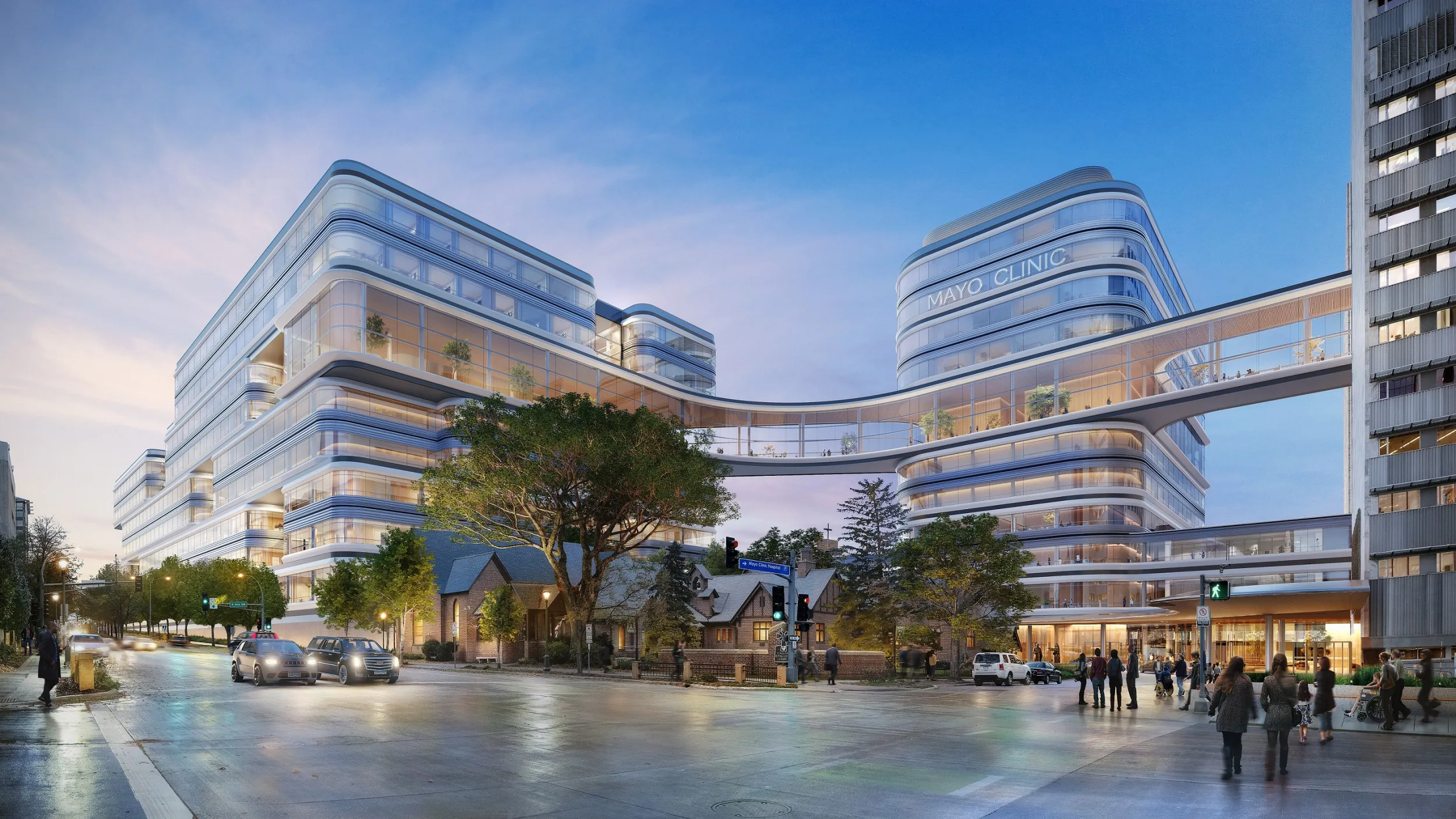
A street-level rendering shows two connected towers planned for the Mayo Clinic Phoenix campus, linked by a sky bridge above pedestrian walkways. (Mayo Clinic)
Care neighborhoods explained: what it means for patients
The expansion is built around a model called “care neighborhoods.” The idea is straightforward. Instead of sending a patient from one department to another, related services are clustered together in one zone. You check in, and the specialists, testing, and follow-up you need are nearby. For patients managing complex conditions, that’s a real difference in how an appointment day feels.
Three thousand five hundred jobs: what the range looks like
The expansion is expected to create roughly 3,500 new jobs. Those roles span physicians, nurses, surgical technicians, imaging staff, researchers, food service workers, and administrative support. If you live in northeast Phoenix or the Scottsdale corridor and want healthcare work, this is a sustained hiring wave. It will play out over multiple years, not a single recruitment push.
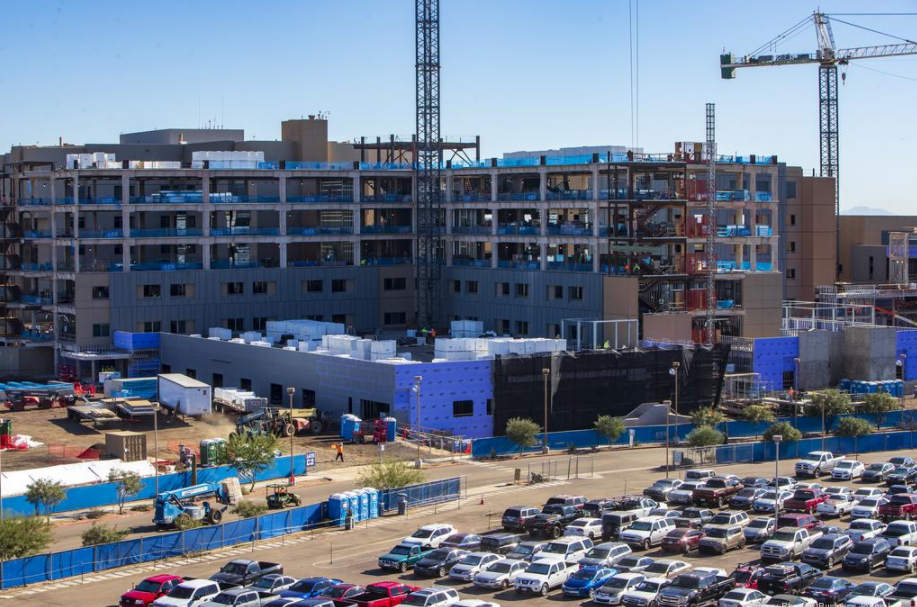
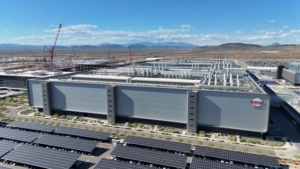
Tower cranes and blue construction wrap at a large Phoenix-area medical campus. Residents near Mayo Clinic can expect similar activity through at least 2032. (InsideTheValley.com)
How this compares to the Arizona Forward Project
The current expansion isn’t Mayo Clinic’s first big build in Phoenix. An earlier phase called the Arizona Forward Project grew inpatient beds from 280 to 374 by 2023. That project was also expected to add close to 2,000 jobs, including about 200 physicians, by 2029. The $2.2 billion plan goes much further. It adds 1.2 million square feet — far beyond the incremental bed additions of Arizona Forward. Residents who watched cranes go up during that earlier phase now have a track record for how Mayo delivers on a large campus build.
Design stage now, permits and construction ahead
As of late November 2026, the project is in the design stage. The “Hope Unbound” filing with the city of Phoenix is the first formal step toward permits. Three general contractors and five design partners are engaged. Permitting and mobilization for a project this complex takes time. Ground won’t break in a visible way overnight.
Dr. Humphreys has confirmed construction runs through at least 2032. No earlier completion date appears in the verified project record. If you’re watching this for a job opportunity or a real estate decision near Scottsdale Road, now is the time to track it. Construction activity near Loop 101 and 56th Street ramps up once permits clear.