
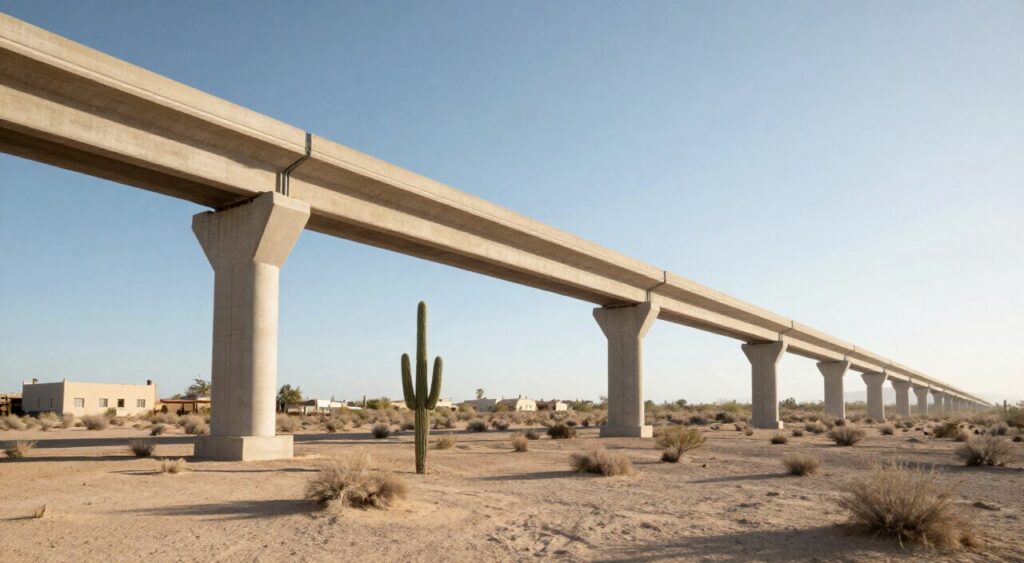
Valley Metro is actively studying whether the west Phoenix light rail expansion should run above Indian School Road on an elevated structure instead of at street level. The idea came directly from community feedback. No cost comparisons have been released yet, and the Phoenix City Council is not expected to vote on a final alignment until early summer 2027.
If you live or own property in Maryvale, here is what is at stake right now
An elevated train line and a street-level train line feel very different from the sidewalk. At street level, trains share signals with cars, deliveries slow the works, and crossings can back up traffic. An elevated line clears all of that. For daily commuters on Indian School Road, elevated rail could mean faster, more reliable trips once the line opens.
But for businesses along the corridor, the uncertainty is real and ongoing. A previous west Phoenix light rail plan was killed in 2019 after businesses lobbied against it. Some residents at earlier meetings have said publicly they doubt the input process is genuine. That skepticism has not gone away.
For homeowners and renters near the eventual route, the alignment decision matters. Property values near transit stations tend to shift once a route is locked in — sometimes before a shovel hits the ground. The problem is that nothing is locked in yet. Valley Metro has not published cost comparisons for the elevated option, and the technical review is still running against at-grade alternatives. That means another year or more of uncertainty before the city commits to anything.
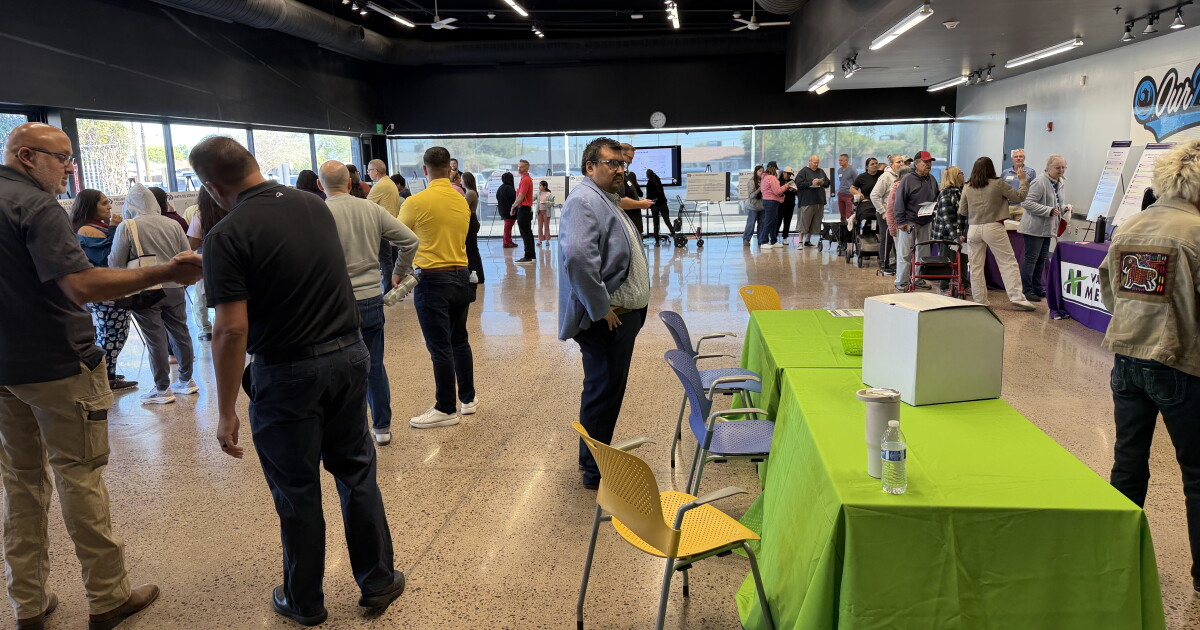
Residents review project displays at a community open house similar to the engagement events Valley Metro has held for the West Phoenix Light Rail Extension. (Illustrative photo)
Where the elevated idea came from: a turkey giveaway, not a planning office
Valley Metro staff did not propose elevated rail in a boardroom. The idea surfaced from residents at earlier public meetings, and Valley Metro brought it back to the community on Nov. 22, 2026. Staff set up at Councilwoman Betty Guardado’s Thanksgiving Turkey giveaway at the Maryvale Community Center — talking to residents waiting in line, not at a formal planning session.
That choice of venue says something about how Valley Metro is trying to reach Maryvale. It also means the elevated option is still early-stage. No engineering drawings, no price tag, and no timeline specific to the elevated design have been published.
The two alignment questions Maryvale is being asked to weigh in on
Valley Metro is asking residents two related questions about the West Phoenix Light Rail Extension, known as the WPE.
First, the route itself. The WPE is planned as a 10-mile extension that would run west along Indian School Road to 75th Avenue, turn south to Thomas Road, and end at the Desert Sky Transit Center at 79th Avenue and Thomas Road.
Second, how the line connects back to the existing network. Valley Metro is asking whether the expansion should turn north at 19th Avenue to link up with the existing system, or continue east from there to connect at a different point. That choice affects which neighborhoods get stations, how transfers work, and how long the ride takes for someone heading downtown.

Valley Metro light rail cars 212B and 205A at Washington Street and 1st Avenue in downtown Phoenix — the existing network that the West Phoenix Light Rail Extension would connect to. (Illustrative photo)
The overpass at 35th Avenue and Grand Avenue is already being designed around this line
Here is a detail most news coverage has missed. The Arizona Department of Transportation, the City of Phoenix, and the Maricopa Association of Governments are separately planning an elevated intersection where 35th Avenue and Indian School Road would cross above Grand Avenue (US 60) and the BNSF railroad. That structure is being designed to accommodate the light rail extension and bus rapid transit.
That matters because it creates a physical reality on the ground before the full WPE alignment is finalized. Valley Metro’s deputy chief for design and construction, Tony Santana, told Axios the agency is “seeing a lot more advantages of being elevated at least over I-17.” If a major intersection on the route is already being built to handle an elevated train, the pressure to keep the rest of the line elevated grows — even if the full-line elevation question is still formally open.
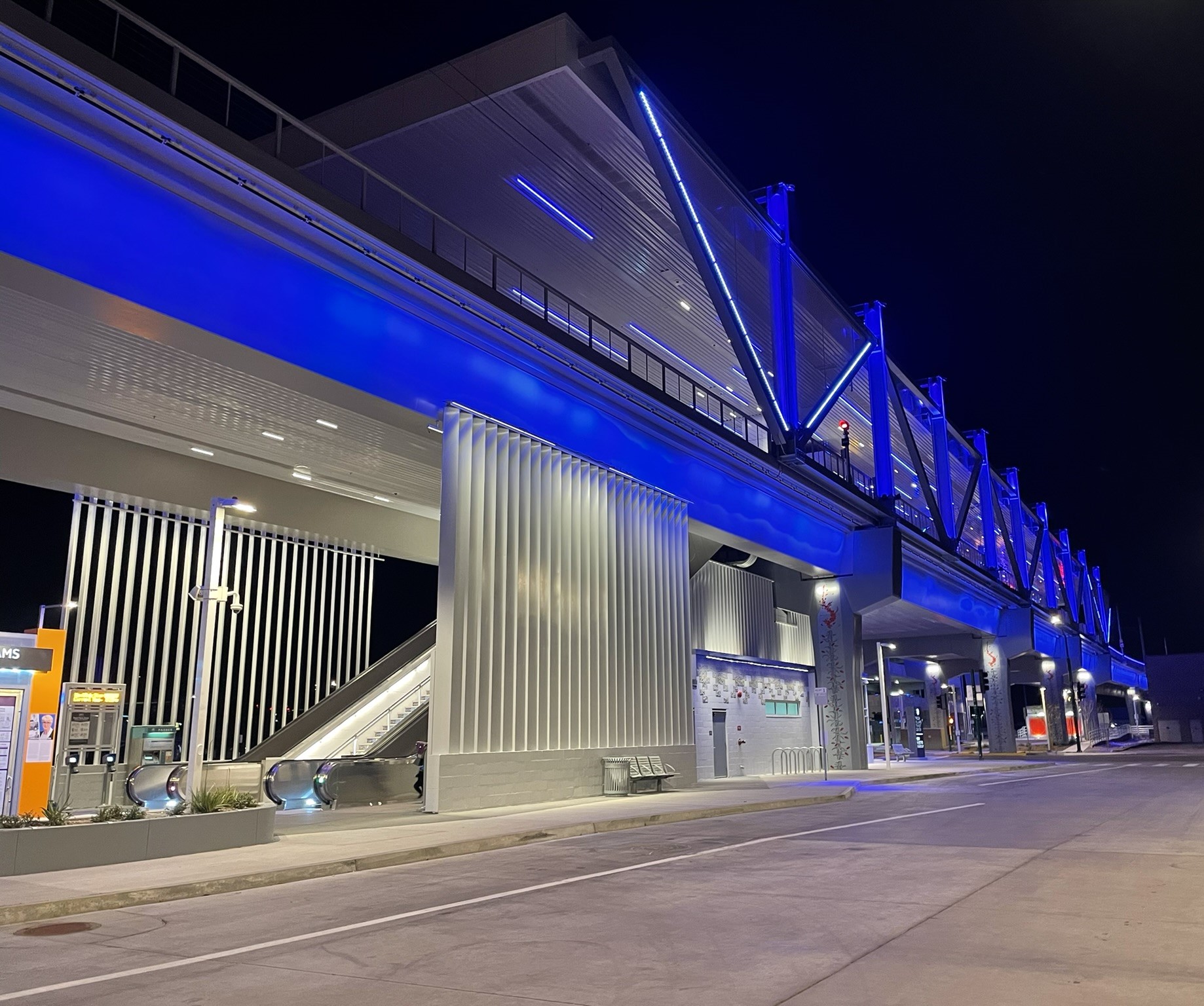
An elevated transit station showing the kind of infrastructure — escalators, raised platforms, and an overhead guideway — that grade-separated light rail requires. The WPE elevated option remains under technical review. (Illustrative photo)
No cost comparison has been published — that is a gap you should know about
Elevated rail almost always costs more to build than at-grade rail. Columns, viaducts, and elevated stations add construction complexity. But Valley Metro has not released any numbers comparing the two options for the WPE. The elevated design is still under technical review.
That means residents being asked for input right now are weighing in without knowing the price difference. The cost figures are expected to come before the council vote. Until they do, any community preference for elevated rail is based on experience with traffic and ride quality, not on a budget trade-off.
How the project got here: the January vote and the road back to council in summer 2027
On Jan. 27, 2026, Mayor Kate Gallego and the Phoenix City Council voted 7-2 to approve and expedite the west Phoenix light rail alignment along Indian School Road. That vote set the corridor. It did not settle whether the line would run at street level or above it.
Since that vote, Valley Metro has been gathering public input and running technical studies. The formal recommendation on alignment options is headed back to the public and to the City Council. The council vote on the alignment is expected in early summer 2027.
That vote will not start construction. It will lock in the route and structure type, clearing the way for environmental review and final design. Construction is expected to begin in 2032. The line is scheduled to open in 2036.
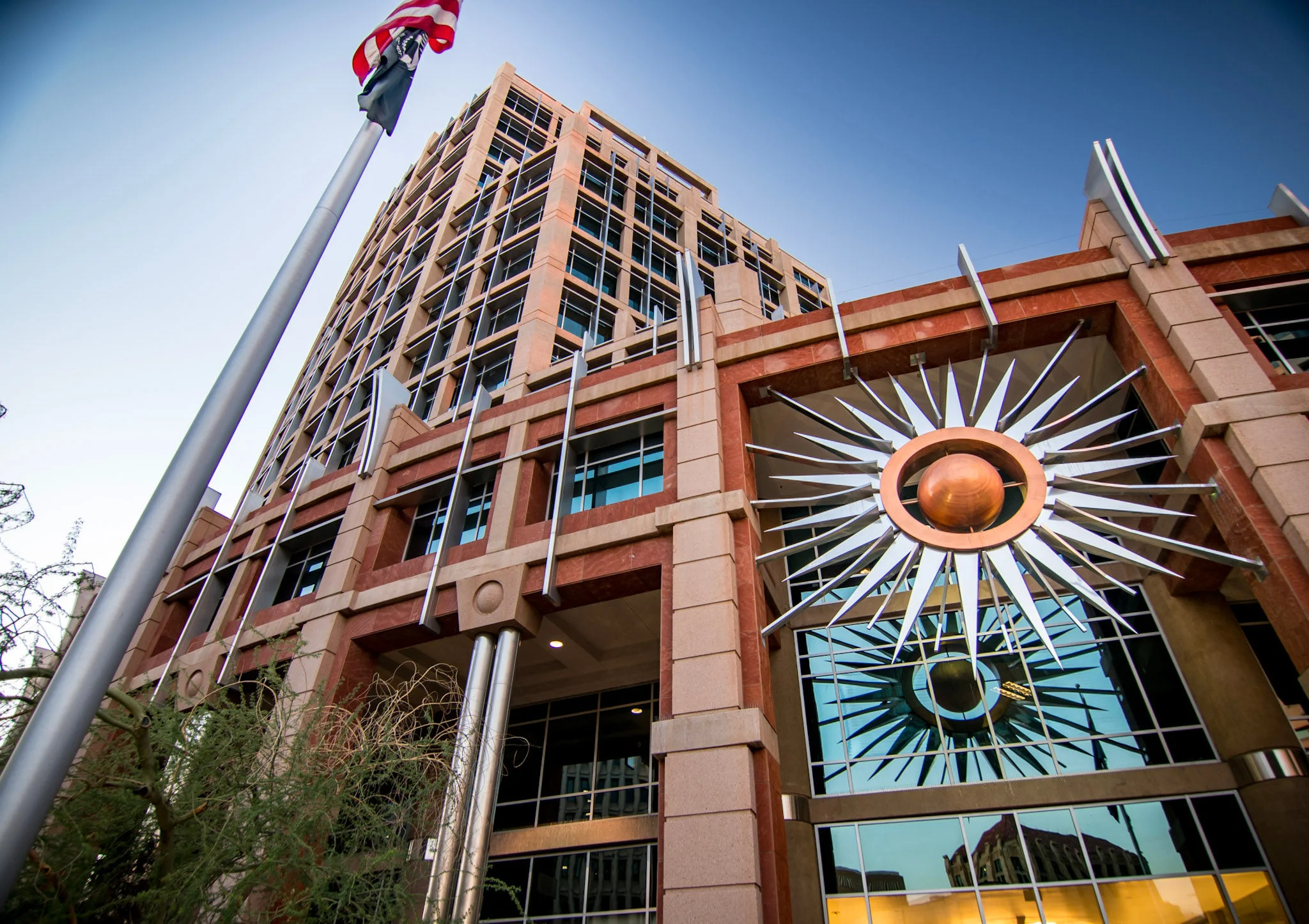
Phoenix City Hall, where the council voted 7-2 on Jan. 27, 2026 to approve and expedite the Indian School Road alignment for the West Phoenix Light Rail Extension. (Illustrative photo)
The early summer 2027 vote, and what you can do before it happens
Valley Metro plans to present alignment study results to the public and to the City Council next year. The council vote on the final alignment is expected in early summer 2027.
That window is your most direct opportunity to influence whether the line is elevated, at-grade, or some combination. Valley Metro has shown it is listening — the elevated option exists because residents asked about it at earlier meetings. Watch for public meeting announcements from Valley Metro and from Councilwoman Betty Guardado’s office, which covers District 5 and much of the Maryvale corridor.
What is not yet known: the cost comparison between elevated and at-grade designs, the specific station locations, and the final answer on the 19th Avenue connection question. Those details are expected before the council vote. Until then, the route is set but the shape of it is still being written.