
Arizona officially joined Nevada’s lawsuit against the U.S. Department of the Interior on Oct. 16, 2026, aiming to block a federal Colorado River plan that would cut the state’s water supply by roughly 27% — and potentially much more after 2028. For the nearly six million people who rely on Central Arizona Project water across Maricopa, Pinal and Pima counties, this lawsuit is the main line of defense.
Your CAP water, your water bill, and what’s actually at risk
If you live in Phoenix, Tucson, or most communities in between, your tap water travels through the Central Arizona Project. The CAP is the largest water delivery system in Arizona. The Colorado River is its source.
The federal plan being challenged in court would cut Arizona’s Colorado River allocation by about 20% through 2028. After that, the lawsuit says cuts could reach 40%. That second phase is the bigger worry.
Arizona, California and Nevada reached the Lower Basin Agreement in May 2026. Without it, the CAP’s Colorado River supply would be cut by 77% over the next two years. The agreement is holding that threat back for now.
What does that mean on the ground? Greater reliance on groundwater, which is more expensive to pump. Potential rate increases as utilities pay more to find and treat alternative supplies. Long-term uncertainty for farmers, homebuilders and businesses across Maricopa, Pinal and Pima counties.
No one can say yet whether your water bill will go up, or by how much. But ADWR Director Tom Buschatzke said the federal framework “could result in cuts to the state apportionment that would devastate Arizona’s economy.” That is the official position of the state agency that manages Arizona’s water supply.
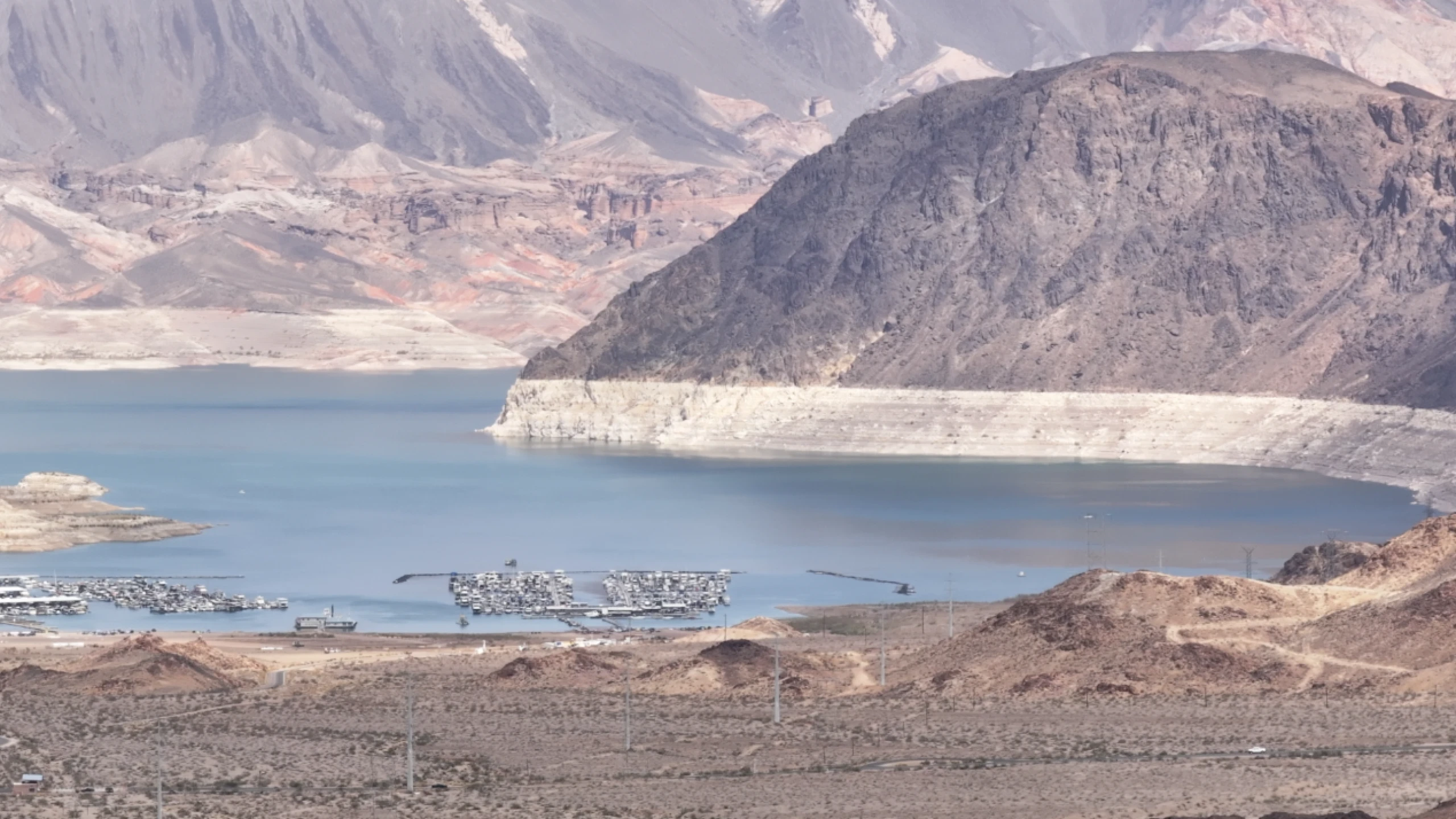
A bathtub ring marks where water once stood on a Colorado River reservoir. Low levels like these drove the federal plan now being challenged in court. (aerial photo)
What Arizona just did — and why it did it Friday
Governor Katie Hobbs and the Arizona Department of Water Resources announced Friday, Oct. 16, 2026 that Arizona has intervened in Nevada’s existing lawsuit. The state is not filing a separate case — it is joining as a party to the action Nevada already started.
Nevada moved fast. The Nevada Attorney General, the Colorado River Commission of Nevada and the Southern Nevada Water Authority filed the lawsuit on Aug. 24, 2026. That was just three days after Interior Secretary Doug Burgum signed the final federal plan on Aug. 21.
Arizona had been building toward this. Lawmakers set aside funds for potential legal action. ADWR retained outside counsel. The City of Phoenix retained its own attorney in August. The Central Arizona Project’s governing board authorized its attorneys to pursue legal action in September. By the time Governor Hobbs announced the intervention Friday, four separate Arizona actors had already taken formal steps to fight the federal plan.
The federal plan: how Arizona became the biggest loser
The federal plan cuts Colorado River supplies to all three Lower Basin states — Arizona, California and Nevada. Arizona takes the hardest hit by far.
Arizona loses 760,000 acre-feet per year. That is nearly 250 billion gallons annually. It represents roughly 27% of the state’s full Colorado River allocation.
The four Upper Basin states — Colorado, New Mexico, Utah and Wyoming — are not required to give up any water under the federal plan. That asymmetry sits at the center of Arizona’s legal argument.
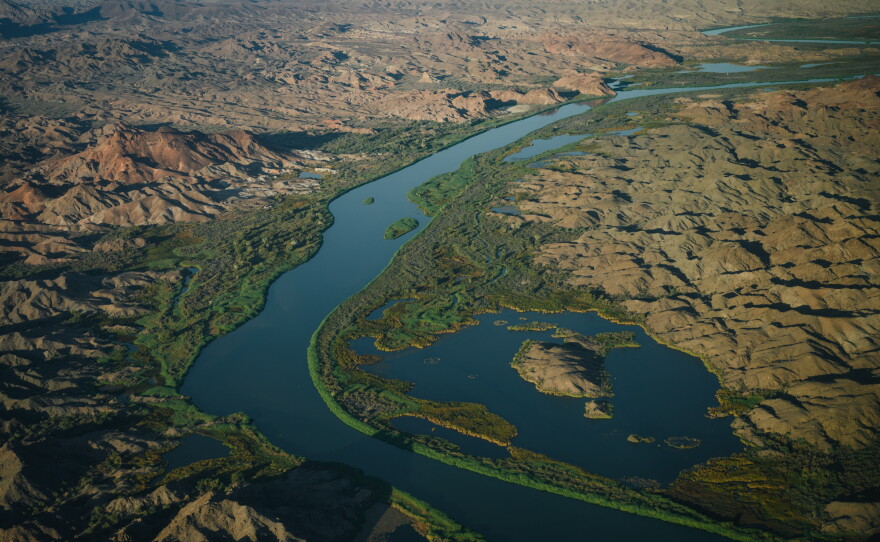
The Colorado River winds through desert mountains. Nearly 6 million residents across Maricopa, Pinal and Pima counties depend on this water through the Central Arizona Project. (aerial photo)
Upper Basin vs. Lower Basin: the fairness argument driving the lawsuit
The law of the river is the set of compacts, court decisions and federal agreements that govern Colorado River water. A core requirement: Upper Basin states must deliver a minimum amount of water to Lake Mead each year.
The lawsuit argues the federal plan ignores that obligation. The federal government is placing nearly the entire conservation burden on Lower Basin states. Arizona absorbs the largest single cut of anyone. The Upper Basin gives up nothing.
Buschatzke put it plainly: the plan “ignores basic elements of the law of the river.”
A 20% cut through 2028 is painful but manageable, especially with the Lower Basin Agreement in place. A 40% cut after 2028 is a different problem. Arizona cities, farms and tribes would need replacement water supplies that do not currently exist at scale.
The Lower Basin Agreement: what it is and what it is holding back
In May 2026, Arizona, California and Nevada agreed to conserve more than 3.2 million acre-feet of water in 2027 and 2028. The goal was to stabilize the river and avoid deeper federal cuts.
That agreement is doing real work right now. Without it, the CAP would face a 77% cut to its Colorado River supply over the next two years. Governor Hobbs said Arizona would keep working with Nevada and California to carry out that agreement. At the same time, Arizona is suing the federal government over the plan it imposed.
The lawsuit is not an attack on the Lower Basin Agreement. It argues the federal plan goes further than the law allows and that the Upper Basin must share the burden.
The court filing and what comes next
As of Oct. 16, 2026, Arizona has formally intervened in the Nevada lawsuit. The case targets the U.S. Department of the Interior and the federal operating plan Burgum signed on Aug. 21, 2026.
The lawsuit aims to prevent cuts of up to 3 million acre-feet per year to Lower Basin states. It also seeks to force the federal government to enforce Upper Basin delivery obligations to Lake Mead.
No court date or ruling timeline has been announced from the sources available. Watch this space; we will update as the court sets dates.
The outcome will shape how much Colorado River water reaches your tap. It will determine how much groundwater utilities must pump as a backup. And it will set the terms for growth and farming across Maricopa, Pinal and Pima counties for years to come.
For more on how Colorado River cuts affect Valley homeowners, see our guides: Colorado River Cuts 2026: Phoenix Valley Guide and Arizona Colorado River Cuts 2027: Phoenix Impact.