

Starting September 12, 2026, your HOA in a planned community can no longer ban pergolas, shade sails, awnings, or other backyard shade structures outright. A separate law now gives condo owners the same foreclosure protections that planned-community homeowners already had. Here is what changed, what did not, and what you need to watch for.
Your backyard just got a little more yours — if you live in a planned community
For years, some Phoenix Valley homeowners have had to tear down backyard pergolas or skip them entirely because their HOA said no. That stops now. Gov. Katie Hobbs signed HB 2342 into law, and it took effect September 12, 2026. Your HOA cannot ban you from installing or using a shade structure in your backyard.
Rep. Stacey Travers (D-Chandler) sponsored the bill. She introduced it after a constituent was told by her HOA to remove a backyard pergola she had already built. That is not a hypothetical — it happened to a real Chandler-area homeowner, and it is why the bill exists.
Phoenix attorney Jonathan Dessaules represents homeowners fighting HOAs. He has pointed to a pattern worth knowing: some associations charge hundreds or thousands of dollars in collection fees. They do this without ever talking to the homeowner first. These new laws are a direct response to that kind of imbalance.
More than 2.26 million Arizonans live in HOA-governed communities, according to 2025 data from the Community Associations Institute. In the Phoenix Valley, that is a very large share of the housing stock.

Planned-community subdivisions like these across the Phoenix Valley are covered by HB 2342’s new shade-structure protections. (File photo)
What HB 2342 actually does: no more outright pergola bans in planned communities
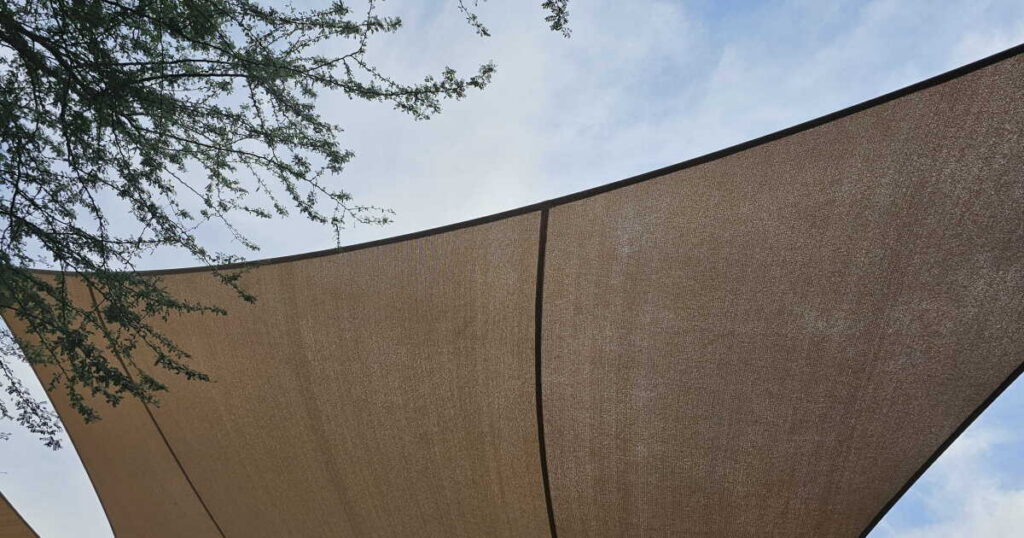
The law defines a shade structure as a commercially produced or professionally manufactured movable or permanent structure. It must be designed to protect an area from sunlight. That definition covers umbrellas, awnings, shade sails, gazebos, pergolas, and canopies. If it fits, your HOA cannot ban it.
Your HOA can still set reasonable rules. Size, placement, and appearance are fair game. But an HOA rule cannot cross four lines:
- Prevent you from installing the structure
- Impair the structure’s functioning
- Restrict your use of it
- Unreasonably raise its cost
That last point matters. An HOA cannot pile on permit fees so steep that putting up a shade sail becomes practically impossible. The law blocks that workaround.
Important: condo owners are not covered by the shade structure law
HB 2342 amends the Planned Communities Act. It does not amend the Condominium Act. If you own a condo and your patio involves a common element, HB 2342 does not protect you. Your condo association can still prohibit shade structures under its existing rules.
This is the single biggest gap most coverage of HB 2342 has missed. Not sure whether you live in a planned community or a condo association? Check your CC&Rs. Or call your association manager and ask directly.
SB 1246: condo associations now face the same foreclosure limits as HOAs
Before 2026, condo owners had weaker foreclosure protections than homeowners in planned communities. SB 1246 fixes that. As of September 12, 2026, a condo association cannot foreclose unless you are at least 18 months delinquent. It also cannot foreclose unless you owe $10,000 or more. Whichever threshold comes first applies.
Planned-community HOAs already operated under this standard. SB 1246 catches condos up to that same line.
The special assessment rule every Arizona homeowner should know
Here is the part that trips people up. If the debt you owe is a special assessment of $10,000 or more, only the 18-month delinquency threshold applies. The dollar amount alone does not trigger foreclosure. Your association still has to wait the full 18 months, no matter how large the special assessment is.
That is a meaningful protection. Without it, a large special assessment vote could put a homeowner in immediate foreclosure territory. The law closes that door.
HOAs must now enforce rules fairly and without favoritism
Beyond the shade-structure and foreclosure changes, the 2026 HOA reform package requires associations to enforce their rules fairly and without favoritism. That means your HOA cannot selectively enforce rules against some homeowners while letting others slide.
This is a third major reform that did not get as much attention as HB 2342 and SB 1246. For homeowners who have felt singled out by their association, it is worth knowing the rule now exists.

Planned communities across the Phoenix Valley are subject to the new fair-enforcement requirement that took effect September 12, 2026. (File photo)
How to use these laws right now
If your HOA has already told you to remove a pergola or denied a shade sail, the September 12 effective date is the line. Rules that conflict with HB 2342 cannot be enforced against planned-community homeowners from that date forward.
If you live in a condo, you are not covered by HB 2342. Read your CC&Rs before you build anything.
If you are behind on dues and facing collection pressure, note the new rule. Your condo association must clear the 18-month or $10,000 bar before it can foreclose. If you have received collection notices with large fees and no prior contact from the association, Arizona law is now pushing back against that practice. Dessaules specifically named it as the core abuse these laws address.
If you are buying a home in the Phoenix Valley and weighing a planned community against a condo, this distinction matters. Gilbert home prices and buyer leverage data for August 2026 can help frame that decision. The Scottsdale short-term rental ordinance is another 2026 change reshaping HOA neighborhoods.