
Arizona’s Water Bank has spent decades quietly storing surplus Colorado River water underground. Now, for the first time, it is spending those savings. The Arizona Water Banking Authority adopted a policy on July 17, 2026. It will use stored credits to offset cuts to Valley cities’ Colorado River supplies in 2027. The guarantee lasts only one year.
Your water is not shutting off, but your bill is heading up
If you live in Phoenix, Scottsdale, Mesa, or Glendale, your tap will keep flowing in 2027. That is not in question. What is in question is how much it will cost to keep things that way — and what happens the year after.
City leaders have said Colorado River cuts will not drain Phoenix-area taps. But the backup plan — combining stored water, engineering projects and water-transfer deals — will cost billions of dollars. Those costs flow back to residents through higher water bills. New homebuilders will also face closer scrutiny over assured-water-supply certificates, which can slow or block subdivision approvals in areas most dependent on Colorado River water. Outer-ring suburbs that rely heavily on the Central Arizona Project canal carry additional long-term uncertainty past 2027.
The two most immediate facts: your water works in 2027, and no one has yet written the rules for 2028.
Why Arizona has more than four million acre-feet of water sitting underground
Arizona is legally entitled to 2.8 million acre-feet of Colorado River water each year. When the Central Arizona Project canal came online, it was delivering 1.6 million acre-feet annually by 1985 — more than Arizona could use at the time.
Rather than let that surplus flow past, Arizona built the Water Bank. For decades it pumped the extra water into underground aquifers across the state, running up a massive ledger of long-term storage credits.
The Arizona Water Banking Authority now holds more than 4.4 million acre-feet in credits. Only about 5% of that total has ever been pulled back out. The reserve is, by any measure, enormous — and nearly untouched.
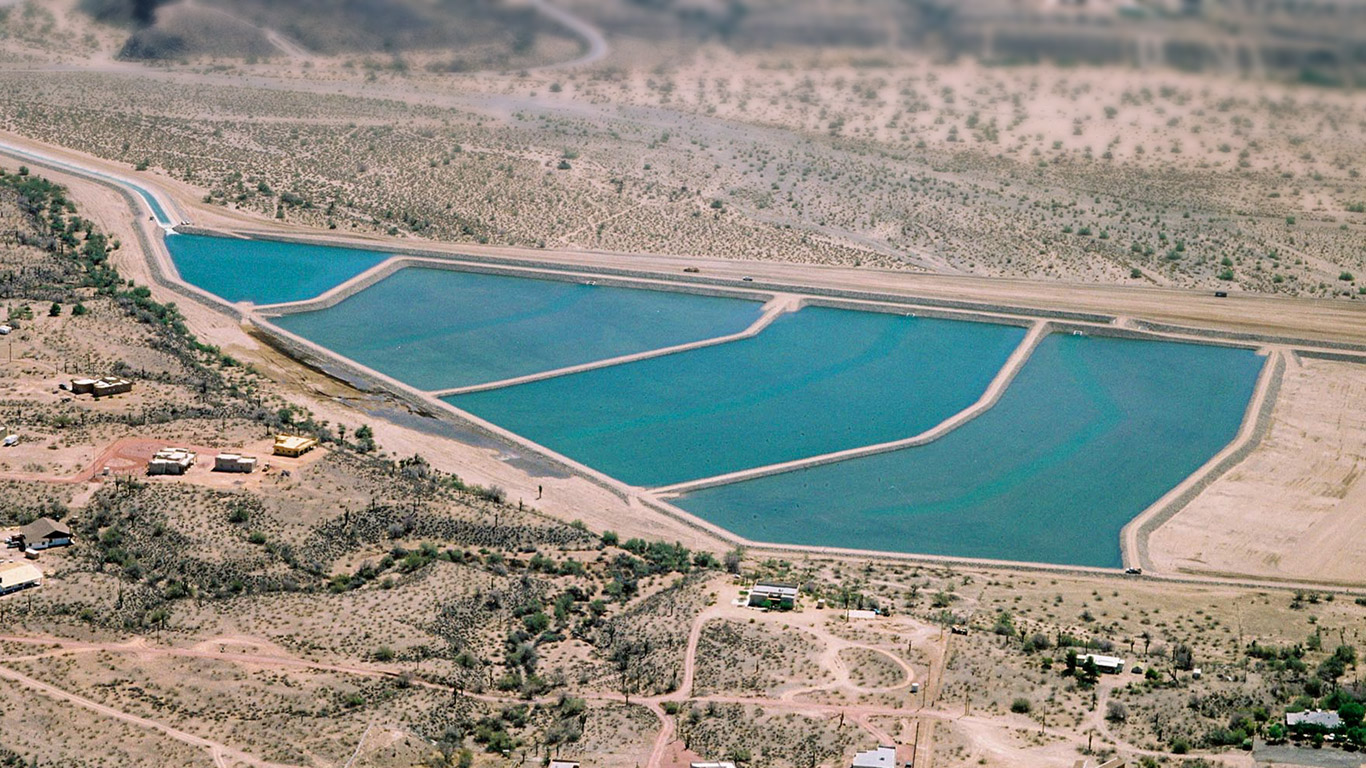
Recharge basins like the Agua Fria facility are where Arizona moved surplus Colorado River water underground. The Water Bank accumulated 4.4 million acre-feet of credits this way — and is now tapping them for the first time. (InsideTheValley.com)
The pivot: Arizona stops saving and starts spending
AWBA Director Rebecca Bernat put it plainly: “We used to bank water through the storage of Colorado River. We do not do that anymore.”
That single sentence marks a historic shift. The Water Bank was built to save. Now it is built to distribute. Bernat has also said, “We’ve stored for the future” — and 2027 is when that future arrives.
The mechanism is called “firming.” When the CAP canal delivers less water than a city is entitled to, the Water Bank steps in and releases stored credits to make the city whole. For 2027, Valley cities won’t have to drain their own individual reserves. The Water Bank covers the gap.
What the cuts actually look like: Arizona vs. California vs. Nevada
Federal operating guidelines were issued in August 2026. Under them, the three Lower Basin states face combined Colorado River reductions of 1.25 million acre-feet per year in 2027 and 2028.
Arizona absorbs the largest share: 760,000 acre-feet. California faces cuts of 440,000 acre-feet. Nevada takes the smallest hit at 50,000 acre-feet.
For Arizona, that 760,000 acre-feet figure represents about a 27% cut to its state Colorado River allocation.
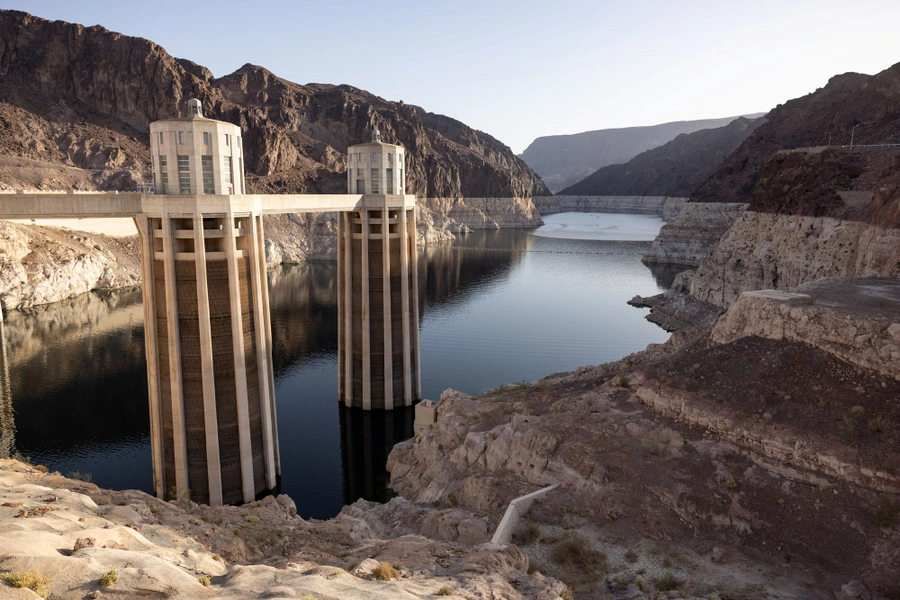
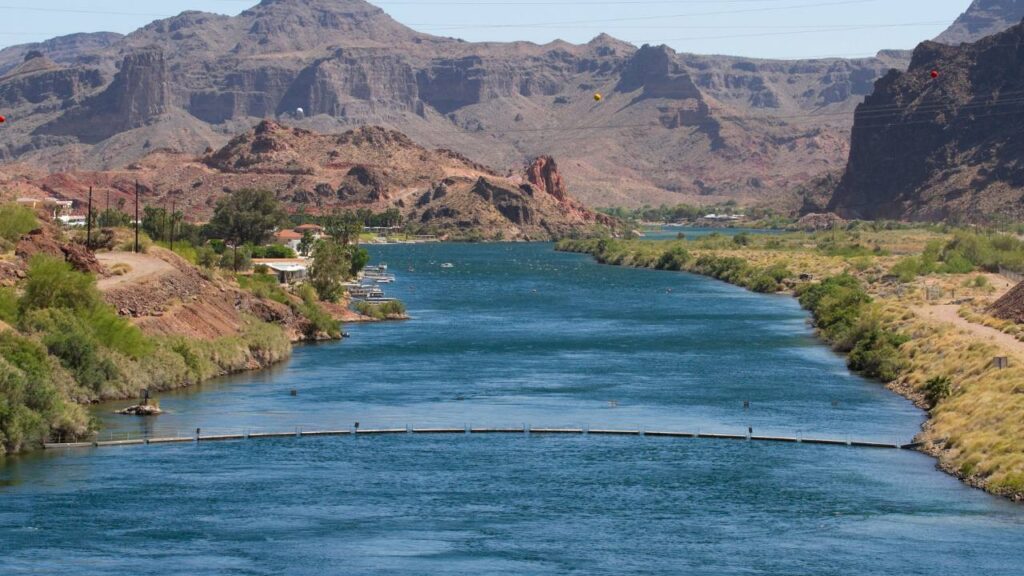
Lake Mead’s visible bathtub ring reflects years of declining Colorado River levels. Those conditions drove the 1.25 million acre-feet in combined cuts hitting all three Lower Basin states in 2027 and 2028. (InsideTheValley.com)
The disaster Arizona dodged — and the deal it got instead
The 27% cut is painful. But it could have been far worse.
At one point, the Bureau of Reclamation proposed cutting CAP canal deliveries by more than 95% beginning in 2027. Phoenix’s mayor’s office warned that such a cut would effectively wipe out Arizona’s Colorado River water supply.
The finalized deal landed at 27%. That gap — between a near-total loss and a heavy but manageable reduction — is the difference the Water Bank’s stored credits are now designed to bridge.
The one-year promise: what the Water Bank guaranteed Valley cities for 2027
Warren Tenney is executive director of the Arizona Municipal Water Users Association. He represents 10 Valley cities — including Phoenix, Scottsdale, Mesa and Glendale — that together account for more than half the state’s population. In July 2026, those cities publicly pressed the Water Bank for answers. They needed to know how much of the stored water they could actually access.
After that public pressure, the Water Bank committed: it will use stored credits to make Valley utilities whole for their 2027 shortfalls. The Water Bank’s Commission approved this firming approach on July 17, 2026.
Most Valley cities won’t have to tap their own individual reserves at all in 2027. The Water Bank covers the cut.
The missing formula: what happens after 2027 is still unwritten
The 2027 commitment is explicitly one year only. No policy exists for 2028 and beyond. No formula governs how fast cities can draw credits, how much they can take each year, or who decides when the reserve is running low.
That gap was the source of the July 2026 tension between the Water Bank and Valley cities. It remains unresolved. The backup plan will cost billions — and who pays, and at what pace, is still being worked out.
For residents, this means the short-term answer is solid. The long-term answer is not yet written. If you are making a 10- or 20-year decision — like buying a home in an outer suburb heavily dependent on CAP water — that gap matters.
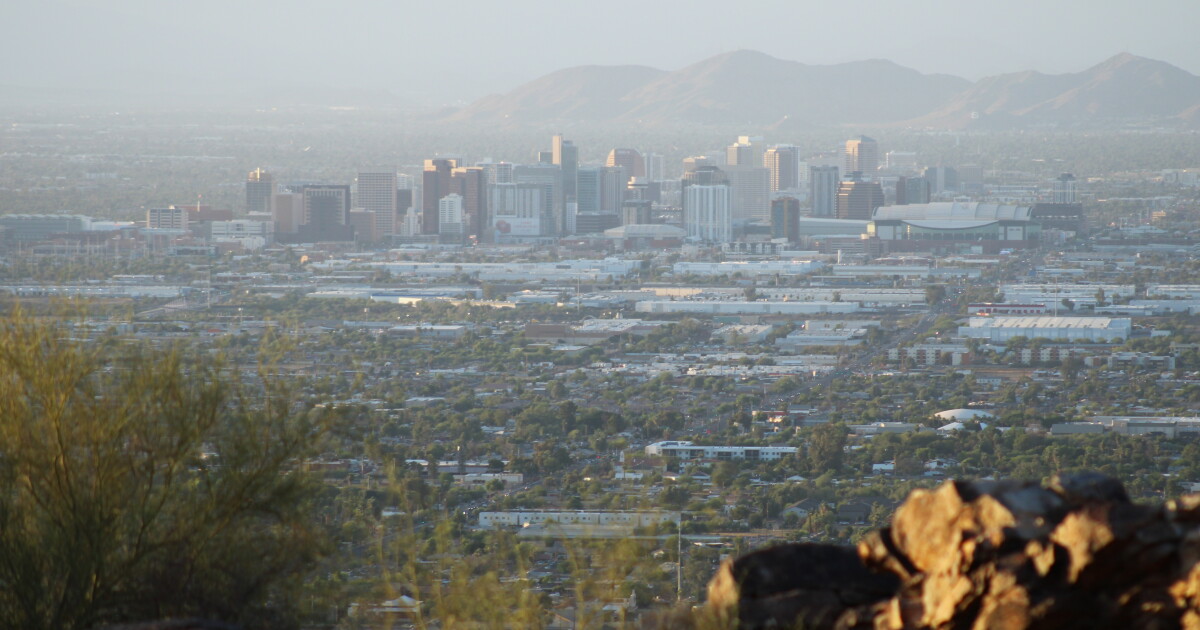
The Phoenix metro faces a Water Bank policy that is firm for 2027 but unwritten for the years that follow. Outer-ring suburbs most reliant on CAP water carry the most uncertainty. (InsideTheValley.com)
If you are buying or selling a home in the Valley, here is what to watch
Water access does not affect most established Phoenix neighborhoods in the near term. But three things are worth watching if you are shopping in newer or outer-ring communities.
First, assured-water-supply certificates. Arizona requires developers to prove a 100-year water supply before a subdivision is approved. As Colorado River allocations shrink, that proof gets harder to provide in areas that rely heavily on CAP deliveries. Approvals in some communities may slow.
Second, water bills. Cities are going to spend billions to maintain supply through alternative sources and infrastructure projects. That cost lands on rate-paying residents.
Third, the 2028 unknown. The Water Bank has no policy yet for the year after 2027. Communities that depend most on a single source — CAP water — carry more uncertainty than those with diverse supplies. That uncertainty is already a factor that serious buyers are starting to ask about.
For a broader look at how the 2026 Colorado River situation developed, see our Colorado River Cuts 2026: Phoenix Valley Guide. For details on the legal fight over allocations, see Arizona Joins Nevada Colorado River Lawsuit 2026.
The 2028 deadline the Valley is watching — and what has to happen before then
The federal operating guidelines cover 2027 and 2028. The Water Bank’s firming policy covers only 2027. That creates a gap: federal cuts resume in 2028, but no new Water Bank policy is yet in place for that year.
The Arizona Municipal Water Users Association and the Water Bank will need to negotiate a longer-term formula before that window closes. Those talks will shape how fast cities can access stored credits. They will also determine who bears the cost of backup supplies and how confidently developers can promise water to new homebuyers in outer suburbs.
The reserve exists. The credits are real. What is missing is the rulebook for spending them — and writing that rulebook is the most consequential water-policy task Arizona faces before 2028 arrives.